- Date
- 12th November 2025
- Categories
- Behaviours
By Kumar Satyam (Finovista).
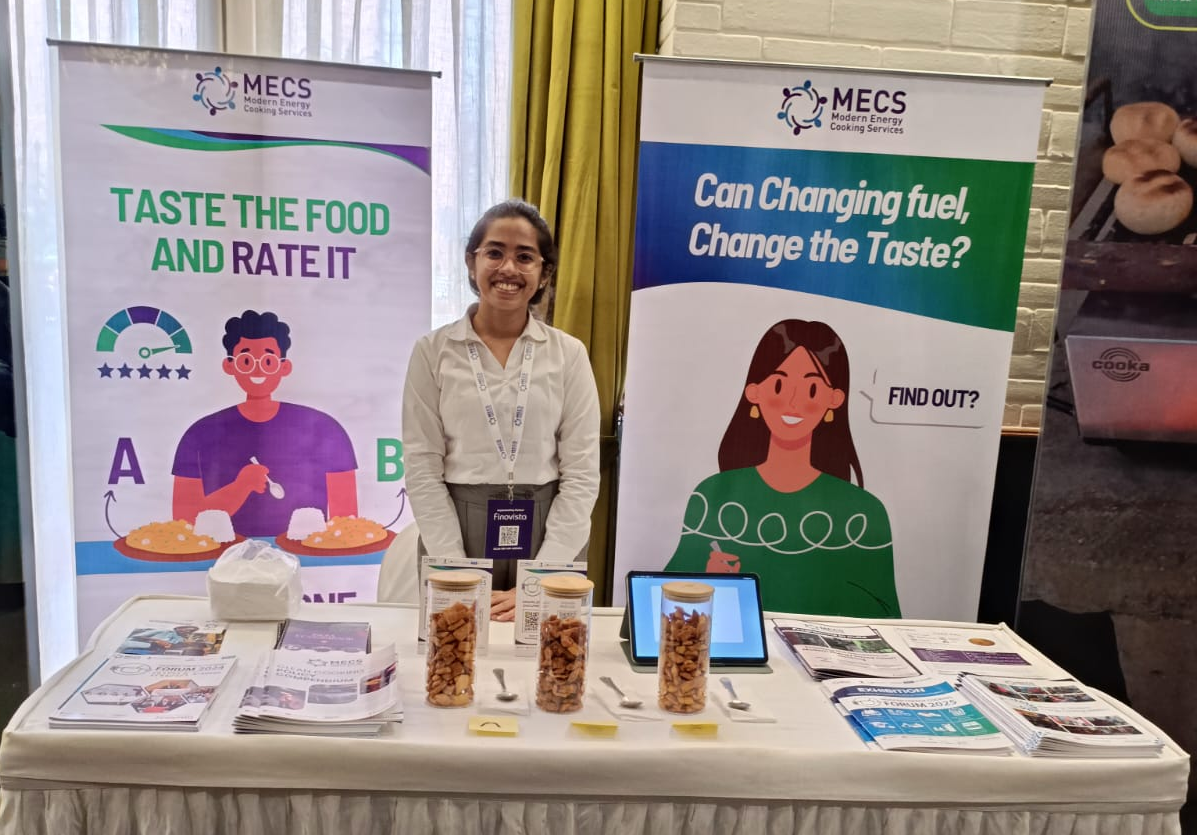
One of the most common misconceptions around Electric Cooking is around the taste, often perceived to be not as good as the food cooked on flame-based cooking i.e. traditional biomass or LPG stoves. Many people believe that the smoky aroma produced by flame-based cooking adds a unique flavour that can’t be replicated with flameless cooking as in eCooking. To explore and challenge this belief, a live tasting counter was organised during the Modern Energy Cooking Forum (MECF) 2025. The objective was to understand whether the type of cooking fuel, biomass, LPG, or induction, truly affects the taste, texture, and overall perception of food among consumers. Unlike a controlled laboratory study, this experiment focused on a single type of cooking and one popular snack item, designed as a real-world activity to capture genuine public feedback on taste on what they liked and disliked.
The overall eating experience of food is influenced by a combination of sensory factors that go far beyond flavour alone. Elements such as texture, aroma, mouthfeel, and appearance play a vital role in shaping how people perceive the quality and enjoyment of what they eat. Texture determines whether food feels crispy, soft, or chewy, while aroma evokes emotional and cultural associations that influence appetite and satisfaction. Mouthfeel, on the other hand, refers to the physical sensations food creates inside the mouth such as oiliness, dryness, or smoothness which often defines whether something feels “well-cooked” or not. Even subtle variations in colour and crispness can alter one’s overall impression of taste.

For the purpose of the experiment, a popular Indian snack, “Namakpare” was selected. This deep-fried savoury bite was chosen because it is familiar to most participants, easy to prepare, and widely perceived as a dish that requires high heat to achieve its signature crispness. This perception stems from the fact that deep frying demands consistently high oil temperatures, and electric or induction stoves are often thought to heat oil more slowly and recover temperature less rapidly than open flames. Many people therefore believe that such frying is difficult to replicate on electric stoves. A single batch of dough was prepared with identical ingredients, which was then divided into three equal portions. Each portion was fried using a different fuel and cooking appliance: firewood on a traditional stove (biomass), an LPG cookstove, and an induction cooktop. The same type and quantity of oil were used, and all three batches were cooked simultaneously to minimize variations due to timing and environmental conditions, although oil temperatures were not measured directly. Participants were invited to taste all three samples labelled Jar A, Jar B and Jar C. These were cooked using biomass, LPG and Induction respectively. The tasting was in random order and participants were asked to rate them on a five-point scale ranging from one (poor) to five (excellent). In addition to numerical scores, participants were encouraged to share qualitative feedback describing their sensory experiences, including comments on flavour, aroma, and mouthfeel.

A total of 254 evaluations were recorded across the three samples, with 82 responses. The results revealed some interesting patterns. The biomass sample (Jar A) received the highest average rating of 4.10, with nearly half of the participants giving it a full five stars. Most described it as crispy, evenly cooked, and flavourful, suggesting that the open-fire method imparted a distinct texture and flavour that participants found appealing. The LPG sample (Jar B) received an average score of 3.47 and elicited mixed reactions. While some participants appreciated its roasted flavour and crunchiness, others felt it was too dry or unevenly fried. The induction-cooked sample (Jar C) achieved an average rating of 3.88, with several participants appreciating its even colour and clean taste, though some noted that it was slightly softer and lacked the crispness and smoky flavour of the biomass-fried version.
The sensory feedback from participants highlighted that texture, particularly crispness, was the defining factor in shaping preferences rather than taste. Most agreed that the taste of the three samples was nearly identical, proving that the choice of fuel had minimal influence on taste itself. What mattered most to participants was how the food felt in the mouth. The biomass-fried sample’s slight smoky flavour and balanced crispness gave it an edge, while the induction sample’s softer texture made it less crisp and less preferred to some tasters. The LPG sample, on the other hand, received low ratings due to uneven colour and texture. These differences are likely due to the distinct heating characteristics of each cooking source: parts of the pan reaching higher temperatures during deep frying may have contributed to enhanced crispness in some areas. However, such sensory differences can also arise after cooking, influenced by external factors like serving temperature, holding time, exposure to air, or ambient humidity, which may subtly affect the final perception of taste and texture. From a broader perspective, the results of this exercise underline an important but often overlooked aspect of perception of taste vs the reality. Findings from this tasting counter clearly show that taste is minimally affected, with only minor variations such as the slight smoky flavour in biomass-fried samples. What minor differences exist can mainly be attributed to texture, which is easily adjustable through cooking techniques, controlling oil temperature during frying and practice. These findings reaffirm that transitioning to cleaner, modern cooking technologies does not require households to compromise on taste or food quality. As India moves toward sustainable energy solutions, incorporating user experience and sensory comfort into clean cooking initiatives will be essential for encouraging widespread adoption and long-term behavioural change.
Although biomass cooking was rated the highest, eCooking was found to be only slightly less preferred. This suggests that while cooks who prioritise flavour above all may still choose biomass for certain dishes, those who are open to making a small compromise on the appeal of the dish can benefit significantly from switching to eCooking. Compared to LPG, eCooking offers all the advantages of clean, efficient, and modern cooking, making it the better overall choice. Further, demonstrations like this are powerful in dispelling myths and creating confidence among users.
……………………………………
Featured image, top: Tasting activity desk at MECF 2025 (photo credit: Finovista).
AI was used to help develop the overall structure, refine the language, and improve the clarity of the content of the blog.