- Date
- 9th July 2025
- Categories
- eCooking
By Dr Jon Leary, MECS Senior Researcher & Director, Gamos East Africa
This story reflects upon the growing opportunities for regional exchange as each country progresses on its own eCooking journey. Whilst several years ago, Kenya was very much the epicenter of the new wave of eCooking, insights from its regional counterparts show that each country has advanced on its own journey and today, exciting developments are popping up across the region. The story presents reflections from a series of regional events attended by Dr Jon Leary of the MECS Kenya team, which revealed the breadth of activities driving forward eCooking adoption across the region.
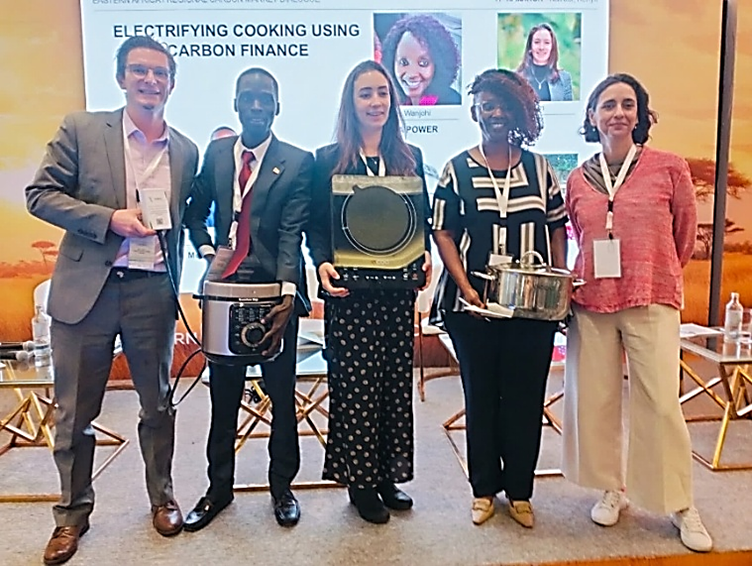
IATA Eastern Africa Carbon Market Dialogue; Nairobi, Kenya; 17-18 March 2025
The eCooking panel at this regional carbon markets dialogue highlighted how Article 6 is likely to drive eCooking adoption up another order of magnitude. Whilst eCooking projects under the VCM typically consisted of tens of thousands of units, Article 6 offers the potential to scale to hundreds of thousands (and beyond). The MECS team presented Malawi as a regional leader in leveraging Article 6. ATEC recently signed a deal with the Klik Foundation as an off-taker for an Article 6.2 transaction involving over 70,000 IoT-enabled induction stoves using the Gold Standard Metered and Measured Methodology. MECS supported the development of this methodology to tackle the integrity crisis within the cooking sector, supported ATEC to develop the first practical project utilising this new methodology, and has convened a sectoral roundtable to collaboratively identify and address challenges experienced in the early stages of implementation. Meanwhile, Burn Manufacturing has received a Letter of Authorisation from the Government of Malawi to initiate carbon projects for forced draft ICS & induction stoves. This involves establishing a factory in Lilongwe, which will employ over 1,000 Malawians over the next 5 years.
ESMAP/AMDA 8th Mini-grids Action Learning Event; Lusaka, Zambia; April 1-3, 2025
This Global event highlighted how far the mini-grid sector has come in the last 10 years, in particular the solar hybrid mini-grid sub-sector. Whilst mini-, micro-, and pico-hydro have played a key role in the electrification of rural areas for decades, recent price drops in solar and battery storage have only recently begun to open up the vast swathes of arid land in between suitable water courses for mini-grid development. Whilst 10 years ago, the mini-grid sector Globally was focused very much on proof of concept, today it is more about how quickly the sector can scale to meet the electricity access gap.
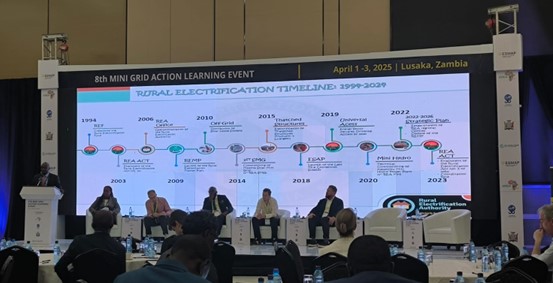
In Zambia in particular, load shedding remains a persistent challenge for ZESCO’s national grid, which is locked into a dependence upon hydropower with seasonal supply challenges exacerbated by climate change. Zambia’s Minister for Energy opened the event with an emphatic speech, highlighting the shortcomings of grid extension and urging the private sector to increase the speed of their deployment to enable the achievement of their universal access aspirations by 2030. He highlighted the critical interventions that the government had made to facilitate this, which included streamlining the regulatory approval process from 2 years to 48 hours, a statement that was corroborated by several private sector developers in attendance.
The role of cooking within solar-hybrid mini-grids has also evolved. Whilst 10 years ago, eCooking on solar-hybrid mini-grids was still very much seen as blue sky thinking. However, many of the pioneers who have since piloted eCooking on their solar-hybrid mini-grids were in attendance. Indeed, the learnings from the COSMO programme around the positive impact eCooking can have on RoI, especially if included at the planning stage, were well received by many. Nonetheless, there were still many sceptics, including those who had piloted eCooking themselves but had seen considerably lower uptake than expected. Others expressed concern about the overloading of grids, i.e. the opposite case.
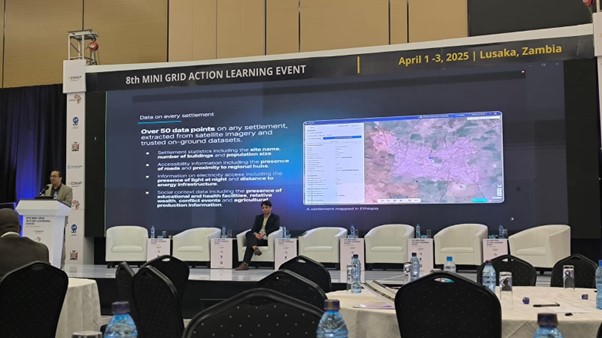
This simply underscored the need for further piloting and synthesizing of the outcomes to refine load modelling to ensure that the next generation of mini-grids to be deployed begins with cooking integrated into the planning stage, with well-defined assumptions about adoption and sustained use. The mini-grid sector is now blessed with an array of digital planning tools that developers could only dream of a decade ago. A prime example of this is VIDA’s geospatial load planning tool, which uses satellite data and AI to identify and characterize different types of rooftops in settlements across a target region in order to predict the type and magnitude of electricity demand that a mini-grid developer might expect. As a result, MECS has a critical role in ensuring that these tools have well-researched and empirically grounded data on cooking loads that align closely with the key input parameters for mini-grid design.
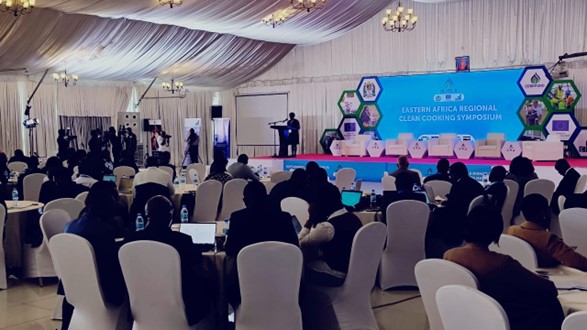
UNCDF/EU East Africa Regional Clean Cooking Symposium; Arusha, Tanzania; 6-8th May 2025
This regional symposium brought together key representatives from countries across the East African region to explore opportunities and challenges in the clean cooking space. eCooking was mentioned in almost every panel discussion and is clearly positioned as the most exciting technology in the clean cooking sector right now. A prime example of this was Dr Faith Odongo’s opening remarks:
Kenya has been fronted as a regional leader, boasting 34% access to clean cooking. We also have 75% access to electricity, which helps us to address the clean cooking challenge, as 68% of households are ready for eCooking, as they have Tier 3+ access.
The groundwork laid by the broader MECS team in changing mindsets around eCooking in the host country of Tanzania was epitomized in the following statement made during one of the panel sessions by Massimiliano Pedretti, Energy Portfolio Manager, EU Delegation to Tanzania:
MECS is the best promoter of eCooking in Africa, if not the world.
MECS was also publicly commended by Tanzania’s Ministry of Energy for its work on the eCooking Awareness Campaign. Matthieu Bommier, Senior Energy Sector Specialist at AFD Tanzania, gave a powerful account of the value of integrating demand stimulation via cooking into electricity access programming during a panel discussion. He recounted how he used to be involved in the transmission & distribution of loans in West Africa. Although eCooking was not yet part of the landscape back then, he now sees opportunities for eCooking in many contexts. He clearly stated that AFD doesn’t want to keep providing finance for new infrastructure if not paired with demand stimulation. Closing by stating that if countries are ready to pay for transmission lines, then why not pay a bit more and make sure that there is demand for the power.
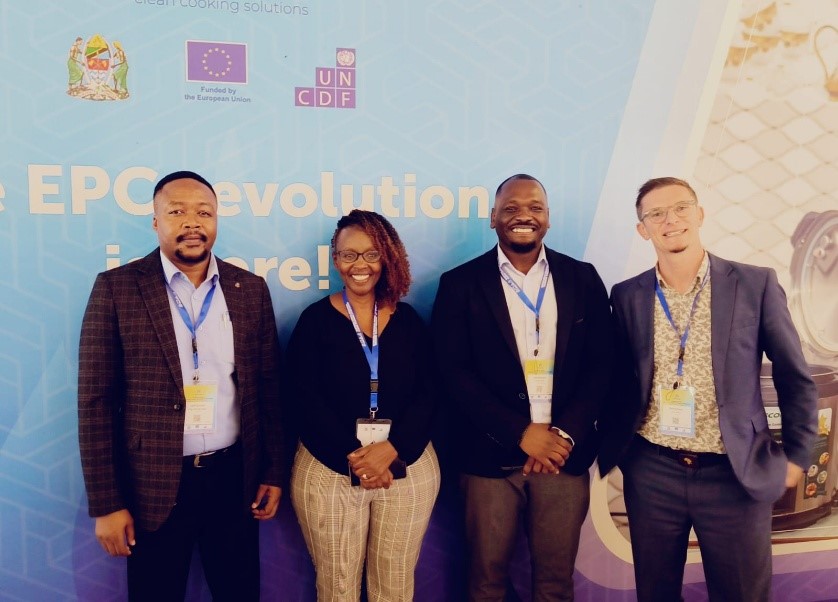
Utilities from across the region were well represented at the conference, with KPLC, TANESCO, and UEDCL all in attendance. eCooking Tariffs were a hot topic featured in many of the panel discussions, with Uganda as the pioneer, Kenya following hot on their heels, and Rwanda, Tanzania, Burundi, and Malawi all eyeing the opportunity. Indeed, this forum provided an opportunity for many of the key partners who have been supporting utility-enabled eCooking to compare notes, opening the door for deeper collaboration going forward. Indeed, the founders of the symposium, the EU, are preparing for a major programme of investment across the region, a major component of which is likely to be on utility-enabled eCooking.
CIFF Co-Creation Workshop on Data-Driven Utility Management for Demand Response; Dar es Salaam; May 21st-23rd 2025
This co-creation workshop in Dar es Salaam was a much more close-knit convening, with just 30 people in attendance. This intimate setting provided an enabling environment for peer-to-peer learning, with key representatives from utilities and regulators in five countries across the region in attendance. The workshop opened with CIFF presenting the opportunity for using philanthropic capital to unlock demand growth through the electrification of cooking and mobility by identifying and tackling systemic barriers to scale. Bayes Consulting introduced the workstream leads, which included the two demand drivers, eCooking (led by MECS) and eMobility, as well as three key enablers: regulation/tariffs, carbon finance/budget neutrality, and demand side management/IoT. Each utility and regulator then gave an overview of the situation in their country, highlighting the key opportunities and challenges they are facing. Finally, two co-creation sessions focused on eCooking and then eMobility enabled the country representatives to articulate their priority interventions.
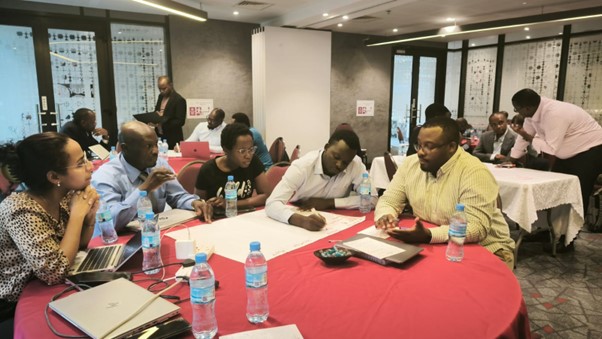
Kenya and Uganda both prioritised institutional cooking piloting, linking it to ongoing work on institutional eCooking tariffs. Top of Tanzania’s list was the development of targeted cooking tariffs as one of their top priorities, despite already having one of the lowest tariffs in the region. Ethiopia has a long history of utility-enabled eCooking, with EEP supporting the development of customised appliances for cooking the popular staple, injera, as far back as the 1970s. Whilst tariffs in Ethiopia are even lower than in Tanzania, the upfront cost is still a major challenge, so support was requested in developing consumer financing mechanisms. In Tanzania, TANESCO is already planning to pilot on-bill financing for eCooking but would like to explore bundling this with connection fees for newly connected customers. The opportunity for the utility to act as an aggregator for carbon projects was highlighted by Kenya and Tanzania, who expressed the desire to explore the development of carbon-backed electricity tariffs. Meanwhile, Malawi, who are hosts to the continent’s first Article 6.2 eCooking transaction, articulated the need to build local capacity through local manufacture/assembly of appliances. This is already underway in Kenya and Tanzania, offering another example where peer-to-peer exchange can enable the achievement of each other’s aspirations.
Way forward
MECS has worked closely with utilities from across the region to develop and scale eCooking programmes targeting demand growth amongst their customers. With programmes now up and running in multiple countries, the opportunities for South-South knowledge exchange are increasing by the day. These regional events have highlighted the central role that utilities have in promoting the adoption of eCooking, and as their KPI is kWh consumed, or ARPU (Average Revenue Per User), there is a strong motivation to ensure not only adoption, but sustained use of these new appliances.
***************************************************************************************************************
Featured Image: Panellists (MECS, Burn, KPLC, Bidhaa Sasa) and moderator (GIZ) at the IATA East Africa Regional Carbon Markets Dialogue. Photo © MECS Programme