
- Date
- 21st May 2026
- Categories
- eCooking, Scaling eCooking
By TaTEDO SESO.
Tanzania is at a defining inflection point in its clean cooking transition, moving decisively from pilot-scale innovation to nationally coordinated scale-up. At the centre of this transformation stands TaTEDO-Sustainable Energy Services Organization (TaTEDO-SESO), supported by social enterprises, including SESCOM Ltd. The organisation has over 35 years of experience in sustainable energy, turning policy ambition into real household adoption across the country. With installed generation capacity now at 3,404 MW—anchored by the 2,115 MW Julius Nyerere Hydropower Project, and national household electricity access reaching 71.2%, Tanzania is now recognised as one of the highest-potential eCooking markets in Sub-Saharan Africa.
The newly released 2026 Tanzania Electric Cooking Transition Assessment, developed by TaTEDO-SESO and SESCOM in collaboration with the JustGESI Project and the MECS Programme at Loughborough University, demonstrates conclusively that Tanzania now has the policy framework, the infrastructure, and the proven delivery models required to scale eCooking to millions of households. The evidence base is not sitting on shelves: it is being translated into immediate, concrete action in communities across the country. The period 2026–2030 will be decisive, determining whether eCooking remains a niche solution or becomes the dominant urban cooking pathway for Tanzanian households.
From pioneer work to national scale
For more than a decade, TaTEDO-SESO has been at the forefront of promoting sustainable energy solutions in Tanzania, with SESCOM serving as its market-facing enterprise driving product distribution and continuous innovation. Since 2018, this partnership has played a catalytic role in building Tanzania’s eCooking ecosystem by supporting early pilots, generating field evidence, and developing scalable delivery models.
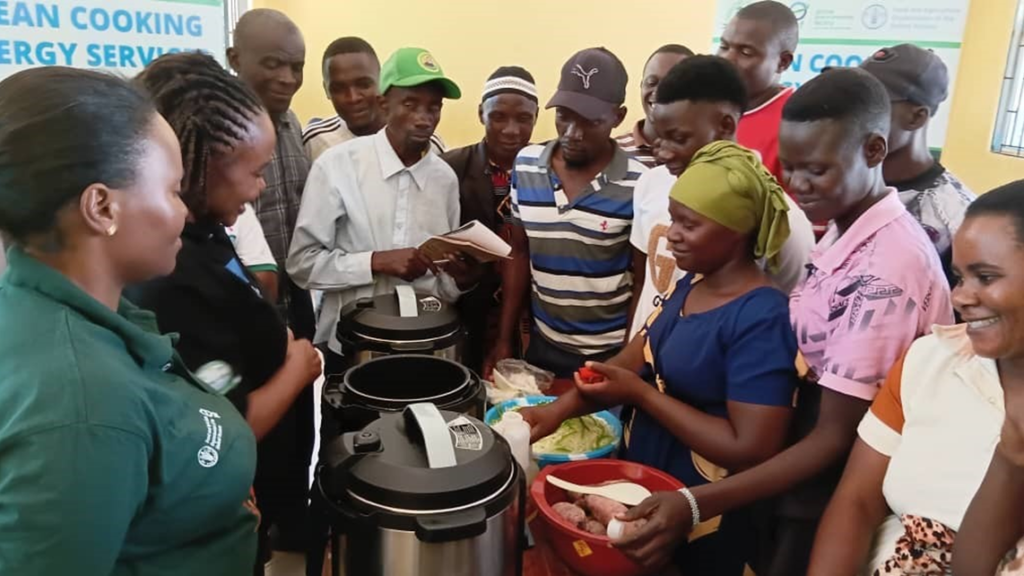
Today, SESCOM has facilitated the distribution of over 25,000 Electric Pressure Cookers (EPCs), supported by three regional service centres, trained technicians, and community-based sales networks, including women-led distribution agents. This field-driven experience has directly shaped national strategy, including Tanzania’s National Clean Cooking Strategy (NCCS 2024 to 2034), launched by President Samia Suluhu Hassan on 8 May 2024. The NCCS sets an ambitious target of 80% clean cooking access by 2034, compared with a baseline of just 23.2% in 2025. SESCOM’s role as Tanzania’s pioneer eCooking actor, with an active on-bill financing partnership with TANESCO, has been instrumental in translating this national ambition into an implementation architecture.
Turning evidence into action
Tanzania’s progress is striking. Clean cooking access has nearly quadrupled from 6.9% in 2021 to 23.2% in 2025, as reported by Tanzania’s Minister of Energy at the IEA High-Level Ministerial Dialogue in Paris in February 2026. National household electricity access has reached 71.2% (84% in urban areas), supported by a generation capacity of 3,404 MW, with approximately 70% coming from clean sources. Yet the scale of the remaining challenge is vast: around 80% of households still rely on solid biomass for cooking, biomass fuels account for 82% of the national primary energy supply, and only 2% of households use electricity as their primary cooking fuel.
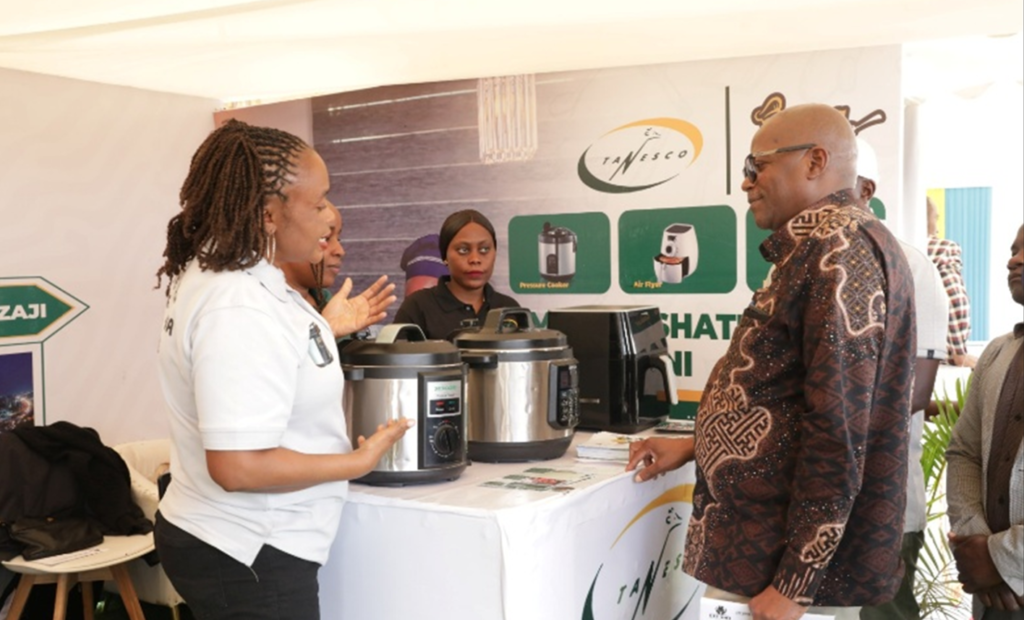
Through field operations across Dar es Salaam, Dodoma, Morogoro, Kilimanjaro, and Mbeya, TaTEDO-SESO and SESCOM have confirmed what the Market Assessment validates: the barriers to eCooking adoption are no longer technical or regulatory. Electric cooking is viable, affordable in use, and fully compatible with Tanzanian cuisine. To-date, approximately 92% of everyday Tanzanian dishes can be prepared with an Electric Pressure Cooker. At the standard domestic tariff, cooking a single meal costs approximately TZS 352 with electricity, compared to TZS 2,000–3,000 with charcoal. The cost ratio of 4 to 6 times has been in favour of eCooking. The real constraints, and the pathways to addressing them, have been clearly identified:
- High upfront appliance cost, with research showing 86% of EPC buyers could not have afforded the appliance without financing (CLASP, 2020)
- Limited consumer awareness and confidence
- Behavioural inertia and fuel-stacking habits, practised by an estimated 66.2% of households, with common urban patterns combining LPG-charcoal, firewood-LPG, or firewood-charcoal
- Gaps in financing, investment, and working capital
- Institutional capacity for large-scale, sustained implementation
Crucially, all these barriers are now being addressed through practical, scalable solutions developed, tested, and refined in collaboration with government and development partners.
“Sustained, community-centred engagement—combined with strong partnerships—is the key to unlocking large-scale adoption of modern energy cooking services.”
April 2026: evidence meets community action
In April 2026, TaTEDO-SESO and SESCOM intensified field operations, participating in a series of high-profile events and community campaigns that demonstrated the growing momentum of Tanzania’s clean cooking transition. These engagements exemplify precisely how evidence from the Market Assessment is being operationalised on the ground.
Women as Catalysts for Change
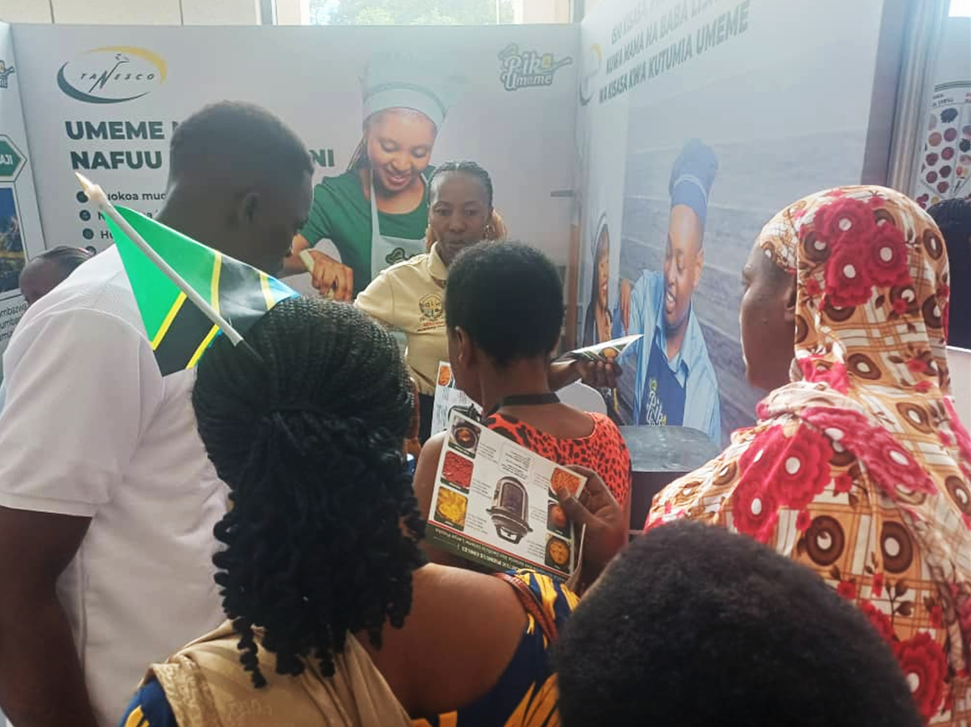
At the Women’s Festival (Kitchen Party Gala) at Mlimani City, attended by over 1,000 women and officiated by Hon. Judith Kapinga, Minister for Trade and Industry, SESCOM used practical cooking demonstrations and food tasting sessions to bring the benefits of electric pressure cookers to life. Participants engaged directly with the technology, experiencing first-hand its efficiency, convenience, and long-term affordability. The event underscored a critical finding from the Market Assessment: women are the primary end-users of cooking technology and the greatest beneficiaries of the switch to eCooking, yet they frequently lack the financial autonomy and decision-making authority to initiate household appliance purchases. Sustained, face-to-face engagement that builds confidence and creates peer-to-peer momentum is therefore essential and non-negotiable as a delivery strategy.
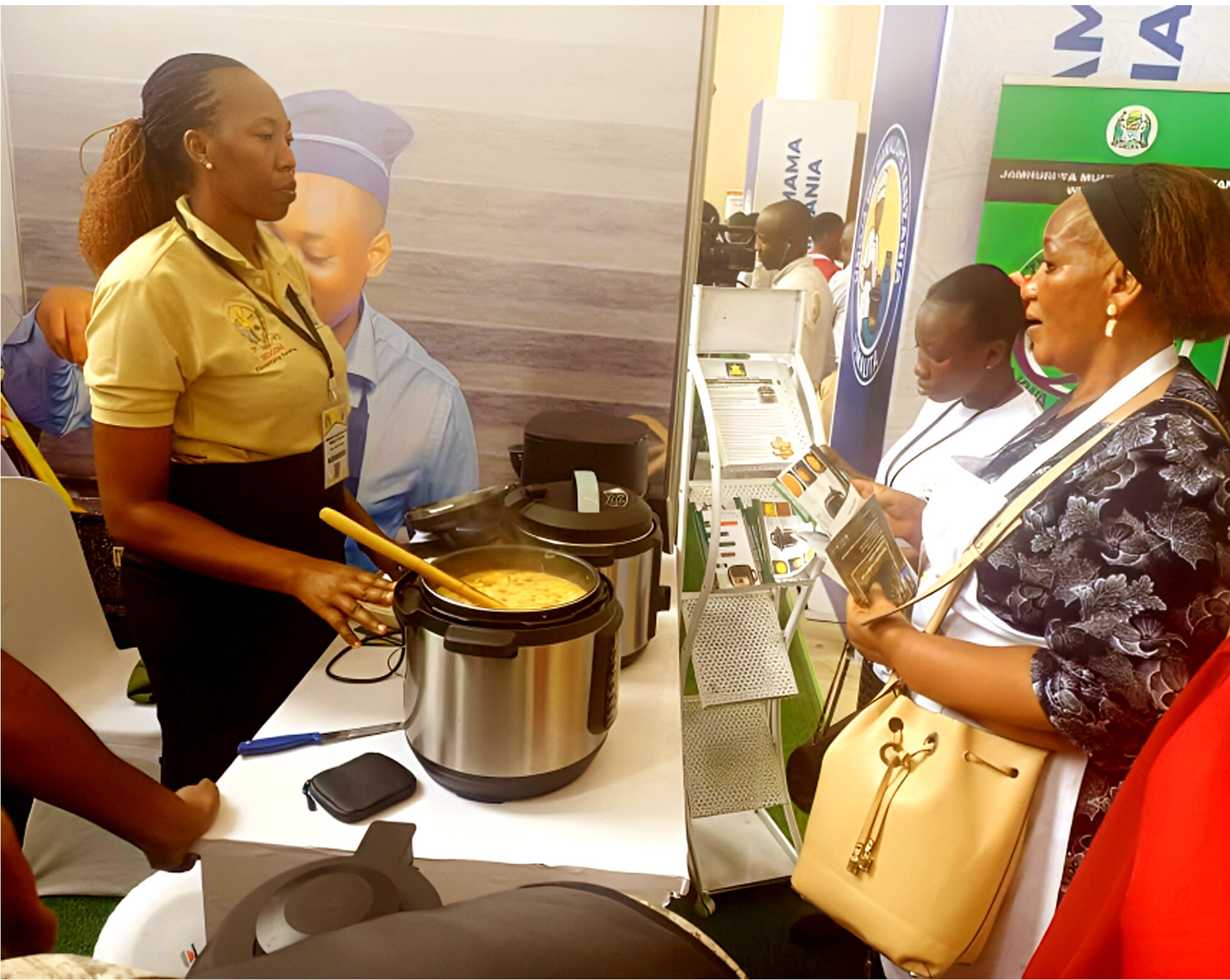
While no immediate sales were recorded at the event, strong interest and concrete purchasing commitments confirmed the power of direct engagement. The Market Assessment documents a “gender paradox” that makes this outreach indispensable: women bear 2 to 4 hours of daily cooking labour and suffer the greatest health impacts from indoor air pollution, yet in 72% of mainland Tanzanian households, where men control financial decisions and they rarely determine what appropriate technology is required for purchasing to support their families. Switching to eCooking saves an estimated 344 hours per household per year, time disproportionately returned to women and girls. Engaging women directly, and building their agency as both users and advocates, is central to SESCOM’s delivery model and to the sector’s long-term success.
Clean Cooking, Nutrition, and Health
At the National Nutrition Conference (Mama na Baba Lishe) held at the Julius Nyerere International Convention Centre, officiated by H.E. President Samia Suluhu Hassan, SESCOM positioned eCooking solutions at the heart of national nutrition discussions. Meals including makande and grilled local chicken were prepared live using EPCs, demonstrating how electric cooking supports healthier food preparation while eliminating exposure to harmful indoor smoke. This is not a marginal public health benefit: biomass cooking is Tanzania’s largest environmental risk factor, contributing to an estimated 33,024 premature deaths annually and 1,414,699 disability-adjusted life years (DALYs) lost (World Bank, 2024). Connecting eCooking directly to these national health priorities amplifies its political and social salience beyond the energy sector.
This integration of clean energy and public health messaging reflects TaTEDO-SESO’s evidence-based, holistic approach: eCooking is not merely an energy intervention; it is also simultaneously a public health, gender equity, nutrition, and climate development solution. The USD 39 billion annual cost of inaction on household air pollution in Tanzania, comprising USD 25 billion in health costs, USD 12 billion in lost female productivity, and USD 2 billion in climate costs (World Bank, 2024), makes the case for eCooking as a national economic imperative, not only an energy transition choice.
Community-Level Engagement Driving Behaviour Change
In Bunju, a 200-member women’s group received hands-on electric cooking training, with five EPCs distributed to early adopters as catalysts for broader community adoption. This activated the peer-diffusion effect that the Market Assessment’s primary research identifies as one of the most powerful drivers of technology uptake. In Dodoma and Kongwa districts, outreach campaigns conducted in partnership with UNCDF extended into markets and rural communities. Live demonstrations of rice, beans, and meat preparation with transparent, real-time display of electricity consumption and cost data—built confidence in the technology’s day-to-day affordability. Consistent with the Market Assessment’s KII findings, direct trial, not abstract awareness, proved to be the most effective conversion trigger.
Reaching Agricultural Communities in Mbeya
SESCOM’s participation in the Mbeya Farmers’ Festival extended eCooking outreach into agricultural and peri-urban settings. A District Commissioner publicly endorsed SESCOM products based on personal experience, encouraging wider local adoption. This was an endorsement that reflects the growing official recognition of electric cooking as a viable, desirable solution. Despite initial electricity logistics challenges, the team delivered diverse cooking demonstrations from fried snacks to traditional staples, showcasing the versatility of EPCs.
“Seeing and tasting is believing—live demonstrations continue to be one of the most powerful drivers of eCooking adoption.”
Driving innovation in financing and delivery
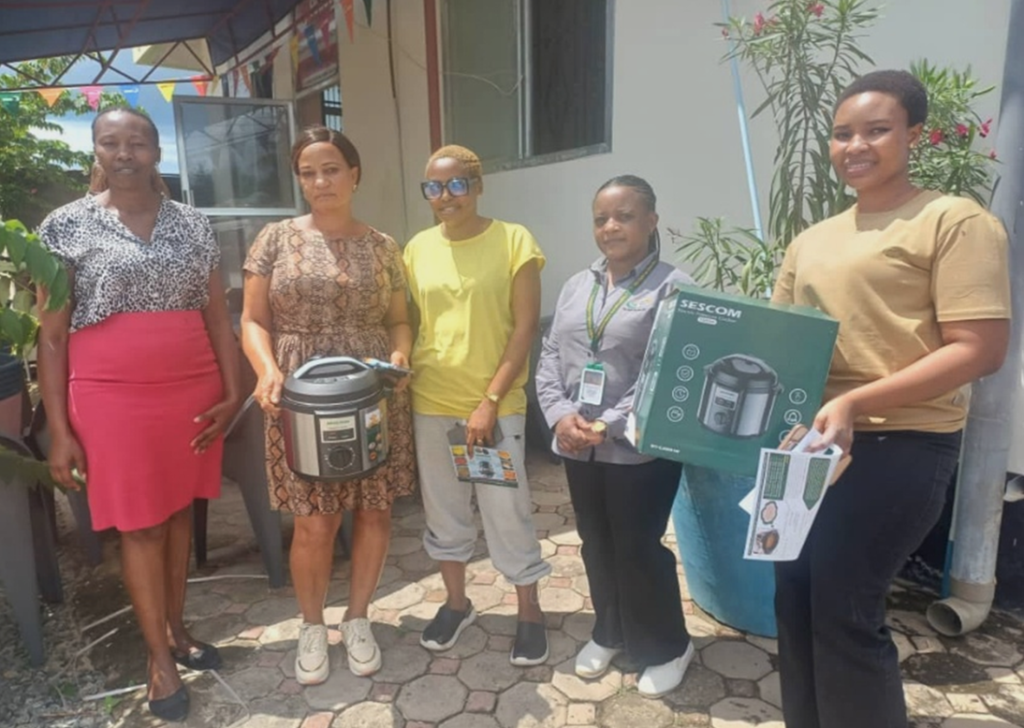
One of the most transformative recent developments is the formal launch on 9 October 2025 of Tanzania’s on-bill financing programme—branded “Konekt Umeme, Pika kwa Umeme” (Connect Electricity, Cook with Electricity)—making TANESCO the first utility in Africa to enable customers to repay eCooking appliances through their monthly electricity bills. This milestone was strongly supported by TaTEDO-SESO and SESCOM through years of technical collaboration, market insights, and implementation experience. The model directly eliminates the upfront cost barrier that has historically limited adoption: research shows 86% of EPC buyers could not have made the purchase without financing (CLASP, 2020). With TANESCO serving over 5 million grid-connected customers and leveraging existing LUKU prepayment meter infrastructure, the scale potential of this channel is unmatched by any other single financing mechanism in Tanzania.
Combined with SACCO-based financing, results-based funding mechanisms (REA RBF; MCFA/SIDA), PAYGo models, and community agent networks, and enriched by emerging carbon finance opportunities following the ICVCM’s 2025 approval of new clean cookstove methodologies. This marks a decisive shift toward a more inclusive and scalable market system. TaTEDO-SESO and SESCOM continue to lead across the ecosystem in:
- Consumer awareness and behaviour change
- After-sales service systems that ensure long-term appliance use and customer confidence
- Gender-inclusive delivery models, particularly through women-led sales and financing networks
- Policy engagement, technical support to government and utilities, and IoT-enabled monitoring systems to track adoption and energy use at scale
A replicable model for impact at scale
The potential impact of scaling eCooking across Tanzania is not theoretical. it is quantifiable. The 2026 Electric Cooking Transition Assessment report estimates that if just 40% of urban charcoal users were to switch to electric cooking, the net social benefit would reach USD 220 million per year, 429 million hours of women’s time would be saved annually (344 hours per household per year), 2,691 DALYs would be avoided, and 1.3 million tonnes of CO₂ equivalent emissions would be reduced each year. These numbers frame eCooking not as an energy sector concern alone, but as one of Tanzania’s most compelling public health, gender, and climate investments.
Across all April engagements, a consistent and effective approach was applied and refined:
- Targeted awareness creation and messaging tailored to audience needs
- Practical, live cooking demonstrations with real food and transparent cost data
- Direct user interaction, feedback collection, and community follow-up
- Strengthened partnerships with utilities, government bodies, and development partners
These outcomes are not theoretical. They are grounded in real-world, field-led implementation by TaTEDO-SESO and SESCOM, whose integrated approach combining policy engagement, market development, and on-the-ground delivery offers a directly replicable model for other countries navigating the same transition.
Looking ahead: from thousands to millions
As Tanzania advances into the 2026 to 2030 scale-up phase, the focus is shifting decisively from isolated interventions to coordinated national expansion. The Tanzania Electric Cooking Assessment Report 2026 priority action plan identifies eight critical workstreams for 2026 to 2028: scaling the TANESCO on-bill financing programme to 100,000 households; removing import duties and VAT on EPCs before the NCCS June 2026 deadline; launching a national eCooking awareness campaign; enforcing appliance quality standards through the Tanzania Bureau of Standards; scaling institutional eCooking to 500+ schools and health facilities; operationalising carbon finance MRV; establishing a national eCooking monitoring database; and mobilising working capital for EPC importers to reduce consumer prices. Each priority reflects a barrier that is now well understood—and for which tested solutions exist.
Across all these workstreams, TaTEDO-SESO and SESCOM are positioned not merely as implementers, but as strategic ecosystem partners to government, utilities, and international development programmes. The April 2026 community engagements align firmly with the NCCS (2024 to 2034) implementation framework and exemplify how coordinated action among public institutions, the private sector, and development partners can deliver tangible, lasting change at a pace commensurate with national ambition.
With strong foundations now in place, proven financing models, a national policy framework, 3,400+ MW of generation capacity, 71% household electricity access, a growing evidence base, and a practised implementation team on the ground, Tanzania has a unique and time-sensitive opportunity to make eCooking the new normal. The economics are compelling: with an EPC payback period of approximately 6 to 10 months at current tariffs, electric cooking offers households one of the best consumer investment returns available. The question is no longer whether eCooking can transform how Tanzanians cook; it is whether the ecosystem can mobilise, coordinate, and scale at the speed the NCCS 2024–2034 demands. The window is open. The strategy, the technology, the financing architecture, and the political will are in place. What remains is coordinated action at scale.
Important Reference
Please read more about the Tanzania Electric Cooking Transition Assessment through the weblink below:
…………………………………………………..
Featured image, top: Mwalimu Nyerere Hydro Electric Plant (photo credit: TaTEDO SESO).
AI has been used for spelling and removing grammatical errors from this article.