
- Date
- 13th November 2025
- Categories
- eCooking
By Jacob Fodio Todd (Gamos Ltd.).
African Indigenous Vegetables (AIV) fall into a camp of foods that have been poorly recorded and researched in modern scholarship, despite their rich legacy. Across Africa, for years grandmas have been telling us about the health benefits of traditional diets, once dismissed as primitive and anachronistic. Belatedly, global institutions are taking note. In the meantime, a whole host of indigenous African Leafy Vegetables (ALV) like African nightshade, jutes mallow and spiderplant have steadily been displaced by greens with a global profile, such as spinach, collard greens and kale. However, things are changing and it turns out grandma was right all along, and this time the science is behind her.
In Kenya crops such as cabbages, collard greens and spinach were introduced and commercialised during the colonial period, gradually gaining market share and growing in popularity. They make sense as agricultural produce. Generally, they are nourishing, productive, and selectively bred to produce a versatile and bountiful product. Nonetheless, farmers routinely need more pesticides and fertiliser inputs to support their growth than indigenous leafy variants, which after all evolved to the prevailing environment of the area and developed pest and disease resistance, and drought tolerance.

In addition to customarily being grown organically, or chemical input free, many indigenous African Leafy Vegetables also, as the pioneering research of Professor Abukutsa-Onyango shows, are extremely nutritious and contain high levels of essential minerals, vitamins A and C and even protein. Yet, to preserve these valuable micro and macro nutrients they need treating correctly, and usually that means being lightly cooked (usually boiled or fried) and possibly fermented, as tradition dictates. However, knowledge of how to cook ALV and traditional cooking practices are being eroded, and generational means of transfer are changing, challenged by the digital realm (e.g. Youtube) and shifting eating habits, as this MECS series of reports discusses. In addition, practically speaking, many of these leaves are lengthy to process, as each leaf needs meticulously separating from stem. Enter Nyumbani Greens.
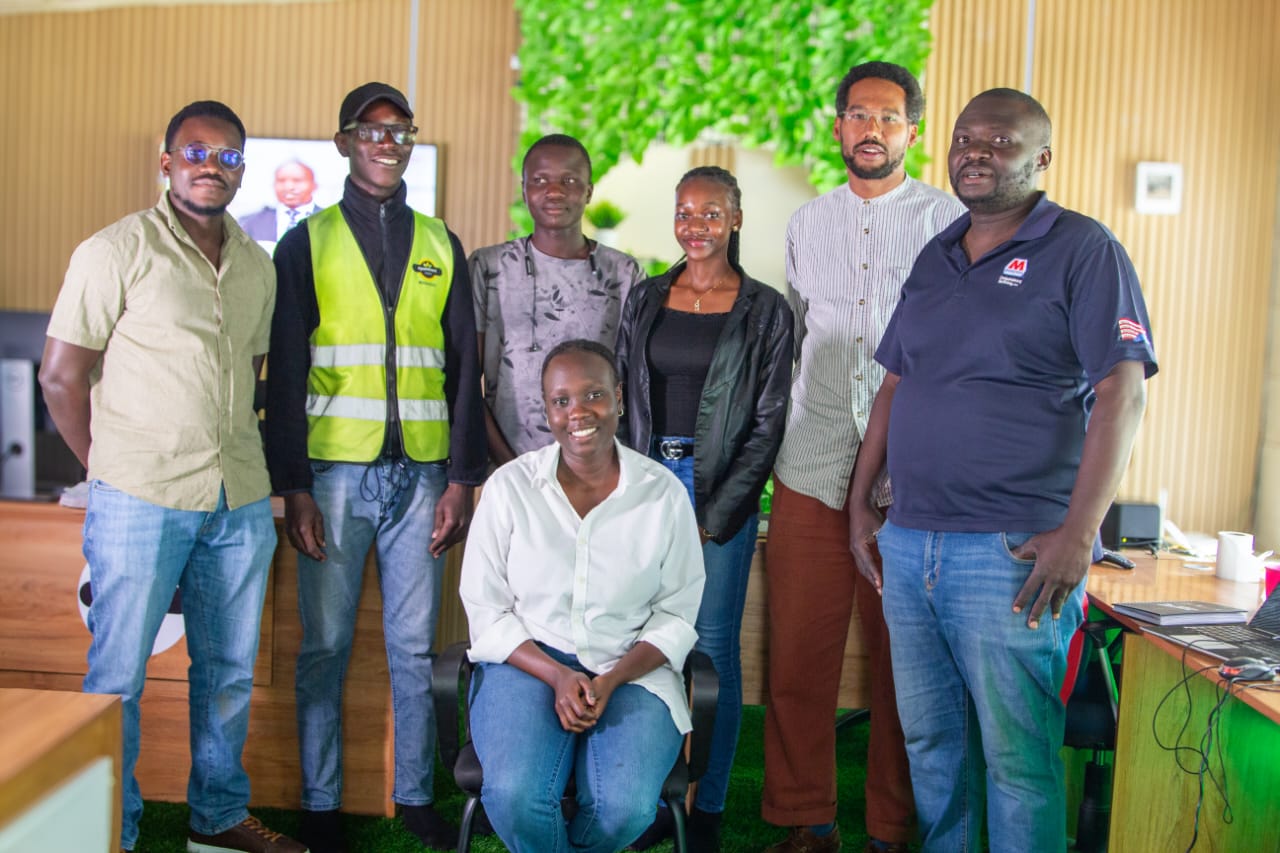
Nyumbani Greens is a start-up based in Nairobi that champions and sells many indigenous African Leafy Vegetables (ALV) and local foods, such as githeri (maize and beans), in their own words, ‘promoting healthy eating and supporting local agriculture’. Their value proposition is taking away the stress for busy Nairobians and the expanding population of urban Kenyans by offering healthy ready-to-eat ingredients. In short, they process and deliver pre-cooked food for a populace who are increasingly hungry for ancestral foods.
Their production facility and headquarters in Jamhuri Agricultural Park is dedicated to this cause and with the support of MECS they are modernising their cooking, thanks to a recent winning bid to a technology accelerator. As evidence grows about the value of African indigenous foods, so does it about the dangers of traditional cooking fuels, like wood and charcoal. Until now, the business has been using a wide fuel stack (charcoal, LPG and electricity) to cook with, but founder Washington Ogol tells me the team see the value in increasing their electric appliance use. With eCooking appliances often maximising design for certain functions (think kettles, rice cookers, and deep fat fryers) and leaning on automation and insulation, it could transform their operations.
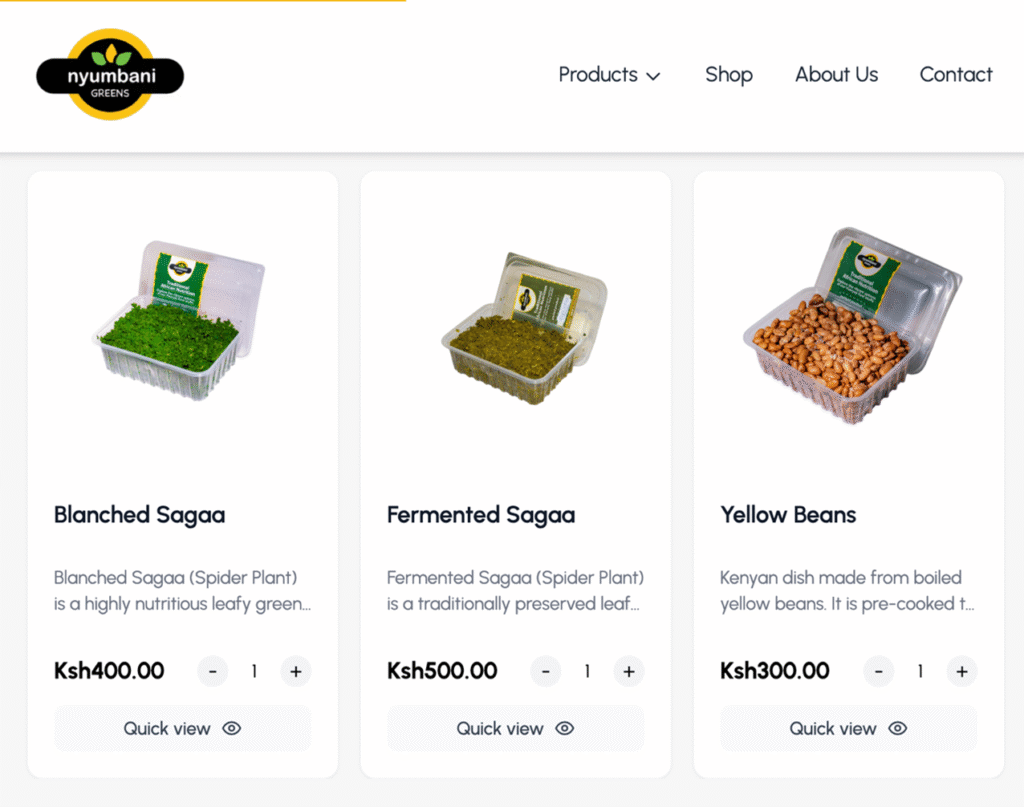
In the commercial setting, cooking often hinges on repeating certain processes repeatedly and as efficiently as possible, from a labour, cost and time perspective. So it is with Nyumbani Greens, who have certain techniques they rely on over and over. Broadly speaking, they only use one cooking process – boiling – for their production line but it is applied at two vastly different durations.
Githeri (maize and beans), kuku kienyeji (village chicken) and various beans are long-cooking, or heavy foods. They typically require hours on the stove. However, cook them under pressure, which raises the temperature and speed at which foods cook within a sealed vessel, and you can vastly reduce the time and energy needed, as numerous MECS studies demonstrate. This can be particularly helpful at elevated altitudes, where Nairobi sits. At their current production capacity, there are a range of commercially available electric pressure cookers (EPCs) at the size of the 40l to 50l sufurias (saucepans) they currently use. In Kenya there are companies such as Feion selling locally manufactured large 100l+ EPC, the jiko-kul, with which they could comfortably double their current capacity, so there is ample room to expand if needed. It is safe to say large EPCs will accelerate their heavy food cooking and likely deliver several health and cost co-benefits.
For their ALV, like kunde (cowpea leaves), mrenda (jute mallow), terere (amaranthus), managu (African nightshade), sagaa (spiderplant), mitto (slenderleaf) and other greens like sukuma wiki (collard greens/brassicas), they rely on briefly submerging the leaves in boiling water, then rapidly cooling; in other words, blanching. As touched upon earlier, this best retains their nutritional value, compared to longer cooking times. This has proven a more complicated technical obstacle for the team because of the volume of fresh boiling water they constantly need. They’ve used a range of different approaches to preheat the water; charcoal jikos; immersion water heaters; electric hotplates and LPG stoves. At the moment these methods are used to bring sufurias full of water up to a good temperature (usually with electric immersion heaters or on a charcoal jiko), before transferring to the LPG to achieve a rapid rolling boil, and starting the blanching process. After a few minutes cooking, the leaves are removed and the water is discarded, both with added nutrients and any unwanted impurities. The cooked leaves are then plunged in cold water before being drained, chopped, some are fermented with dairy products, and finally packaged.
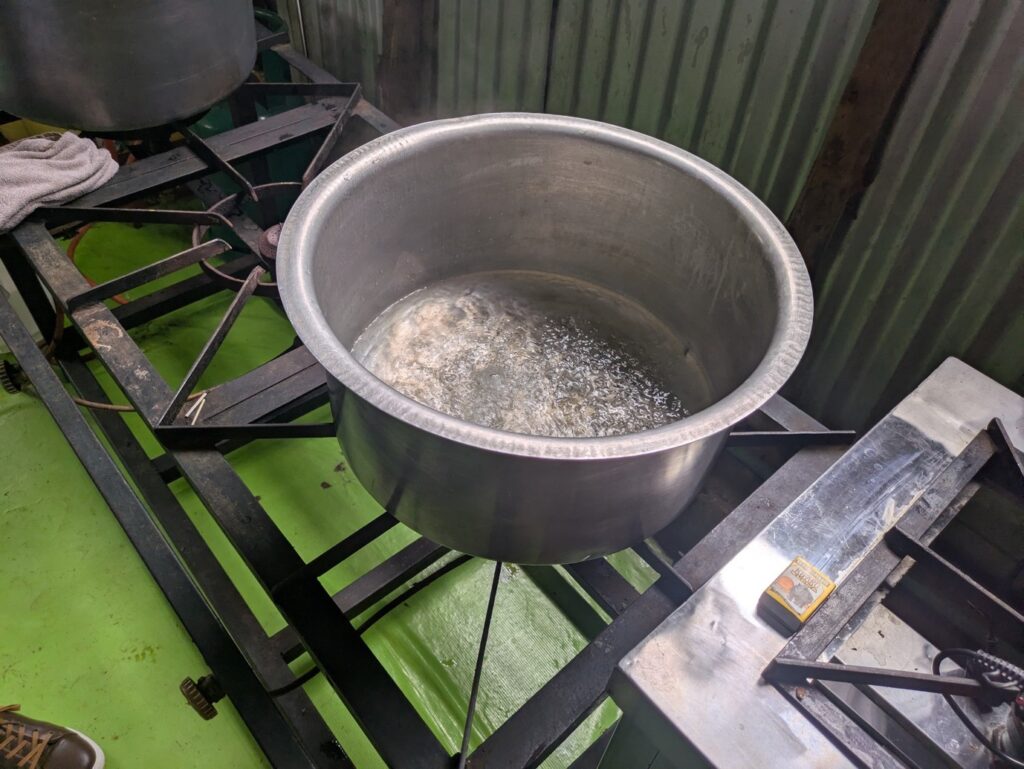
Measuring a technology’s efficiency at boiling water is a long-standing standard of the clean cooking world, and the Water Boiling Test is an influential protocol. It is an important consideration for the Nyumbani team who can boil around 1000 litres of water a day to use for blanching[1]. Using a data-driven approach to compare methods, with support provided by MECS and tools developed and amended by the Nyumbani Greens team, it is process that is ripe to be streamlined.
For this, a few electric options are under consideration; induction stoves, eBoilers; improved immersion heaters; and a dedicated solar hybrid water heater are all possible alternatives. As is often the case, it is not simple nor speedy to compare energy consumption across devices using different fuels. First, current methods are being documented and assessed before being balanced against the potential of the other devices, and the team will opt for the best suited device, to reduce energy consumption and time. Nyumbani Greens estimate that consumers can save up to 70% of their cooking energy by using their pre-cooked batch produce, with any final seasoning, stew and indeed household energy use at the discretion of the customer.

Across the ALV ecosystem, new sits harmoniously with old in numerous ways; sukuma wiki sits alongside managu; traditional informal vegetable sellers Mama Mbogas (mboga = vegetables) dovetail with Nyumbani Greens and innovative companies like them, who champion, sell and promote organic ALVs; and eBoda bodas deliver produce alongside fossil fuel motorbikes. There is increasing recognition of the nutritional and environmental value of AIV and their proponents, and growing supply; ALV production has doubled in the last decade. In all likelihood in the coming years, households, businesses and institutions will continue to contribute to and preserve Kenya’s traditional food heritage, and explore eCooking, helped by the country’s formidable renewable energy landscape and ever-expanding electricity access. It too has almost doubled in the last 10 years.
[1] Four times that is used for cooling and washing.
……………………………………
Featured image, top. Greens being prepped: managu in the foreground, sukuma wiki in the background (photo credit: Jacob Fodio Todd, MECS, 2025).
No AI was used in writing the piece. AI was used for research purposes.