By Dr Anna Clements, Dr Will Clements, Dr Simon Batchelor (Gamos, MECS) & Dr Iwona Bisaga (Global Clean Cooking Lead at Norwegian Capacity (NORCAP) and the Global Platform for Action on Sustainable Energy in Displacement Settings (GPA)).
Partnering with Growing Government Engagement in Energy Access (GGE-EA), a partnership funded by UKAid under the Transforming Energy Access Programme, MECS participated in a webinar series on the theme of eCooking and Energy Access, with a focus on eCooking on minigrids. GGE-EA is a partnership between CLUB-ER and SouthSouthNorth (SSN)’s African Mini-Grids Community of Practice (AMG-CoP) under the African Climate Action Partnership (AfCAP), formerly the Africa LEDS Partnership (AfLP). The webinars were organised and hosted by Hary Andriantavy, Executive Secretary of CLUB-ER who has over 30 years of experience in energy access. The GGE-EA operates across all Africa, and so the webinars were simultaneously translated into French.
Access to clean and affordable cooking is essential for sustainable development, yet many communities, especially those in off-grid and minigrid areas, continue to face significant barriers to adopting eCooking. The 3-part webinar series tackled eCooking in off-grid settings, delved into mini-grids specifically, and spotlighted how carbon credits can help finance the transition. All the webinars are now available on YouTube and the MECS website, with links below.
In webinar 1, “The eCooking Opportunity in Off-Grid Contexts & Country Examples”, Dr. Anna Clements covered the what and why of eCooking and mapped out it’s applicability in off-grid contexts, covering both minigrids and standalone solar systems. Dr. Faith Wandera-Odongo, Director of Renewable Energy at Kenya’s Ministry of Energy and Petroleum, highlighted Kenya’s significant progress in clean cooking and their plans to integrate eCooking into Kenya’s modern cooking future. Dr. Iwona Bisaga explored the potential of clean cooking in humanitarian settings where eCooking can be provided as a standalone solar PV eCooking solutions (such as that offered by ECOCA) or paired with minigrids to provide clean cooking (UNEPCCC). The webinar also covered the importance of integrated energy planning, with clean cooking and electricity considered together, so that electricity access can be leveraged to solve the clean cooking challenge (MECS). Iwona highlighted Malawi’s approach to Integrated Energy Planning and its emerging eCooking roadmap (MECS).
Webinar 2, “Deep Dive into eCooking and Minigrids”, led by Dr Will Clements, explored eCooking in minigrids contexts in more detail. Will highlighted key results from the COSMO (Cooking Support on Mini-Grids) Challenge Fund’s first phase, in which 7 projects in 7 countries modelled integrating eCooking either in existing or new-build minigrids. While results are context specific, eCooking integration increased minigrids revenue in all cases, and for one project, saw the payback period drop from 9 years without eCooking to just 4 years with eCooking incorporated into system planning. Ms. Allison Archambault from EarthSpark International and Mr Prosper Magali from Powerhut Renewables presented on their on-the-ground experiences integrating eCooking into their minigrids, explaining how eCooking integration can improve the financial viability of rural electricity access. Echoing the integrated energy planning message in webinar 1, this webinar provided evidence from studies and practitioners that eCooking can enhance minigrids profitability, particularly when integrated at the planning stage.
Finally, webinar 3 addressed “Issues of Affordability and Financing the Transition to eCooking”, led by Dr. Simon Batchelor and Dr. Anna Clements. This final webinar explored how innovative financing models can unlock the potential of eCooking for underserved populations, citing mechanisms such an on-bill financing, and PAYGO. The majority of the webinar focused on how accessing carbon markets, either through voluntary markets or through Article 6, can contribute the required financing needed to support the eCooking transition. Simon described how countries can ready themselves to take advantage of Article 6.2, which enables carbon trading between governments, and soon, Article 6.4, which will be a trading platform. He highlighted an example deal through Article 6.2, where the cook gets a heavily subsidised eCooking appliance, the host government gets a cut of the carbon, the utility gets more revenue, the supplier makes the balance through carbon funds, and the buyer country gets to offset their carbon emissions. In this way, carbon deals can be money makers for governments, suppliers, and the cooks themselves.
…………………………..
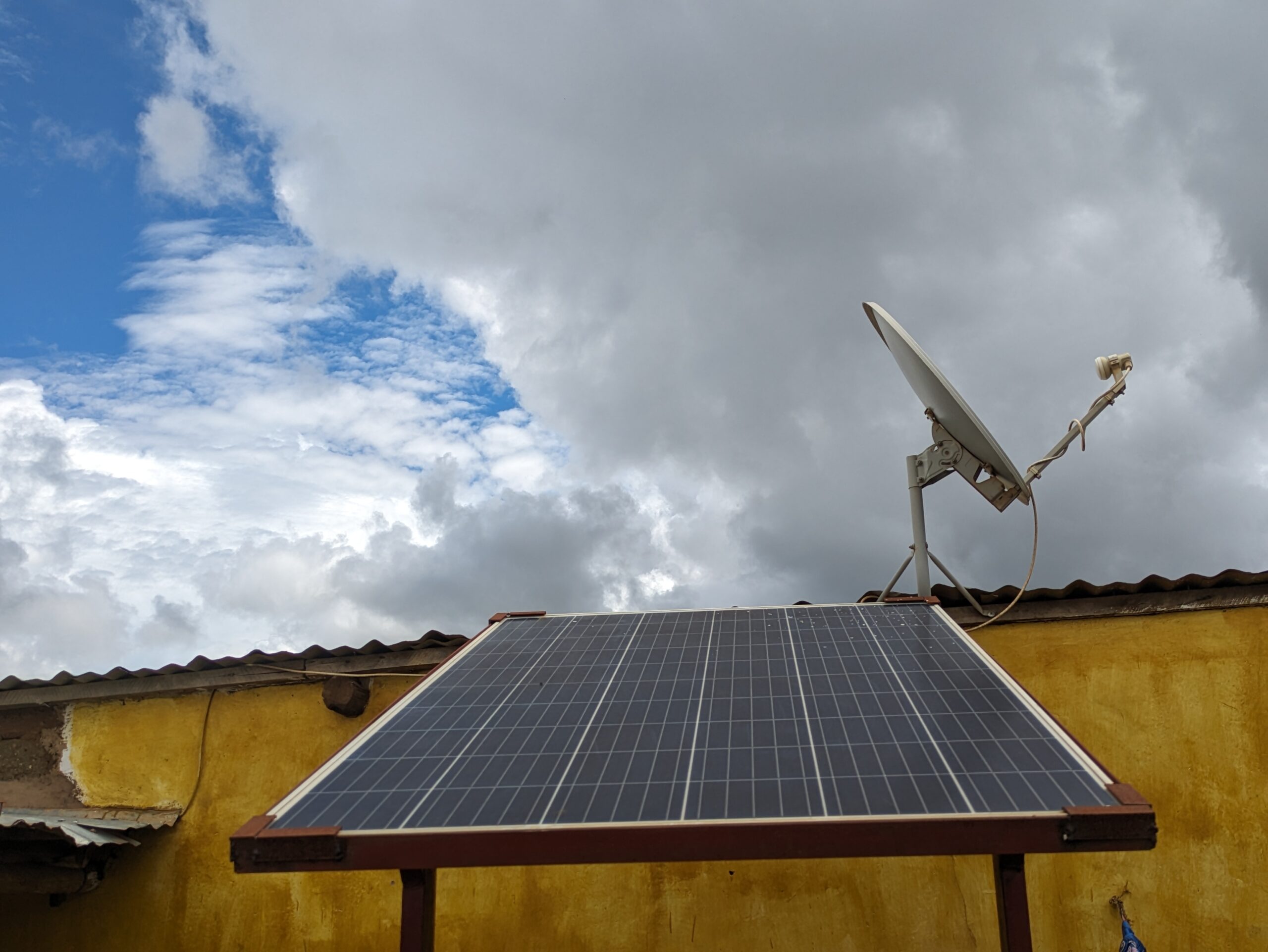
Featured image: A solar panel installed in a beneficiary compound, Dzaleka Refugee Camp, Malawi (photo credit: Jacob Fodio Todd, MECS).