- Date
- 13th May 2025
- Categories
- Clean Energy
By Dr Yesmeen Khalifa & Jose Luis Ortega Moreno
From the 24th to 28th of February 2025, the Government of Botswana’s Ministry of Minerals and Energy (MME) and the SADC Centre for Renewable Energy and Energy Efficiency (SACREEE) jointly hosted the inaugural SADC Sustainable Energy Week event in Gaborone, Botswana. This regional event, themed ‘Accelerating Sustainable Energy Solutions for an Energy Secure SADC Region’, aimed to drive the adoption of sustainable energy practices across the Southern African Development Community (SADC) and promote opportunities in the renewable energy and energy efficiency sectors. The event brought together experts, practitioners and representatives from both the public and private sectors to discuss key issues, including policy and enabling environment, financing, grid integration, energy efficiency, renewable energy technologies and clean cooking and energy storage.
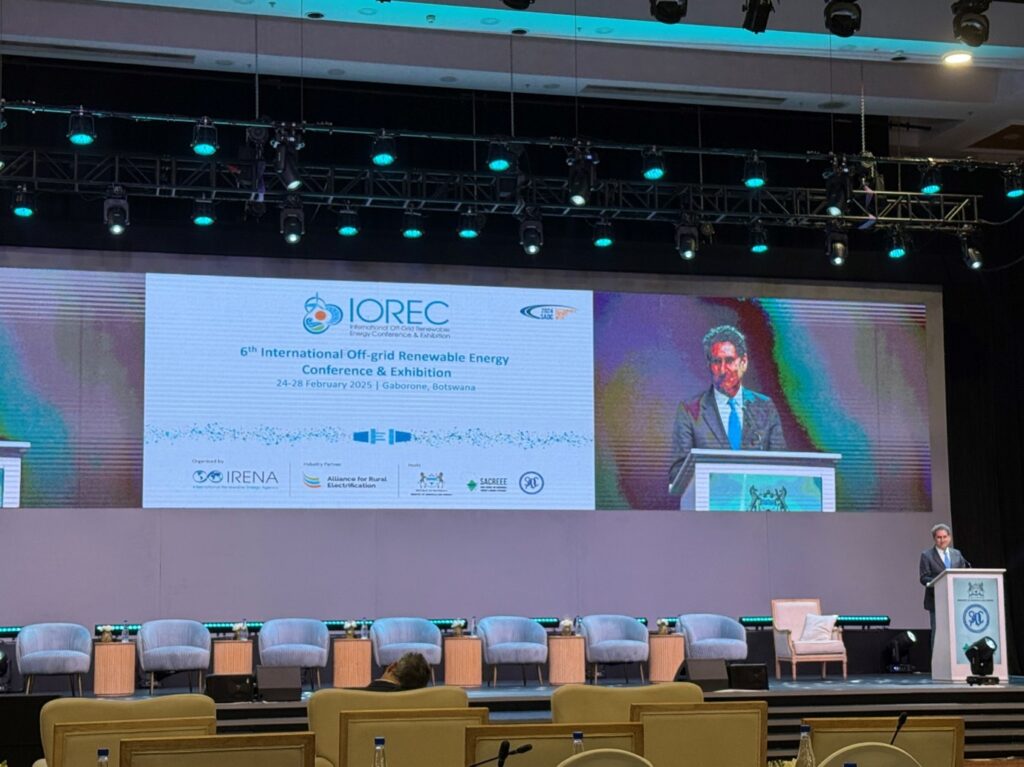
In conjunction with the SADC Sustainable Energy Week, the Government of Botswana hosted the 6th International Off-grid Renewable Energy Conference and Exhibition (IOREC 2024), organised by IRENA. IOREC is a key event of the International Renewable Energy Agency (IRENA), convened every two years, providing a global platform for exchanging knowledge and sharing experiences and best practices on various technology, policy, regulatory and finance aspects of off-grid renewable energy solutions, emphasizing its vital role in advancing climate and sustainable development objectives. This year the conference was themed: ‘Translating Commitments to Actions: Off-Grid Renewables for Socioeconomic Development and Climate Action’. Experts and practitioners in the off-grid renewable energy community discussed how an action-oriented approach with access to affordable finance can accelerate progress towards achieving SDG7, while supporting other sustainable development and climate goals.
The Government of Botswana hosted both events which were co-organised by SACREEE in partnership with IRENA, the United Nations Industrial Development Organisation (UNIDO), the European Union, SOLTRAIN, and others. The Five-day conference included a diverse range of activities: high-level plenary sessions, detailed presentations, break-out sessions, exhibitions and technical site visits. Over 500 delegates attended the event, with 50 local speakers and 170 international speakers joining from 150 countries across the world.
SADC Sustainable Energy Week
In the official opening remarks, the President of Botswana Advocate Duma Gideon Boko emphasised that the implementation of energy supply strategies requires collective efforts, deep cooperation, developing regional energy projects, harmonising policies and regulations, and sharing best practice to ensure sustainable and secure energy future.

The SADC region continues to face several challenges in the energy sector. Approximately 50% of the region’s population have access to electricity, with only 32% of rural residents benefitting from this access. Whilst possessing a great potential for renewable energy development, the SADC region continues to rely heavily on coal for its energy needs, supplying 62% of power generation in the region.
One of the most reiterated words during the conference was ‘bankability’. Electricity utilities often operate at a loss, limiting their ability to extend operations and improve the quality of energy delivered. Electricity tariffs do not tend to be cost-reflective, impacting the profitability of operators and hindering their ability to upgrade inadequate electricity infrastructure, including aging grid systems and substandard transmission interconnectors. These issues also affect smaller scale electricity access projects, such as those led by mini-grid operators, who struggle to attract funding with low profit expectations. Enhancing profitability requires the implementation of cost-reflective tariffs, the development of innovative finance mechanisms, and the application of effective risk mitigation strategies.
At the conference, the diversification of energy sources was highlighted to safeguard sustainable access to electricity in the face of rising challenges such as climate change. For example, in Zambia, where most of the electricity generation is generated from hydropower, severe droughts have had significant impact on energy supply – resulting in blackouts. Therefore, countries must invest in diverse sustainable sources of energy to increase the resilience of their national electricity systems.
The lack of harmonised energy policies, regulatory frameworks and standardisation across the SADC region was argued to hinder the participation of the private sector in accelerating progress towards energy access. Repeatedly throughout the event, there were calls for further regional cooperation to ensure an effective strategy to achieve widespread and reliable electricity access. Stakeholders highlighted various strategies and solutions to address these challenges. Firstly, SADC members showed strong commitments to boosting electricity access and capacity in their countries. For example, Botswana presented a plan to develop 1.5GW of solar power by 2030 and Zambia showcased its goal to construct over 1000 solar-powered mini-grids to provide access to renewable energy in remote locations. Additionally, five SADC member countries (DRC, Madagascar, Malawi, Tanzania, and Zambia) have already signed onto Mission 300 and the Dar er Salaam Declaration aiming to achieve universal electricity access in Africa by 2030. Regional organizations, such as the Southern African Power Pool (SAPP), also aim to continue developing energy access. SAPP is a collaborative network of national electricity companies, operated under SADC, which advances energy interconnectivity through regional trading, allowing countries to share excess capacity whilst promoting a more competitive electricity market.
There is growing interest across the region in increasing the generation of renewable energy not only to improve electricity access but also to enable regional energy trading, supporting other countries in the region and addressing the high costs of energy storage (essential within the context of the expansion of renewables). However, improvements to grid infrastructure are necessary to facilitate energy trading.
International organisations also presented examples of how energy access can be accelerated in the SADC region through political and financial harmonisation. The United Nations Industrial Development Organisation (UNIDO) led a dialogue on the Global Network of Regional Sustainable Energy Centres (GN-SEC), an initiative promoting regional cooperation in sustainable energy development. The GN-SEC supports regional energy centres in Africa, the Caribbean, the Pacific, Asia, and the Middle East to accelerate energy transitions and promote regional partnerships. Moreover, stakeholders in the financial sector expressed their commitment to providing innovative solutions for sustainable energy projects and signalled their interest for further collaboration with SADC governments.
The 6th International Off-grid Renewable Energy Conference and Exhibition (IOREC)
In his opening remarks for the IOREC, the Director-General of IRENA Francesco La Camera noted that over one billion people continue to lack a reliable connection to electricity. To combat this, he stressed the need to strengthen the cooperation between SADC countries on renewable energy development and the need to align national policies with international commitments. At COP28 IRENA established the Utilities for Net Zero Alliance (UNEZA), uniting the world’s leading power utilities to accelerate electrification efforts and strengthen grid capacity.
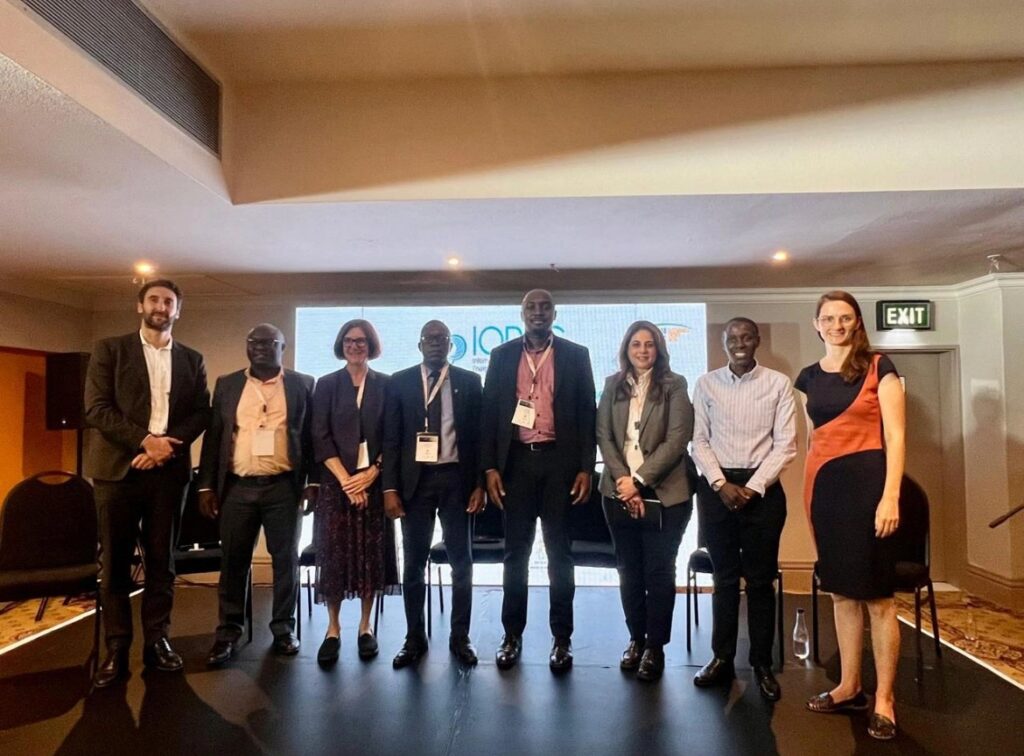
During the IOREC, Dr Yesmeen Khalifa of MECS spoke at a panel discussion on ‘Achieving the Clean Cooking Transition through Renewables: Opportunities and Best Practices for Bioenergy’. The session was hosted by IRENA, SNV, and CIFOR-ICRAF, with panellists being representatives for the Zambia Ministry of Energy, the Botswana Ministry of Minerals and Energy, UNIDO, and OPEC. The discussion was focused on how bioenergy (such as biogas, bioethanol and bioLPG) is currently positioned within the modern energy cooking narratives and which bioenergy solutions are supporting the transition to clean cooking. The panelists highlighted the key challenges for accelerating access to clean cooking through bioenergy, including the lack of policies and regulations in many countries, financing and affordability issues, the lack of awareness on clean cooking solutions, the lack of after sale services and maintenance, the inconsistency of feedstock, the lack of supporting infrastructure and value chain, cultural and behaviour barriers as well as fuel stacking which remains a barrier for accelerating access to clean cooking. The panelists emphasised that there is no one-size-fits-all solution and recommended adopting a multi-fuel strategy to avoid the risk of relying on a single cooking fuel. This aligns with the AFREC report, which highlights the significant differences among African countries and the need for evidence-based approaches to explore how resources should be effectively targeted to address the clean cooking challenge. The panelists also highlighted the importance of developing targeted policies and establishing frameworks to support local feedstock production. Moreover, the discussion called for promoting partnerships, cross-sectoral collaboration and coordination with various stakeholders, introducing innovative financing mechanisms to reduce the upfront costs, designing incentives to scale-up implementation and delivery of clean cooking solutions. Finally, it is crucial to integrate gender equality and social inclusion principles throughout the development process to ensure no one is left behind as well as understanding the cooking practices and cultural aspects.
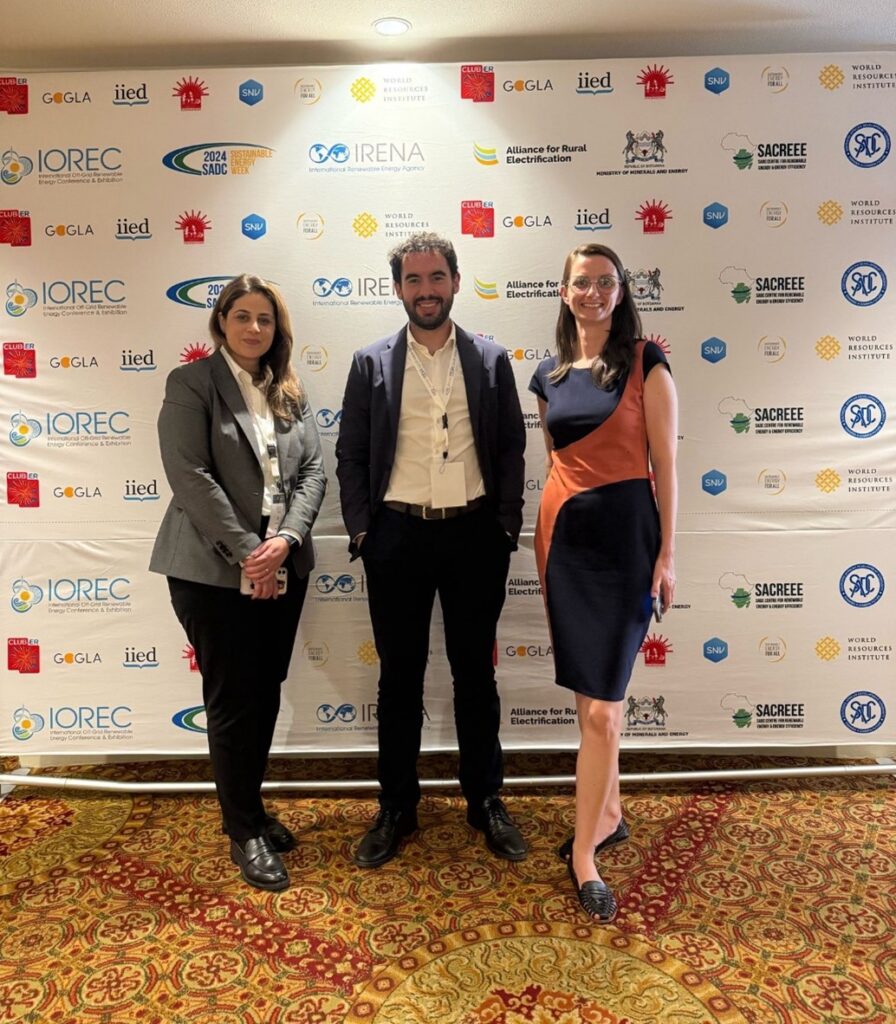
An additional session on clean cooking was held during the last day of the SADC-IOREC conference tackling the topic: ‘Accelerating universal access to clean cooking appliances through regional market development and supply chains’. The panel discussion was moderated by the Global Women’s Network for Energy Transition (GWNET), with speakers being members of GN-SEC’s regional energy centres and SAPP. Panellists highlighted that, to accelerate clean cooking transitions in their respective regions, clean cooking policies must be developed and harmonised, affordability issues must be addressed through innovative financial mechanisms, and awareness raising campaigns must be held.
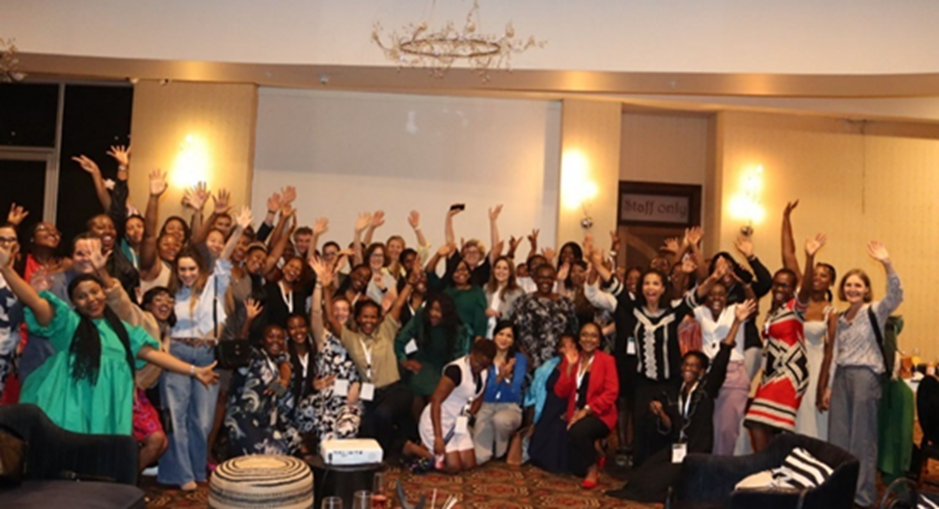
Alongside the conference, Dr Yesmeen participated in the GWNET Networking Event, celebrating SADC Women in Energy. This special event brought together women from the public and private sectors, academia and international organizations across the energy sector. The networking event provided a space for participants to connect, share their career journeys, and discuss their experiences in the energy sector. Dr Yesmeen had the opportunity to meet and connect with many inspiring women from the SADC region.
Main Takeaways
Overall, both the SADC Sustainable Energy Week and the IOREC showed that the region is strongly pushing towards achieving universal electricity access. Delegates emphasised the urgent need to harmonise strategies for sustainable energy planning, implementation and resource mobilisation. They identified that the region requires further policy coordination to effectively deliver a universal and reliable supply of electricity. This actively aligns with the agendas of the Dar er Salam Declaration on Mission 300 and the incorporation of regional SDG 7 targets into countries’ upcoming NDCs.
Delegates also addressed the demand side of electricity access, specifically linked to the financial difficulties faced by national utilities and independent energy distributors and operators. Innovative financing mechanisms were identified as a useful tool to draw in demand from customers with low purchasing power, whilst promoting the expansion of electricity access into unserved areas.
Nevertheless, we found that electric cooking was overlooked as a powerful means to drive up demand and help utilities become more profitable. Combined with innovative finance, such as carbon credit programmes, eCooking can become more accessible and affordable for low-income customers, advancing electricity access in the region and ensuring the financial sustainability of energy providers. Whilst still relying on fossil fuels for electricity generation, the SADC region has much potential for renewable energy to become a larger source of the region’s energy production.
At the conference, MECS also highlighted the importance of multi-fuel strategies for clean cooking transitions. Electricity and modern biofuels, for example, can ensure that clean cooking targets different population sectors so that no one is left behind, whilst promoting sustainable practices which can have positive impacts on the environment, health, and socioeconomic factors.
The SADC region shows promise and is highly committed to achieving universal electricity access in the region. Before the second SADC Sustainable Energy Week, planned to be held in Zimbabwe in 2026, it is crucial that governments and key stakeholders ensure that eCooking is integrated into the regions’ sustainable energy plans. eCooking should be considered not only as a clean cooking solution but also as a key component for driving electricity demand and enhancing the profitability of their national utilities and the private sector.
……………………………………
Featured image, top: The GWNET Networking Event, celebrating SADC Women in Energy. Photo taken by SACREEE.