- Date
- 20th February 2026
- Categories
- Clean Cooking, Clean Energy, eCooking
By Jose Luis Ortega Moreno and Prof. Ed Brown (Loughborough University).
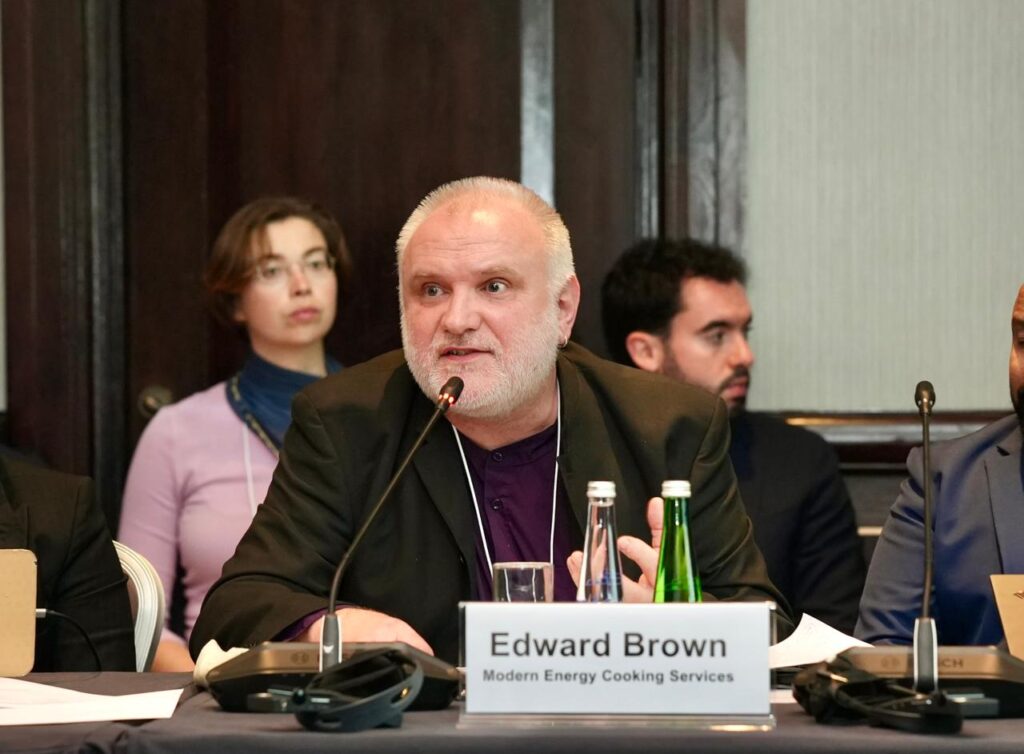
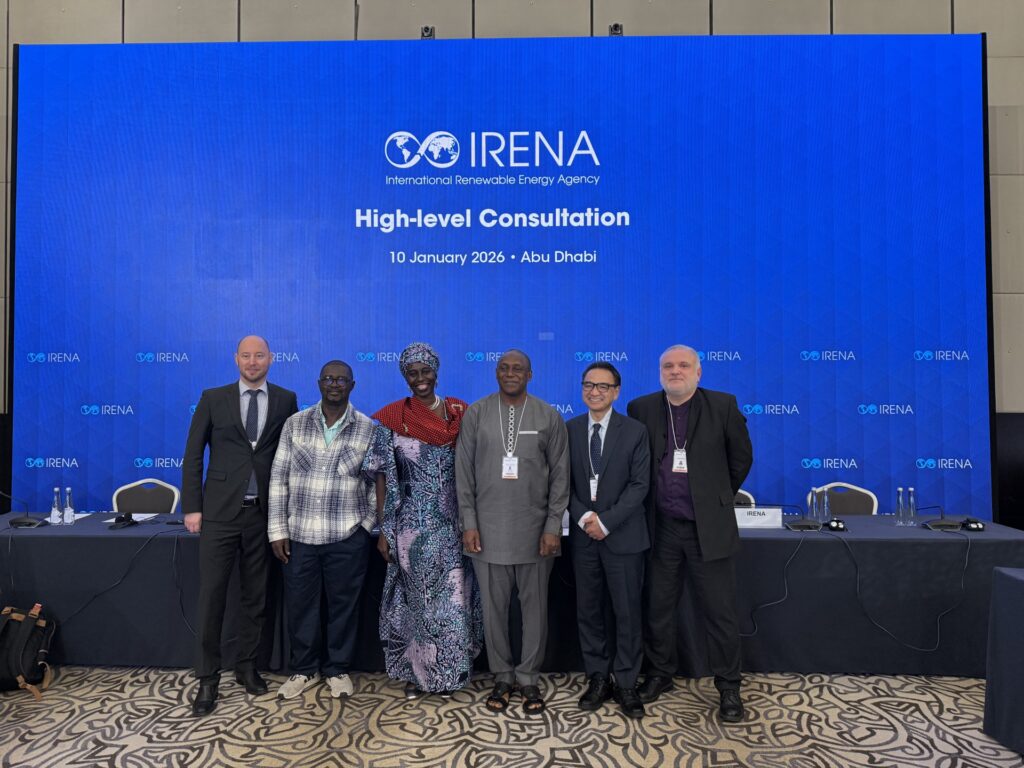
In January 2026, MECS participated in the Sixteenth Session of the International Renewable Energy Agency (IRENA) Assembly in Abu Dhabi, as well as meetings of the Sustainable Development Goal (SDG) 7 Technical Advisory Group (TAG). MECS ensured that sustainable access to modern energy cooking was a key component of the ongoing discussions throughout the events. The main sessions in which Prof. Ed Brown, MECS Director, spoke at were the High-level Consultation for the SDG7 TAG and a side-session on ‘Mobilising Finance for Clean Cooking’, both taking place on 10 January. MECS also participated in an additional SDG7 TAG meeting on 13 January. Below we highlight some of the key takeaways from our engagements in Abu Dhabi:
At a Time of Geopolitical Uncertainty, Regional Cooperation is More Needed than Ever
As we were making our way to Abu Dhabi, we heard the news that the United States had withdrawn itself from IRENA. We imagined this would provide a stark backdrop to the event. In 2024, the United States was the third-largest market for renewable energy investment and accounted for close to 13% of global energy-related CO2 emissions (IEA, 2024). Instead of letting this turn of events dominate discussions at the Assembly, however, national delegations emphasised the need for stronger regional cooperation to mitigate the risks that global geopolitical uncertainties pose to the renewable energy transition.
On 10 January, for example, one of the opening sessions, focused on ‘Roadmaps for a Renewable Future Across Latin America and Caribbean Subregions’, underscored that deeper regional integration is crucial to both safeguard and to accelerate the energy transition. Coordinated regional strategies, including integrated power markets, cross-border grid interconnections, and shared regional standards and regulations, were highlighted as pathways to reduced costs, increased investments, and improved energy security.
In relation to Latin America’s transition to clean and modern energy cooking, Central America remains the subregion with the largest clean cooking access gap. In 2018, 18 million people or 37% of all households, lacked access to clean cooking in Central America (IRENA, 2026). However, IRENA projects a positive trajectory for the region to 2050, with electric cooking accounting for up to 57% of clean cooking access under certain models. Such approaches imply an annual addition of 230,000 electric cookstoves across the region until 2030, increasing to 330,000 per year between 2030 and 2050 (IRENA, 2026). IRENA highlights that to achieve this ambitious targets, regional planning and cooperation is vital. Latin America is not a region that has featured strongly in MECS’ work to date but with recent engagements on the issue with the World Bank’s Latin American division, there is an emerging buzz around eCooking possibilities across the region.
Calls for regional cooperation, but also tellingly regional leadership, were echoed across many of our conversations with attendees. In the context of Africa, regional cooperation is vital to address the major challenges facing the continent: the millions remaining without electricity access, the rapidly changing geopolitical contexts governing regional energy security and, of course, the need to rapidly scale-up clean cooking solutions. Diverse African representatives we encountered recognised those challenges but also argued that regional organisations must play a bigger role in designing energy and clean cooking solutions, “so that countries do not have to act alone”. At MECS we understand that regionally led approaches are crucial to achieving universal access to clean cooking, as targeted by SDG7. For example, in 2024 we published the ‘Sustainable Scaling: Meeting the Clean Cooking Challenge’ report alongside the African Energy Commission (AFREC) and the World Bank’s Energy Sector Management Assistance Program (ESMAP). The report disseminates information on the status of clean cooking across Africa to promote a holistic and regional drive to universal clean cooking access, utilising the breadth of African energy endowments and pursuing effective multi-fuel strategies based on effective understandings of questions of affordability and medium and long-term sustainability. Within this context, the Global Electric Cooking Coalition (GeCCo) serves as an effective working group of international partners, including country governments, providing a platform to unify work, avoid duplication, and to drive the scale-up of solutions.

Finance is crucial, especially if we want to improve data collection and development indicators
‘Without energy there is no development’. This was Demetrios Papathanasiou’s, Global Director for the World Bank’s Energy and Extractives Global Department, bold statement during the SDG7 TAG meeting on 13 January. An addition to that statement, however, could be that without finance, there is no energy, and therefore no development. In the pursuit of universal clean cooking access, finance and affordability remain among the most significant hurdles, particularly in poor and remote settings. International investment is also regionally skewed. Africa accounts for around 20% of the world’s population and, according to the IEA, 600 million Africans still lack access to electricity while one billion lack access to clean cooking. Yet Africa attracts less than 3% of total global energy spending (IEA, 2024).
During the Pre-Assembly Day on 10 January, IRENA presented its latest report tracking clean cooking investments in countries with the largest access deficit. IRENA found that the estimated investment in 2022-2024 across the top 100 clean cooking access-deficit countries ranged from USD 0.4 billion to USD 2.8 billion, with most investments directed towards LPG. Nevertheless, data on financial commitments to energy access and clean cooking remain fragmented and lack common definitions; this is also frequently accompanied with a tendency to under report the financing of broader gas infrastructure and the opportunities to draw upon electricity infrastructure investment for electric cooking expansion. Alongside this, some countries report only grant-based finance, whilst others include loans or investments. These data challenges extend beyond finance, affecting energy access indicators and SDG7 more generally.
Indeed, during the IRENA Assembly and the SDG7 TAG meetings, poor quality data was positioned as a central impediment to achieving energy access targets. Data is crucial for tracking progress and understanding the nature of transitions, developing evidence-based policies and strategies, and attracting foreign investment. Nevertheless, as pointed out by several partners at the Assembly, data collection and publication are highly resource-intensive and are often led by national agencies with limited capacity and budgets. International organisations, donor governments, and international investors must recognise that governments require additional resources to expand their data-collection efforts and enhance opportunities for more effective, data-driven energy delivery strategies. This connects to one of the other key debates that figured prominently across discussions during and around the assembly – the role of Artificial Intelligence (AI) within the trajectory of energy futures. We don’t have space to consider all of the opportunities and potential dangers of the role of AI within the sector but the interested reader should explore the work around the governance of AI within the sector being led by our friends at Climate Compatible Growth (CCG).
More effective use of data can improve the affordability of clean and modern energy cooking solutions. Transitions to modern energy cooking can significantly reduce CO2 emissions, with effective use of precise stove utilization data enabling developers to target higher carbon prices that can then be utilised to subsidise solutions, expand reach, and ensure appliance use. Most recently, UpEnergy announced its Building Pathways to Electric Cooking (BPTEC) project in Ghana, which aims to distribute over 240,000 electric pressure cookers and induction stoves to middle- and low-income households by 2027. The World Bank has provided UpEnergy with a USD 200 million outcome bond, while carbon revenue will allow appliances to be subsidised by more than 50%. Of course, as recent events have shown us, over-reliance on carbon revenue can be dangerous, as Matt Leach argues on our recent blog, however, the market is moving in the right direction. From the blog: “Taken together, the Berkeley findings, ICVCM approval and high project ratings point in the same direction: the key question is no longer whether clean cooking credits can be credible, but whether they are measured or merely assumed. This is not a marginal improvement – it is a structural shift in how clean cooking emissions reductions are quantified.”
Alongside this, transitions to modern energy cooking can have significant gender, environment, health, and wider socio-economic co-benefits, and capturing data on these outcomes can increase the value of carbon credits and unlock new investment opportunities. At MECS, we have explored these co-benefits through resources such as the MECS Gender Framework or our research on black carbon. These discussions underline that energy access and clean cooking have an impact across the development spectrum.
SDG7 and clean and modern energy cooking must not be siloed. We cannot miss the opportunity to promote a multi-fuel approach at the next Clean Cooking Summit.
It is perhaps by now a truism to state that SDG 7 is instrumental in achieving other SDGs due to the intersectional nature of energy access. Nonetheless, it has frequently been the case that energy access and clean cooking policies, at both national and international levels, have not been designed with this principle in mind. Given this, discussions during the SDG 7 TAG stressed the importance of inter-ministerial dialogues and collaboration to ensure that energy policies are directed at enabling broader development targets to be met – keeping people, as consumers, producers and nurturers at the centre of development practices, with energy sector targets and strategies prioritising their needs. Large-scale energy access initiatives, such as Mission 300, should ensure that energy infrastructure plans are not siloed from investments in other development areas if SDG targets are to be met by 2030 (raising, for example, some serious questions about the levels of energy access being provided across current initiatives).
Turning more specifically to assessments of the global efforts to meet the clean cooking access targets set out in the SDG Agenda 2030, it is clear that progress must accelerate, as the scale of the access gap remains substantial. This requires countries to reflect on their national energy plans and identify opportunities to significantly strengthen clean cooking solutions. Mission 300 provides a useful example of how the existing investment pipeline can be leveraged to support this, with new electricity connections providing opportunities to introduce electric cooking solutions, thereby advancing two objectives simultaneously. Crucially, countries must lead decisions on which energy and clean cooking strategies are most appropriate for their own contexts. A multi-fuel and multi-technology approach is key to developing effective, reliable, and secure energy access strategies that respond to diverse needs within and across countries.
An important opportunity to reinforce the value of multi-fuel and multi-technology approaches will be the forthcoming Clean Cooking Summit, set to happen in Nairobi, Kenya later this year. In fact, as we write the final draft of this blog, we are ‘en route’ to Paris to participate in a technical workshop organised by the IEA to discuss the design of that summit. Our hope is that the event will be organised around the principles of technology-neutral and country-led approaches to clean cooking, providing a platform to share lessons learned and recommendations from past experiences and implementation programmes (we will shortly be sharing a major new study produced collaboratively with the IEA and CCA which explores those experiences within the specific context of affordability support mechanisms). By bringing together countries from different regions and contexts, the Summit could offer a pioneering example of international dialogue on clean and modern energy cooking. For instance, regions such as Latin America could share experiences in clean cooking policy and strategy development with Sub-Saharan Africa, and vice versa. Lessons on fuel subsidisation, carbon markets, supply chain development, and diverse cooking fuel and technology programmes can inform governments and help them to design more effective clean cooking campaigns. We are looking forward to helping design an inclusive and effective Clean Cooking Summit that will function as a global platform channelling knowledge, political commitment and resources towards the design and implementation of sustainable, country-owned, multi-fuel and multi-sectoral clean cooking strategies.
Overall, the IRENA Assembly and the SDG7 TAG meetings underscored that meeting the rapidly approaching 2030 SDG7 deadline will require accelerated and scaled-up efforts on energy and clean cooking access. SEforAll (2025) reports that 73% of African countries saw an increase in the population without access to clean cooking between 2010 and 2023. This is alarming, if the objective is to reach universal access by 2030. The challenge is even greater for modern energy cooking, with around 4 billion people still lacking access (ESMAP, 2020). In this context, key takeaways from the IRENA Assembly and the SDG7 TAG must be translated into action: promoting regional cooperation to address geopolitical uncertainties, increasing financial flows into clean and modern cooking solutions, strengthening data collection, and ensuring a holistic understanding of energy access and clean cooking at the highest policy levels.
References.
ESMAP, 2020. Multi-Tier Framework for Cooking: A Comprehensive Assessment Method to Measure Access to Modern Energy Cooking Services. Accessed 29 January 2026. https://www.worldbank.org/en/topic/energy/brief/fact-sheet-multi-tier-framework-for-cooking
IEA, 2024a. ‘United States, Energy Mix’. Accessed 29 January 2026. https://www.iea.org/countries/united-states/energy-mix
IEA, 2023. ‘United States, Overview’. Accessed 29 January 2026. https://www.iea.org/countries/united-states
IEA, 2024b. Clean Energy Investment for Development in Africa: Status and Opportunities. Accessed 29 January 2026. https://www.iea.org/reports/clean-energy-investment-for-development-in-africa
IRENA, 2022. Hoja de ruta de energías renovables para Centroamérica: hacia una transición energética regional, Agencia Internacional de Energías Renovables, Abu Dabi.
SEforAll, 2025. Tracking SDG7: The Energy Progress Report 2025. Accessed 29 January 2026. https://www.seforall.org/system/files/2025-12/SEforALL%20SDG7_TRACKING_2025-data_analysis.pdf
………………………………
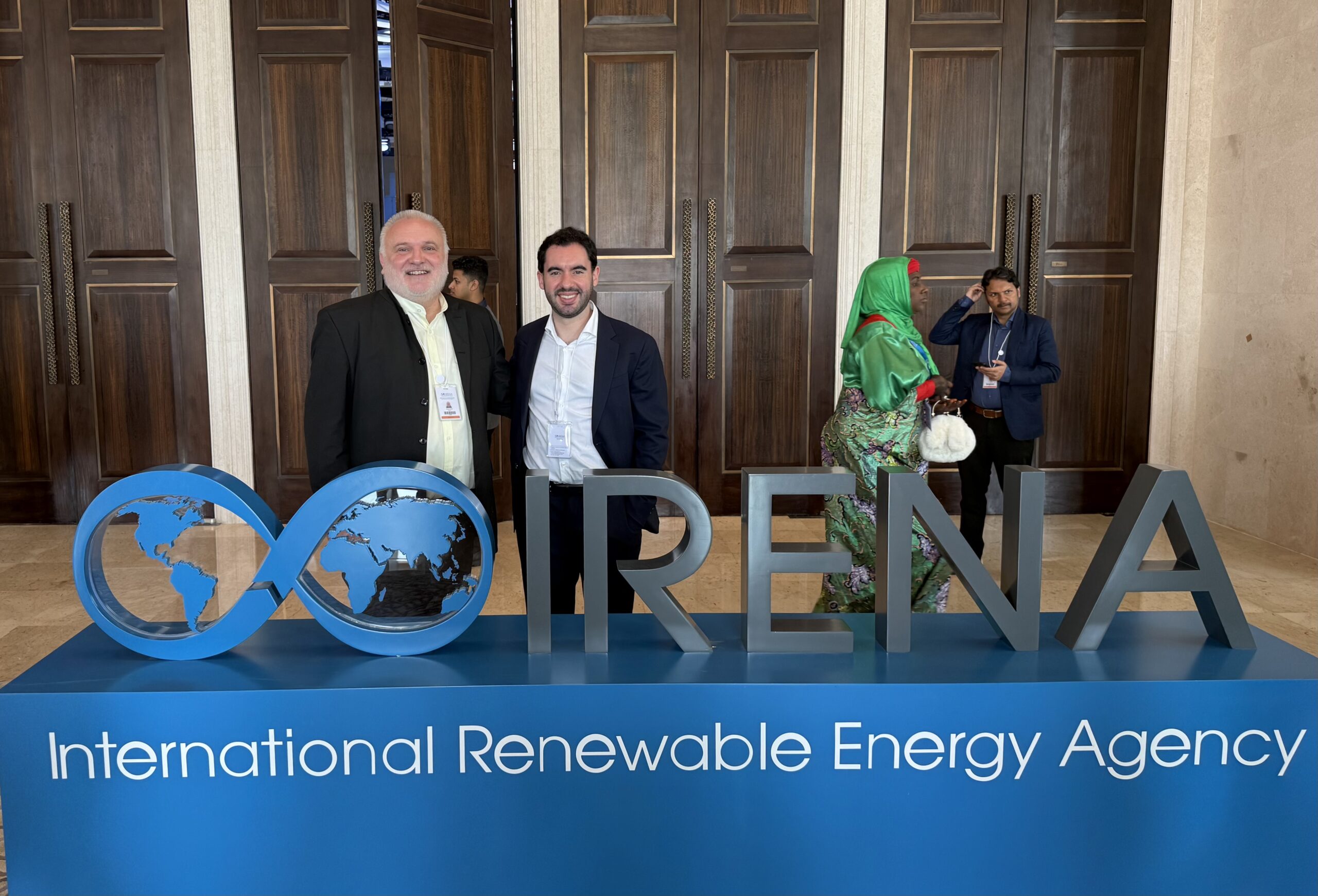
Featured image, Photo 1. Prof. Ed Brown and Jose Luis Ortega Moreno (MECS) at the 16th Session of the International Renewable Energy Agency (IRENA) Assembly in Abu Dhabi. (Photo credit: Jose Luis Ortega Moreno).