- Date
- 28th May 2026
- Categories
- Commercial Cooking, Electric Cooking
By Dr Steyn Hoogakker and Cedric Dzelu
Ga kenkey, also known as kuomi – meaning ‘bite and swallow’ – is much more than a meal in Accra. It is a cultural staple, a source of comfort, and a daily food for many urban residents. Made from fermented maize dough, wrapped in maize husks, and boiled or steamed, kenkey is usually eaten with red or black pepper sauce and fried fish. It is generally affordable, filling, and deeply embedded in the food culture of Accra (Amankwaa et al., 2024).
Kenkey production is also an important livelihood. Across Accra, many small commercial producers – and especially women – rely on kenkey to supplement household income and support urban food security. Yet while clean cooking research and interventions have often focused on households, commercial cooks have received far less attention. This matters because producing food for sale is not the same as cooking at home. It involves larger quantities, longer cooking times, tighter profit margins, and different risks.
This Working Paper therefore asks a simple but important question: could modern energy cooking services (MECS) play a role in producing Ga kenkey?
The study builds on earlier small-scale experiments using electric pressure cookers for kenkey production (Sarpong et al., 2023; Hoogakker and Mensah, forthcoming). It also responds to calls for more food-specific approaches to energy transitions, especially for small commercial food enterprises whose needs are often overlooked (Hoogakker, 2026; Ossei-Bremang et al., 2023). If successful, such transitions could help reduce exposure to smoke, lower local and ambient air pollution, and reduce pressure on firewood supply chains and deforestation (Amoah et al., 2015).
The research focused on three aims:
- To understand the current landscape of kenkey production and cooks’ experiences with conventional cooking.
- To identify the barriers that kenkey enterprises face when considering a shift from firewood to cleaner cooking technologies.
- To compare eCooking and conventional cooking in terms of running cost, taste, and convenience.
Firewood is familiar but it comes with hidden costs
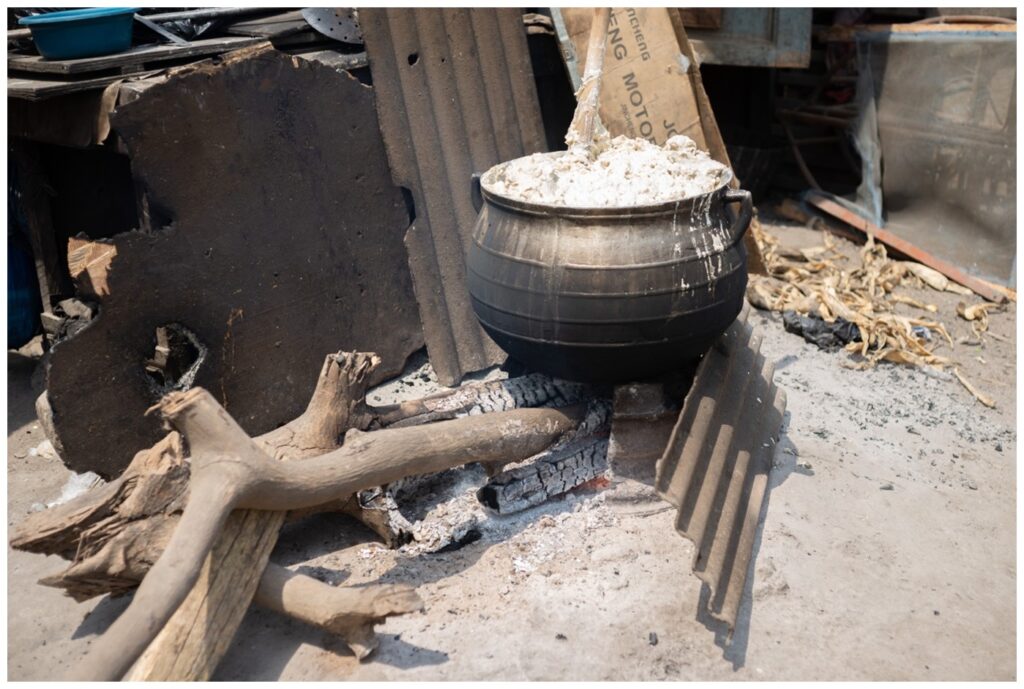
For many kenkey producers, firewood is the normal and trusted way to cook. It is widely used because it is seen as accessible, suitable for large pots, and cheaper than other fuels. But the research shows that this familiarity comes with significant challenges.
Through observations, interviews, and a small survey, cooks described a range of problems linked to firewood use. Smoke exposure was a major concern, with some cooks reporting respiratory problems and eye irritation. Maintaining the fire also requires constant attention: cooks must keep ‘balancing’ the fire, manage the heat, and stay close to high temperatures for long periods.
Firewood also creates business uncertainty. Prices fluctuate, supply can vary, and the quality of the wood is not always predictable. Moisture content, type of wood, and seasonal changes can all affect how well the fire burns. For small businesses already operating with tight margins, this makes daily planning more difficult.
Despite these challenges, many producers were cautious about switching to MECS. The most common concerns were the cost of electricity or LPG, the price of new equipment, safety, and uncertainty about whether kenkey cooked differently would still taste right. This caution is important: kenkey is not just any food. Its taste, texture, smell, and softness matter deeply to producers and customers.
Still, the study also found curiosity. Many cooks expressed interest in learning more about cleaner cooking options, especially if they could see them working in practice and receive proper training.

Cost, taste, and convenience – eCooking for Kenkey
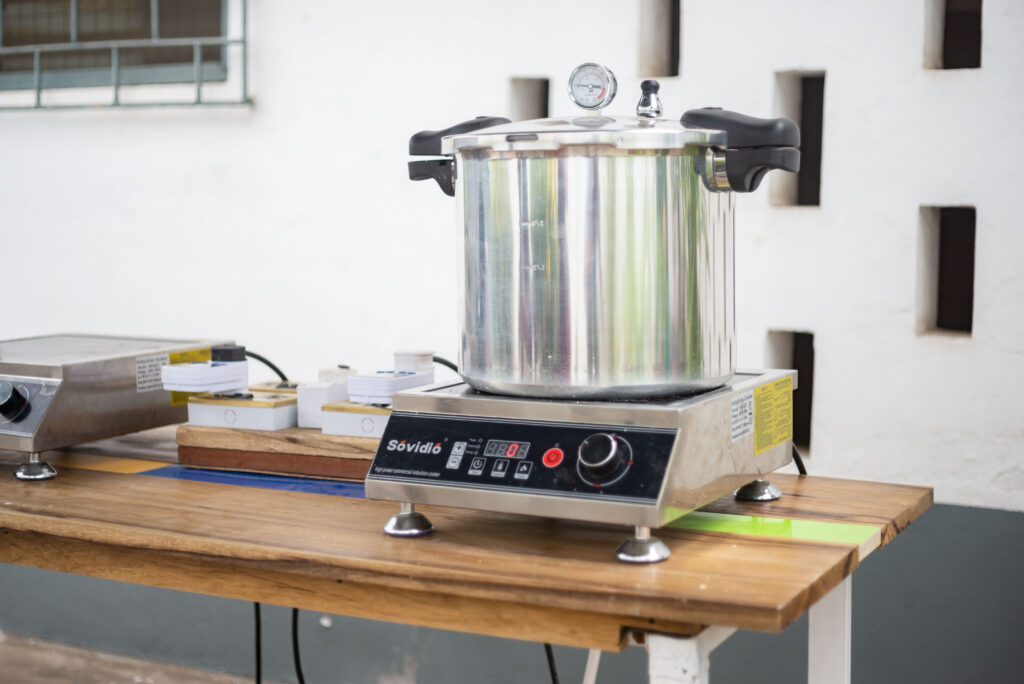
To explore this further, the research team carried out pilot eCooking experiments using a 3.5 kW induction stove and a compatible 22-litre stainless steel pressure cooker. The aim was to replicate the production scale of a smaller kenkey enterprise and compare the results with measured firewood use from five vendors in Adabraka, Accra.
Before the experiment, participating cooks estimated that using electricity to cook around 70 balls of kenkey might cost between GHC 100 and GHC 150. By comparison, they estimated that firewood for the same amount would cost about GHC 30, and charcoal about GHC 50. However, the measured results told a very different story.
The actual electricity cost for producing 70 medium-to-large balls of kenkey was GHC 13.61. This was not only far below what cooks expected, but also cheaper than the measured firewood cost of GHC 25.9 for the same quantity. On a per-ball basis, eCooking cost around GHC 0.19, compared with an actual measured firewood cost of around GHC 0.37 per ball.
In other words, in this small pilot study, eCooking was around two to three times cheaper than measured firewood use. It was also seven to eleven times cheaper than the cooks’ expectations. This finding challenges a common assumption that firewood is always the cheapest option for bulk cooking. In urban areas such as Accra, where firewood must be purchased and transported, that assumption may not always hold.
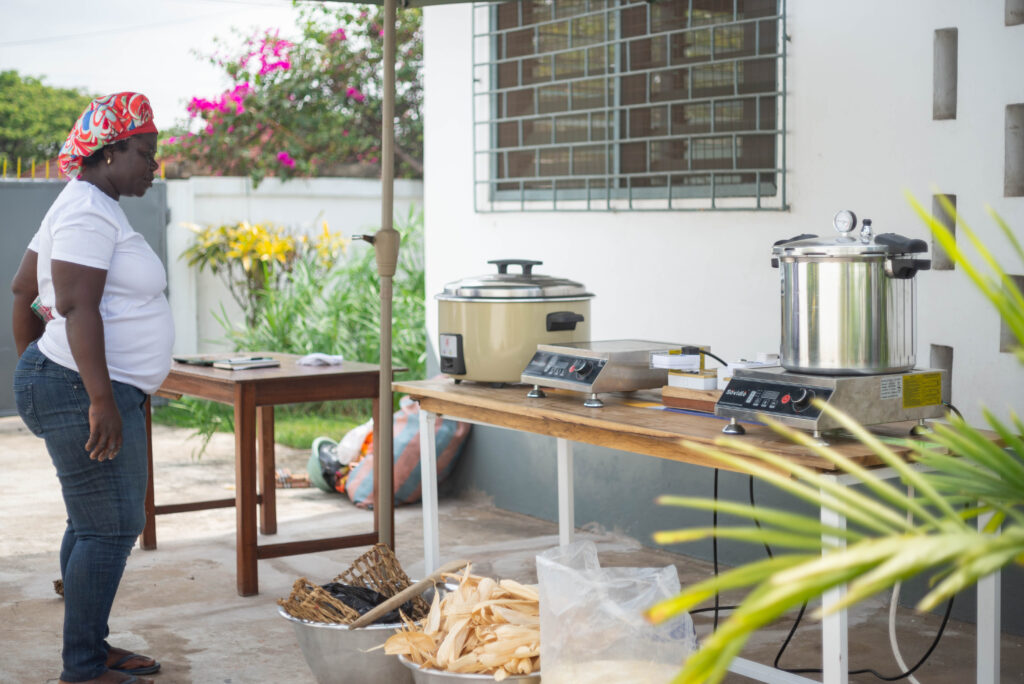
Cost is only part of the story: for kenkey producers, taste, and texture matter just as much. The experiments showed that kenkey could be successfully cooked with electricity and pressure cooking, although the best results came after adjusting cooking time, pressure, and water levels so that the balls were mostly submerged and reached the desired ‘softness’.
Once refined, the cooks praised the taste, texture, and aroma of the electric pressure-cooked kenkey. The pressure cooker also required less constant attention than firewood, potentially freeing up time for other tasks such as preparing pepper, frying fish, cleaning the production space, or organising sales.
What needs to happen next?
These findings are encouraging, but they are not the final answer. The pilot was small, and future pilots should therefore test larger appliances, different pressure levels, cooking times, and production scales in real-life settings, alongside blind taste tests with cooks, vendors, and consumers. There may also be scope for shared equipment, group purchasing, or cooperative production spaces, but any future model must be flexible and designed with producers, not simply for them.
The results strongly suggest that eCooking kenkey deserves further attention, but technology alone will not drive the (necessary) change. Producers will need hands-on demonstrations, practical training, clear information on safety and running costs, access to suitable appliances, affordable finance, and reliable electricity infrastructure.
Above all, kenkey producers themselves must remain at the centre of future pilots and policies, ensuring their knowledge, taste standards, and entrepreneurial realities guide the process. The early evidence is clear: electricity can cook kenkey at lower running cost than firewood while meeting producers’ quality expectations, meaning the future of this culturally important food should be shaped by evidence, experimentation, and the voices of those who cook it every day.
*********************************************************************************************************
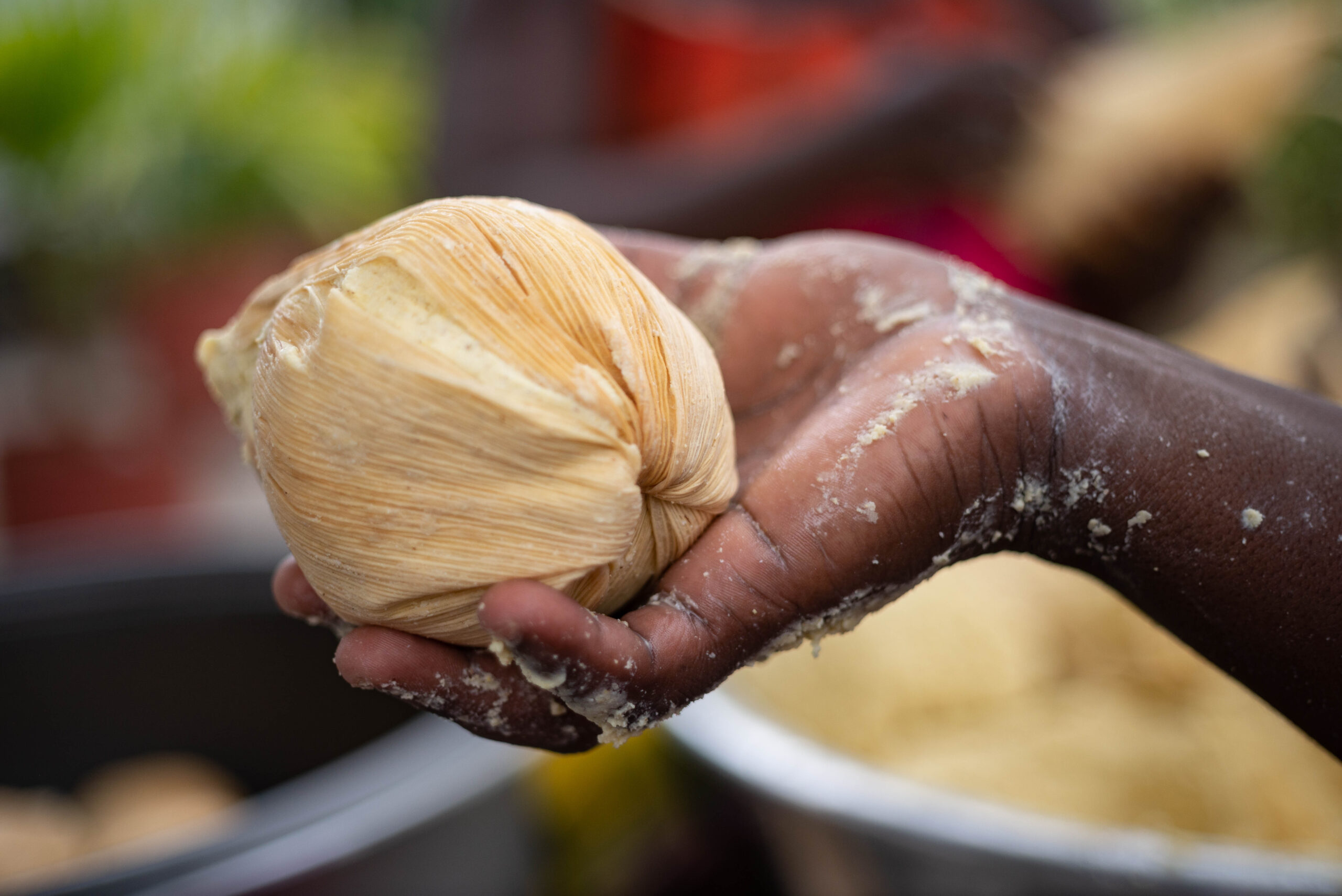
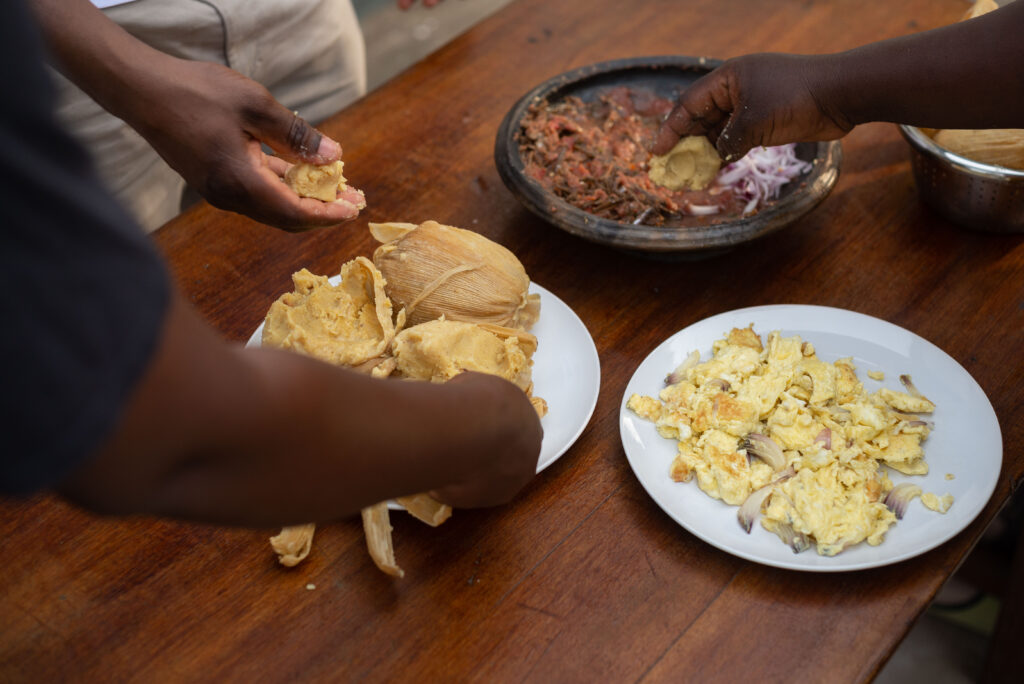
Featured Image: Ready moulded kenkey ball the size of the cook’s palm. © Steyn Hoogakker.
AI Disclaimer: No AI was used in authoring this blog.
References:
Amankwaa, E. F., Gough, K. V., & Oteng-Ababio, M. (2024). “It is for home, but we use it for work”: intra-urban comparison of infrastructure and home-based enterprises in Accra. Urban Geography. https://doi.org/10.1080/02723638.2024.2354665
Amoah, M., Marfo, O., & Ohene, M. (2015). Firewood consumption pattern, availability, and coping strategies adopted to mitigate firewood scarcity: A case of rural households in Ghana. Forests Trees and Livelihoods, 24(3), 202–218. https://doi.org/10.1080/14728028.2015.1052854
Haleegoah, J. A. S., Ruivenkamp, G., Essegbey, G., Frempong, G., & Jongerden, J. (2016). Street-Vended Local Foods Transformation: Case of Hausa Koko, Waakye and Ga Kenkey in Urban Ghana. Advances in Applied Sociology, 06(03), 90–100. https://doi.org/10.4236/aasoci.2016.63009
Hoogakker, S.S. (2026). Informing Just Energy Cooking Transitions in Urban Informal Settlements: An Assemblage Ethnography in the Community Foodscape. PhD Thesis. Loughborough University. https://doi.org/10.26174/thesis.lboro.31424819
Hoogakker, S.S., & Mensah, P. (forthcoming). Households’ eCooking Transitions in Urban Informal Settlements: A Longitudinal Case-Study in Greater Accra. MECS working paper.
Oduro-Yeboah, C., Amoa-Awua, W., Saalia, F. K., Bennett, B., Annan, T., Sakyi-Dawson, E., & Anyebuno, G. (2018). Application of a value chain approach to understanding white Kenkey production, vending and consumption practices in three districts of Ghana. African Journal of Food, Agriculture, Nutrition and Development, 18(2), 13406–13419. https://doi.org/10.18697/ajfand.82.17090
Ossei-Bremang, R. N., Akyereko Adjei, E., & Kemausuor, F. (2023). A novel framework for the simultaneous assessment and uptake of clean cooking technologies by food processing enterprises. Cleaner and Responsible Consumption, 11. https://doi.org/10.1016/j.clrc.2023.100141
Owusu-Brafi, N. (2013). Evaluation and Design of a Steam Cooking Process for Ga-kenkey Production [University of Ghana]. http://ugspace.ug.edu.gh