- Date
- 1st October 2026
- Categories
- Clean Cooking, Electric Cooking, Electrification
By Dr. Jon Leary, Gamos East Africa / Loughborough University.
On Tuesday 22nd September 2026, the IEA, Kenya and Norway convened the first ever session on clean cooking at the United Nations General Assembly (UNGA) in New York City. This session marked a turning point for the global discourse on clean cooking and electrification, with H.E. President Ruto of Kenya making the explicit connection between the two and an array of high-level representatives following suit. This blog unpacks the key statements made during this session and documents this key milestone in the story of change of global narratives within the converging clean cooking and electrification sectors.
Back in 2024, the IEA organised the first High Level Summit on Clean Cooking in Africa. Hosted in Paris, where the IEA is based, this event precipitated over $2 billion in commitments towards tackling clean cooking by the partners in attendance. In addition to financial commitments, attendees committed to meeting again in two years’ time to take stock, this time on the African continent. President Ruto had invited the global clean cooking community to Kenya this July, however the Nairobi Summit has since been postponed until early next year. In the meantime, the IEA has convened a series of interlinked sessions within key global convenings designed to keep the conversation moving, the most recent of which took place last week at UNGA on Tuesday 22nd September 2026.
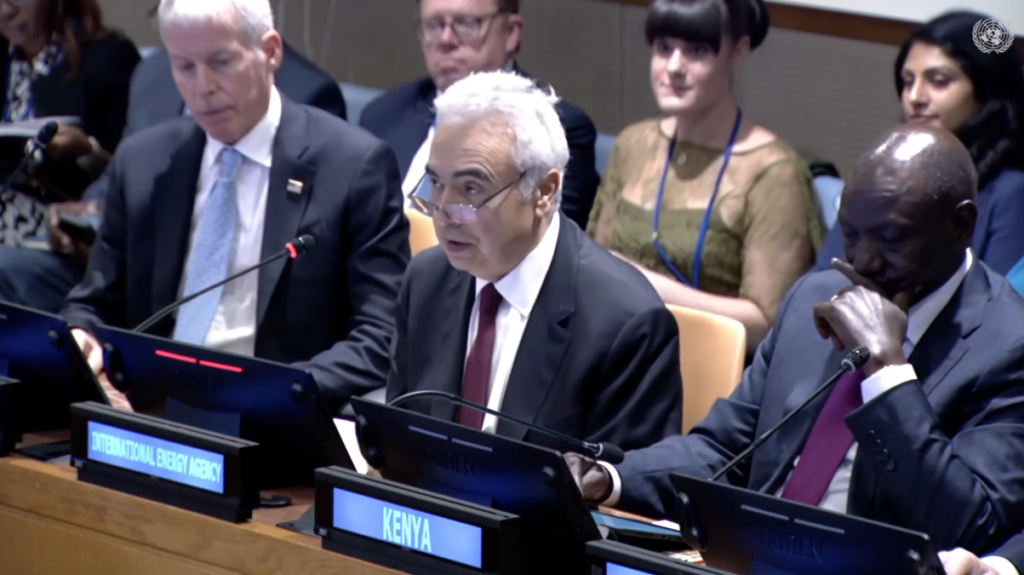
This event was important for many reasons:
- It was the first ever dedicated clean cooking event at UNGA;
- It was organised collaboratively by Kenya’s Clean Cooking Delivery and Implementation Units (CCDU and CCIU);
- It brought together the highest-level representatives from countries in both the Global South and the Global North, as well as key international organisations.
With these key ingredients, it was always going to be a special convening and the conversation that unfolded undoubtedly did justice to the magnitude of the occasion.
President Ruto‘s opening speech set the tone perfectly, directly connecting clean cooking with electricity access. Not only did he highlight eCooking as a new tool for the cooking sector, but he also explicitly unpacked the value of cooking as a tool for demand stimulation in the power sector:
“Electric cooking can turn a basic electricity connection into meaningful and productive demand. It can strengthen utility revenues, improve the economy of investment in generation and network, and ensure that electrification delivers greater value to households.”
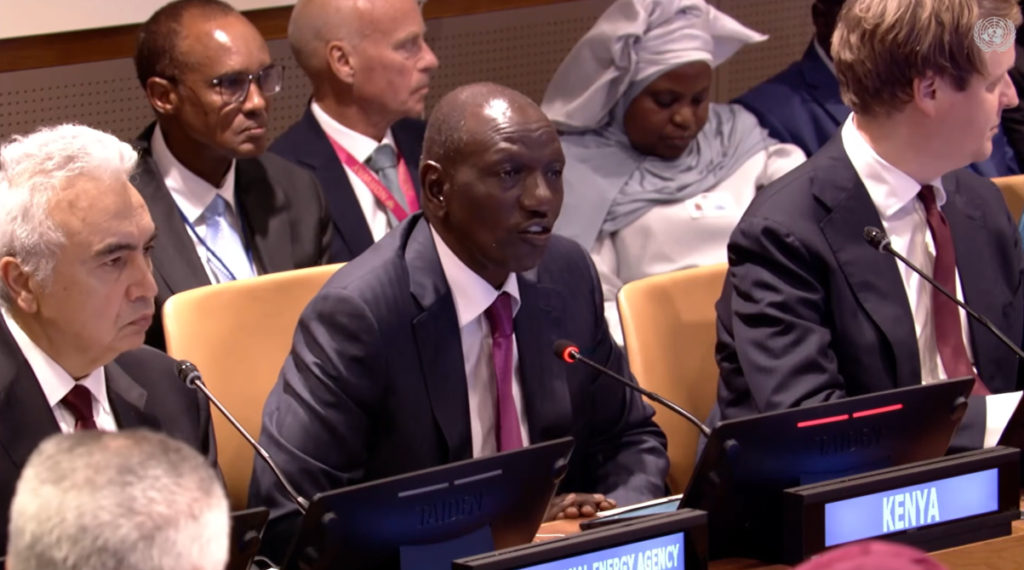
President Ruto’s messaging was reinforced by numerous other attendees throughout the session. Whilst the preceding sessions since the inaugural Summit in Paris had focused heavily on gas as the sole solution to the clean cooking challenge, it was reassuring to see that this session realigned the narrative:
- Firstly, by repositioning out the multi-fuel approach as the most viable way to address the global clean cooking challenge, given the scale of the problem and the diversity of contexts involved; and
- Secondly, by highlighting the additional value of the electric pathway as a renewable solution that leverages the global progress on electrification and enhances the financial viability of the power sector.
These two points were embedded within many of the contributions made throughout the session, with several of the key interventions highlighted below:
Ajay Banga, President of the World Bank Group framed electric cooking as part of a technology-neutral toolkit that must be adapted to local realities:
“There’s no new technology to be sought here. So whether it’s electric or LPG or biogas or ethanol or other technologies, that depends on the country’s local circumstances. We will do it country by country, but we don’t need to reinvent the wheel.”

Akim Olubade, Senior Vice President of the African Development Bank (AfDB) noted that electrification is incomplete without considering cooking loads and that embedding cooking within broader energy sector investments can harmonise the expansion of these synergistic sectors:
“At the African Development Bank, we recognize that electricity access alone will not transform lives if we continue to have households who rely on polluting and inefficient cooking solutions.”
“Tanzania is embedding it in the major electrification investment that they are doing, so it’s not an isolated initiative.”
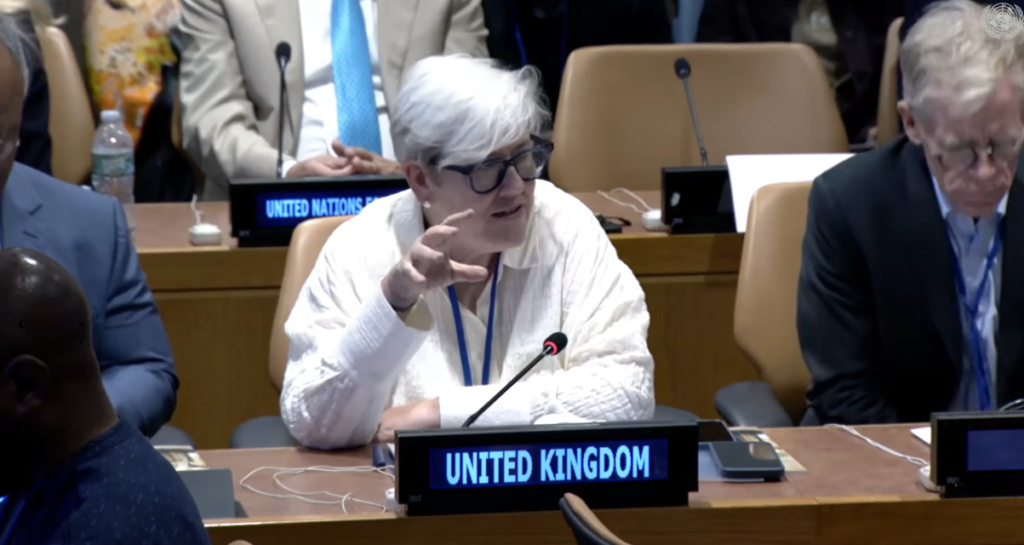
The UK’s Climate Envoy, Rachel Kyte, highlighted the work of the MECS programme in catalysing the eCooking transition and offering an alternative to the fossil fuel pathway that has dominated the narrative in the preceding sessions:
“Modern Energy Cooking Services has improved clean cooking access for about five million people. Building the evidence for electric cooking, eCooking, it has helped put in national policy and leverage a further £600 million.”
“…why should households and governments be locked into solutions that are simply going to be victims of fossil fuel price volatility? That’s where eCooking provides reliable and affordable power that is also part of energy security and part of household security.”
Representatives from France and Denmark (respectively) focused on mainstreaming clean cooking into broader energy sector investment strategies and strongly backed the electrification agenda to drive down costs:
“We are also fully supporting you in the electrification agenda. Let’s bring this topic to COP 31, because electrification of clean cooking will also bring affordability for households… in this context of very difficult energy pricing, affordability of electricity will be critical if we want to solve this problem.”
“Obviously, if you take the life cycle cost, we see eCooking as a unique solution moving forward.”
It was refreshing to see the views from the private sector were also more diverse than in the preceding sessions, with innovative companies that offer an array of scalable, multi-fuel solutions focused specifically on addressing the clean cooking challenge, such as Burn and Envirofit, given the floor. The major OMCs and their industry lobby were still there, but this time their voice was diluted and came across, as it should do, as offering one of the many solution pathways for the clean cooking sector, as opposed to the only one. The main missing voice this time around was that of the African utilities. Their role was alluded to by several of the speakers who made that explicit connection between the clean cooking and electrification sectors, but ensuring they have a seat at the table in Nairobi next January will enable them to play an active role in shaping the global discourse.
To conclude, this session gave hope that the forthcoming Clean Cooking Summit in Nairobi would present a balanced view of the clean cooking sector, opening up new opportunities across the various fuel/technology value chains and making that all important synergistic connection into the world of electrification.
Watch the entire session here.
………………………………………………..
AI disclaimer: AI was used to transcribe the dialogue during the event, to identify suitable direct quotations and to summarise the contributions made by each representative.
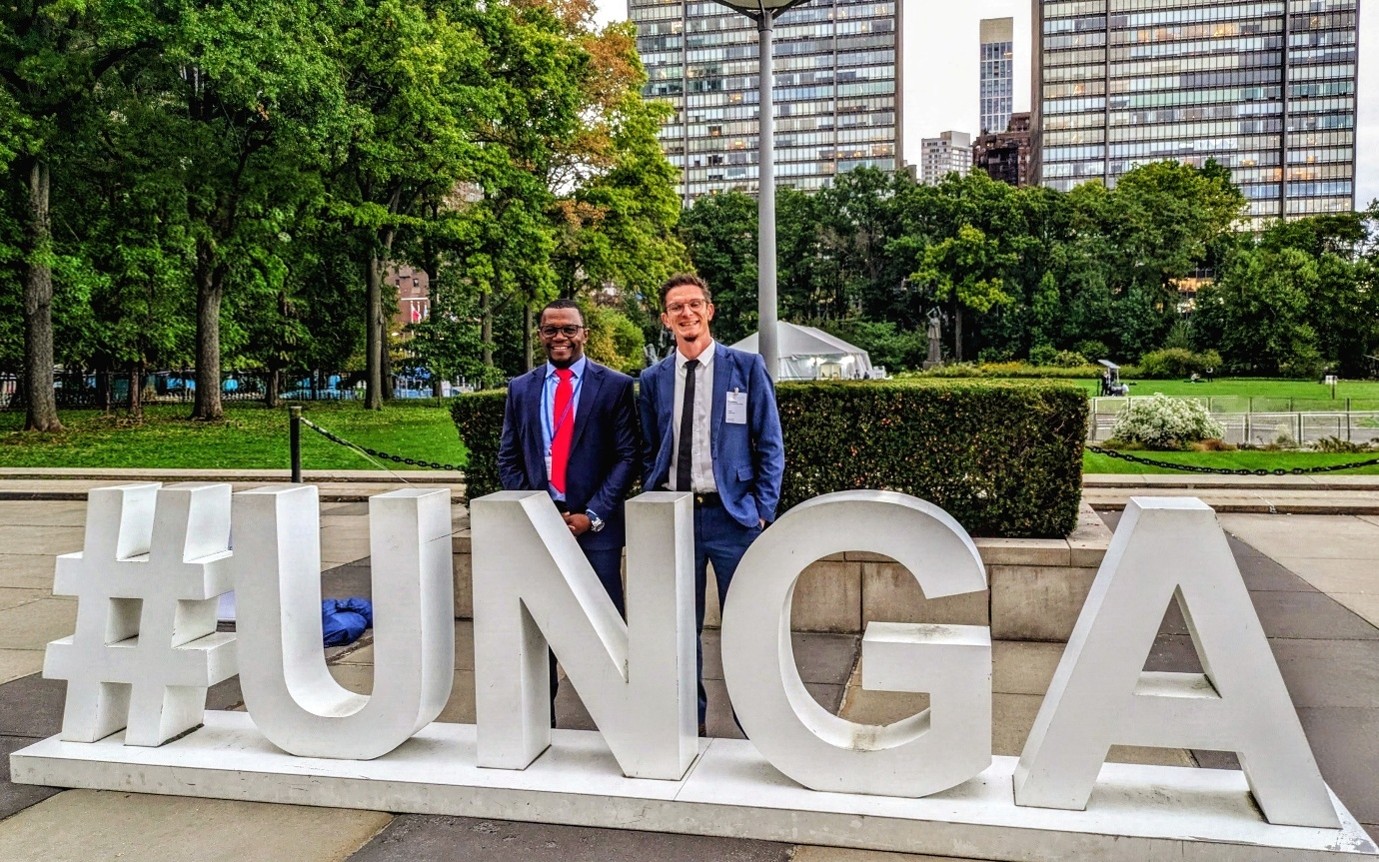
Figure 1, top: Benson Ireri, Head of Kenya’s Clean Cooking Delivery Unit with MECS Senior Researcher, Dr. Jon Leary, on the UN campus after the UNGA High-Level Session on Clean Cooking. Photo credit: MECS.