- Date
- 3rd June 2021
- Categories
- General
A new Talk Series, led by the MECS programme through its in-country partner Finovista and other stakeholders, focuses on different topics relating to transitioning to modern energy cooking services. The Talk Series aims to enable the transition to modern energy cooking services. The first of its kind, 12 modules for the Talk Series have been identified, focusing on key aspects of Cooking Devices Design & Innovation, Research & Pilot, Finance for Clean Cooking, Nutrition & Electric Cooking, Energy Cooking Access, Capacity Building, MECS Global Resources, Support for Indian Device Manufacturers, Institutional Cooking, Market Opportunities for Indian Device manufacturers and Global Market Access.
The on-going Talk Series is an important tool and now an established platform for promoting modern energy and clean cooking services of the MECS programme in India, bringing together stakeholders from modern energy cooking and allied sectors to enlighten about the various aspects and challenges in adoption of clean cooking in India.
Phase IV (April 2025 onwards).
Webinar 12: Clean Cooking in India’s Energy Transition Pathways to Viksit Bharat and Net Zero
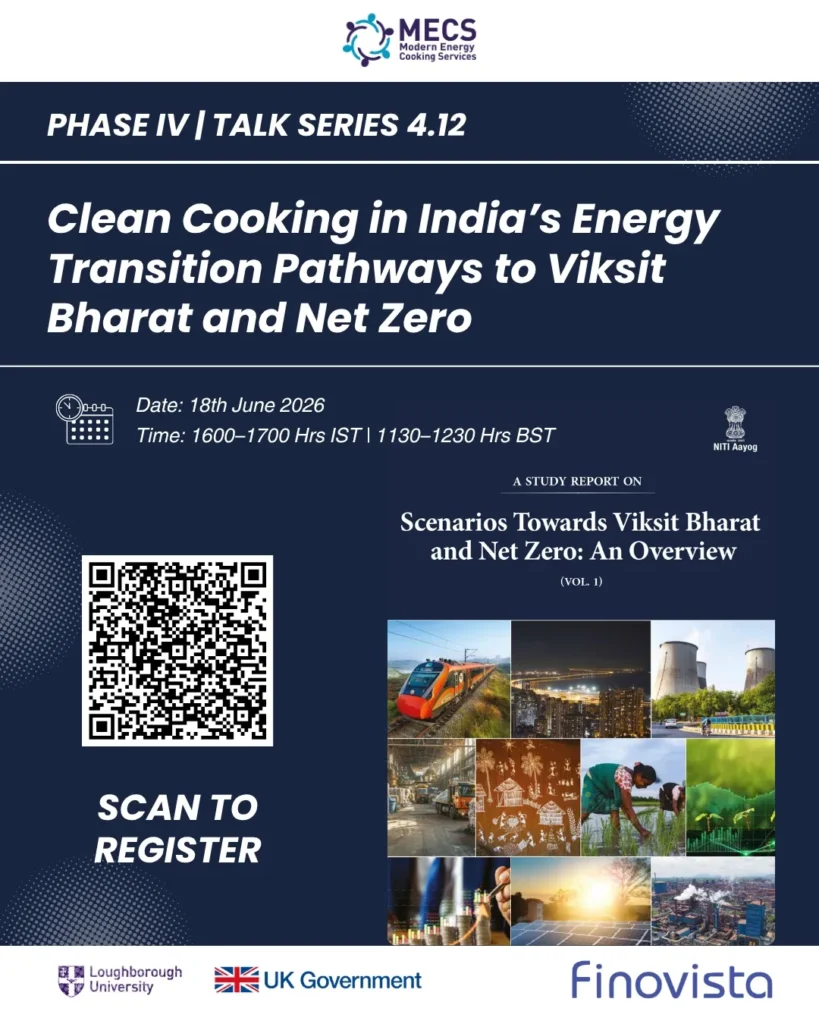
The 12th session of the Talk Series – Phase IV on Modern Energy Cooking titled “Clean Cooking in India’s Energy Transition Pathways to Viksit Bharat and Net Zero”, was held on 18 June 2026, 16:00-17:00 IST / 11:30-12:30 BST.
India’s long-term energy and climate strategy, as articulated in the NITI Aayog report “Scenarios Towards Viksit Bharat @2047 and Net Zero India – An Overview (Vol I)”, presents integrated modelling pathways for achieving high economic growth alongside deep decarbonisation of the energy system. The study examines alternative scenarios that project sectoral energy demand, electrification rates, fuel substitution patterns, emissions trajectories, and infrastructure requirements up to 2047 and 2070.
As India advances toward becoming a Viksit Bharat by 2047, clean cooking transitions must be evaluated not only through public health and access lenses but also through system-level energy modelling, infrastructure planning, and fiscal sustainability considerations. Aligning clean cooking strategies with macro energy pathways requires a clearer understanding of modelling assumptions, demand elasticity, efficiency parameters, and fuel substitution rates embedded in long-term scenarios.
This session aimed to technically unpack how cooking energy is represented within national energy modelling frameworks and to examine the policy signals required today to ensure that clean cooking contributes optimally to India’s long-term development and Net Zero goals. The session brought together energy modellers, policymakers, DISCOM representatives, clean cooking practitioners, appliance manufacturers, climate analysts, and development partners to explore the structural positioning of cooking energy within India’s broader transition architecture.
Webinar 11: Electric Cooking for Street Food Vendors: Evidence from Field Deployment and Business Implications

The 11th session of the Talk Series – Phase IV on Modern Energy Cooking titled “Electric Cooking for Street Food Vendors: Evidence from Field Deployment and Business Implications” was held on 14 May 2026.
India’s street food sector—comprising nearly 10 million vendors—relies heavily on LPG and other fuels, leading to high costs, heat exposure, and operational challenges. This session presented insights from a field deployment across 760 vendors in Delhi and Bihar, exploring how electric cooking is being adopted in real business environments.
Key insights from the study include:
• 88% of vendors saved at least one LPG cylinder per month
• 71% reported net monthly savings, even after electricity costs
• 75% saw income increases (10–20%) due to improved efficiency
• Electric appliances are increasingly used as additional burners during peak hours
This session unpacked what drives adoption, the business case for vendors, and the broader implications for scaling electric cooking in India’s informal food economy.
Webinar 10: Multi-Fuel Cooking Assessment for Indian Dishes
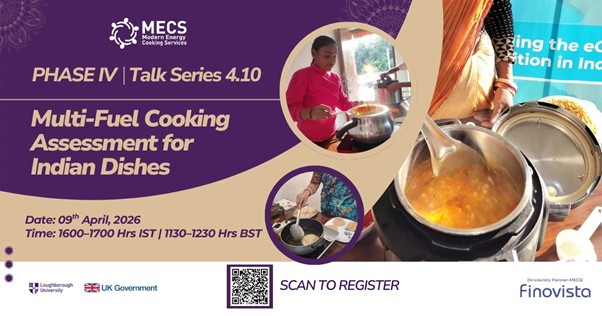
The 10th session of the Talk Series – Phase IV on Modern Energy Cooking titled “Multi-Fuel Cooking Assessment for Indian Dishes” was on 9 April 2026 (16:00-17:00 IST / 11:30-12:30 BST).
The multifuel cooking study conducted by Finovista provides clear, and evidence-based insights into how India’s dominant cooking fuel – LPG – compares with a range of modern electric cooking devices when assessed across time, energy use, cost, usability, and user experience. The results reaffirmed that no single electric appliance can fully meet the diversity of Indian cooking needs; however, a combination of electric appliances has the potential to significantly improve energy efficiency, reduce household cooking costs, and support India’s transition toward cleaner, modern kitchens.
This session aimed to unpack the insights emerging from the multifuel study and explore their implications and viability for India’s clean cooking transition. By bringing together policymakers, researchers, appliance manufacturers, utilities, and clean cooking practitioners, the discussion examined how evidence from controlled cooking trials can inform technology development, appliances design, consumer adoption strategies, and policy frameworks that support a gradual shift toward efficient and modern cooking solutions.
Webinar 9: Women in Modern Energy Cooking (WMEC)
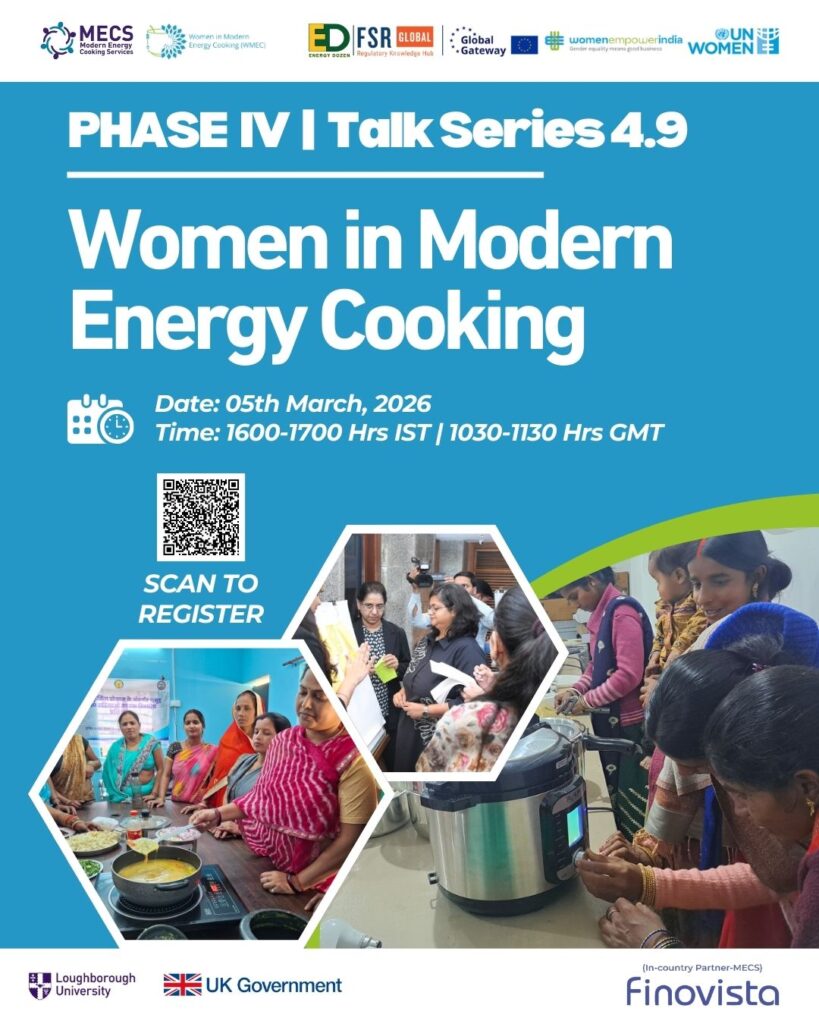
The 9th session of the Talk Series – Phase IV, titled “Women in Modern Energy Cooking (WMEC)”, was held on 5 March 2026, and was conducted as a webinar under the Energy Dozen initiative.
The session aimed to reflect on the WMEC journey and explore how modern energy cooking initiatives can better integrate gender perspectives, enable women’s leadership, and strengthen adoption outcomes. The session brought together policymakers, practitioners, industry actors, researchers, and women leaders and participants from Energy Dozen to identify priority actions for advancing a just, inclusive, and sustainable clean cooking transition in India.
Webinar 8: Building Community Champions: Train the Trainer for SHGs on eCooking

The 8th session of the Talk Series – Phase IV, titled “Building Community Champions: Train the Trainer for SHGs on eCooking”, was held on 22 January 2026, 16:00-17:00 IST / 10:30-11:30 GMT.
As electric cooking initiatives expand across India, a critical question is who enables adoption on the ground and how that adoption sustains over time. While technology, finance and infrastructure are essential, experience from clean energy and livelihood programmes shows that community-based institutions, particularly women’s Self-Help Groups (SHGs), have a decisive role to play in translating programmes into practice. SHGs are deeply embedded in local contexts, trusted by households, and well-positioned to influence everyday cooking practices, appliance usage, and energy behaviours. Accordingly, this session will focus on the Train-the-Trainer (ToT) approach as a practical and scalable model to strengthen women’s leadership to create a cadre of skilled trainers who can propagate best practices in the eCooking ecosystem. By training selected SHG members as local resource persons, equipped with hands-on knowledge of electric cooking appliances, safety, cost management, and efficient use, these capacity-building programmes can create a cadre of community-level trainers and champions. These trainers, in turn, support peer learning within and across SHGs, enabling wider outreach without continuous external facilitation. This session brought together SHG networks, livelihood missions, policymakers, utilities, technology providers, and development practitioners to explore how Train-the-Trainer models can position women not only as users of electric cooking but as enablers, service providers, and leaders of the transition.
Webinar 7: Managing the Load Requirement for eCooking

The 7th session of the Talk Series – Phase IV, titled “Managing the Load Requirement for eCooking”, was held on 18 December 2025. The session explored the challenges and opportunities of integrating eCooking into India’s electricity system. The session brought together experts to discuss the impact of rising cooking loads, the importance of smart planning, and the need for efficient appliances. It highlighted strategies to ensure grid readiness, including demand management, infrastructure strengthening, and renewable integration. Ultimately, the discussion underscored that the success of eCooking relies on both cleaner appliances and a resilient, well-planned power system.
Webinar 6: Navigating Cookware Compatibility for eCooking

The 6th session of the Talk Series – Phase IV, titled “Navigating Cookware Compatibility for eCooking”, was held on 7 November 2025.
By bringing together manufacturers of cookware and eCooking technologies, the session aimed to demystify the cookware landscape, promote design innovation rooted in Indian kitchens, and chart a pathway towards a standardised, accessible, and user-friendly eCooking ecosystem.
Webinar 5: Cooking-to-Grid (C2G)
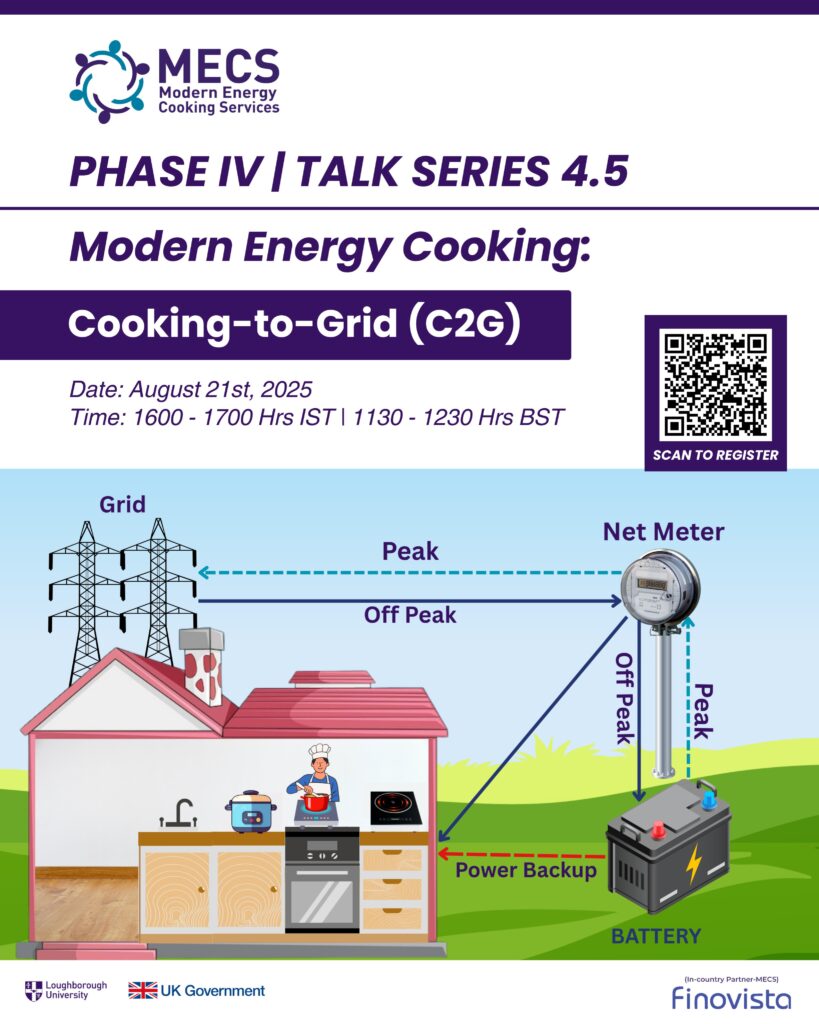
The 5th session of the Talk Series – Phase IV, titled “Cooking-to-Grid (C2G)”, was held on 21 August 2025.
Affordability of electricity and lack of liquidity are said to be key barriers to the adoption of electric cooking in many households in India. In many parts of the country, the reliability and quality of household grid electricity supplies are also not adequate. However, recent increases in generating capacity are changing this. In addition, the integration of renewable sources of energy in grid has added another factor leading to variations in power availability. The power quality will sometimes be too low to run anything other than a light bulb. These possible technical issues underpin the potential use and benefits of supporting electric cooking with batteries. Cooking-to-Grid (C2G) is a transformative concept that reimagines battery-based cooking systems in households not just as electricity consumers, but as decentralised energy assets that can actively support the power grid. As electric cooking appliances gain traction, there is a timely opportunity to integrate energy storage into these systems. Homes equipped with battery-enabled cookstoves or cooking devices could collectively function as a vast network of distributed storage units.
This session spotlighted the role of battery-based eCooking systems in enabling distributed energy storage, delved into the technological and policy enablers of C2G, and explored the synergies between clean cooking, grid resilience, and battery innovation. The panel also examined business models, scalability opportunities, and international examples of distributed energy storage via household appliances.
Webinar 4: Demand Side of Institutional Cooking In India

The 4th session of the Talk Series – Phase IV, titled “Demand Side of Institutional Cooking in India”, was held on 17 July 2025. The discussion explored the demand side of institutional eCooking in India and the kind of strategic planning and support needed through innovative financing models and subsidies, making the transition financially viable for institutions.
Webinar 3: Advancing eCooking: Recognising Innovation in Induction Cooktops 2024-2025 Global Leap Awards Winners and Finalists Announcement

The 3rd session of the Talk Series on Modern Energy Cooking under Phase IV, ‘Advancing eCooking: Recognising Innovation in Induction Cooktop – 2024-2025 Global Leap Awards Winners and Finalists Announcement’, was held on Thursday 12 June 2025, 16:00-17:00 IST / 11:30-12:30 BST. This talk series was organised by MECS through in-country partner Finovista in association with CLASP to announce the winners and finalists of the 2024–25 Global LEAP Awards for Induction Cooktops. The competition was administered by CLASP and funded by UK aid and the IKEA Foundation, through the Efficiency for Access Coalition.
The Global LEAP Awards is an international competition that identifies and promotes the world’s best, most energy-efficient appliances and equipment intended for use in energy-constrained settings. The Global LEAP Awards have evolved into a trusted global brand that serves as the de facto source of accurate, actionable information about the quality and energy performance of appliances designed for use with off-grid solar energy systems, mini-grids, and areas with inconsistent grid connection.
The webinar:
- Reflected on the importance of eCooking and the role of innovation.
- Presented key insights and learnings from the competition’s evaluation process highlighting user experiences in Kenya and India.
- Announced competition Winners and Finalists and launch the 2025 Buyers Guide for Induction Cooktops.
- Explored through dialogue with manufacturers, users, and partners ways to continue to drive the adoption of eCooking in off- and weak-grid communities.
Webinar 2: Empowering Anganwadis through eCooking
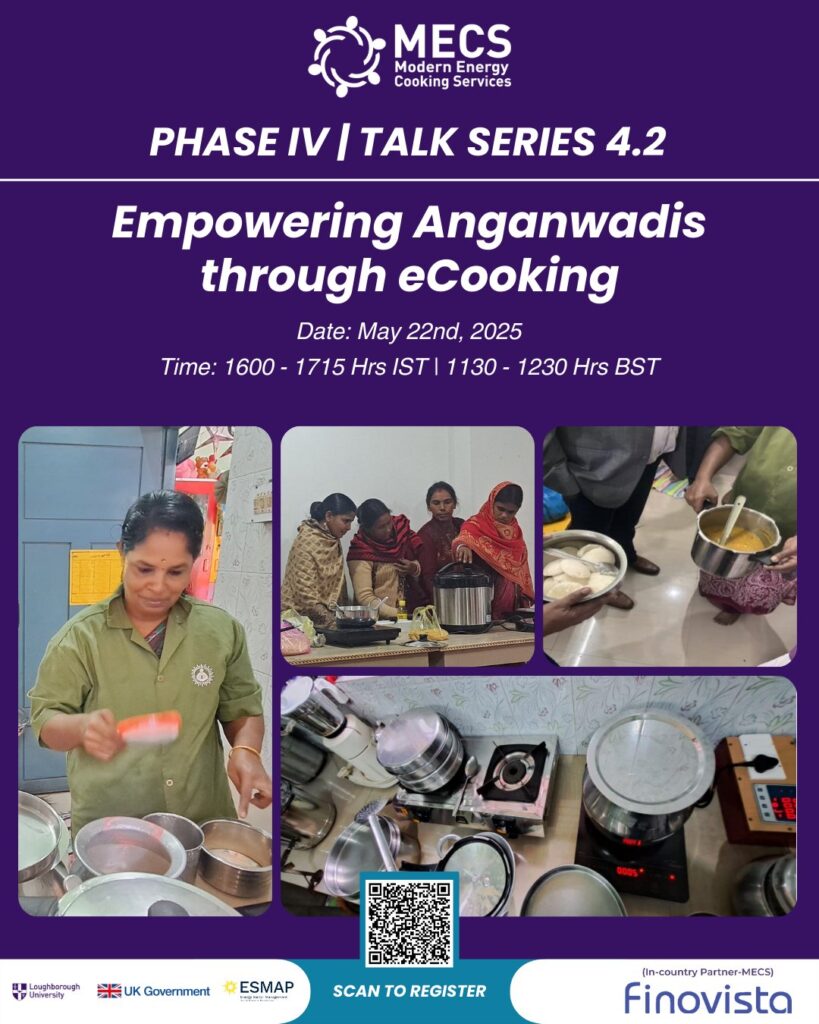
The 2nd session of the Talk Series – Phase IV on “Transitioning to Modern Energy for Cooking: Empowering Anganwadis through eCooking”, was held on 22 May 2025, 16:00-17:15 IST / 11:30-12:45 BST.
Anganwadis serve as critical community childcare centers across India, providing nutrition, early education, and health services to millions of children and women. However, many still depend on biomass or LPG-based cooking methods, exposing workers and beneficiaries to indoor air pollution, safety risks, and inefficiencies. With India’s near-universal electrification and growing renewable energy capacity, integrating eCooking technologies offers a sustainable, cost-effective, and scalable solution. The shift to eCooking not only aligns with India’s clean energy transition but also enhances nutrition delivery, operational efficiency, and working conditions at the grassroots level.
Despite its transformative potential, the scale-up of eCooking in Anganwadis presents challenges, including infrastructure limitations, affordability of institutional-grade appliances, and the need for behavioral change and capacity building among frontline workers. This session brought together key policymakers, technical experts, and implementation partners to explore the way forward by focusing on:
- Creating an enabling policy environment that supports institutional eCooking adoption
- Addressing the investment needs and de-risking strategies for scaling implementation
- Strengthening the supply chain for institutional-grade electric cooking appliances
- Making eCooking affordable and accessible for community institutions
The session also highlighted insights from ground-level initiatives, research studies, and field visits to Anganwadi centers, offering valuable perspectives on impact, learnings, and replicability.
Webinar 1: Enabling Policy For eCooking Transition In India

The 1st session of the Talk Series – Phase IV on “Transitioning to Modern Energy for Cooking: Development of an Enabling Policy Environment and Programme Support Ecosystem for Accelerating Transition to eCooking In India”, was held on 4 April 2025, 16:00-17:15 IST / 10:30-11:45 GMT.
An enabling policy environment is crucial for driving a low-carbon transition, particularly in India’s clean cooking sector, where effective and socially acceptable policies are needed to overcome persistent adoption barriers. Despite government and non-government efforts, challenges such as lack of awareness, affordability, and infrastructure hinder widespread acceptance of clean cooking solutions, even as India advances in electrification and renewable energy expansion. Electric cooking appliances like induction cooktops and pressure cookers offer a promising, smoke-free alternative to solid fuels, yet a national strategy for their promotion remains absent, as highlighted in the Green Shift report by the Energy Transition Task Force under the Ministry of Petroleum & Natural Gas. To mainstream eCooking, India must integrate it into national energy policies with clear targets, market incentives, regulatory support, and financial de-risking mechanisms to encourage private-sector investment.
Phase III (October 2023 onwards).
Webinar 12: Integrating Clean Cooking into Article 6.2/6.4 of the Paris Agreement: Implications & Opportunities for India’s Climate Strategy

The 12th session of the Talk Series – Phase III on ‘Integrating Clean Cooking into Article 6.2/6.4 of the Paris Agreement: Implications & Opportunities for India’s Climate Strategy’, was held on December 5, 2024, from 16:00 – 17:15 IST / 10:30 – 11:45 GMT.
India’s inclusion of clean cooking in GHG mitigation activities under the Paris Agreement supports a market-driven approach to achieving Net Zero targets, further bolstered by global initiatives like the Modern Energy Cooking Services (MECS) program, and national campaigns such as LiFE and GoElectric.
International collaborations, including MECS, position India as a key player in the global clean cooking technology manufacturing sector. These efforts align with national priorities such as Atmanirbhar Bharat and Make in India, fostering the development of locally manufactured, scalable solutions.
By leveraging regulatory frameworks, financing mechanisms, and global cooperation, clean cooking can play a transformative role in advancing India’s climate and energy goals. This transition not only addresses climate change but also improves public health, boosts livelihoods, and strengthens climate resilience for a sustainable future.
Webinar 11: Tackling Ambient Air pollution through Electric Cooking

The 11th session of the Talk Series – Phase III on ‘Transitioning to Modern Energy for Cooking: Tackling Ambient Air pollution through Electric Cooking’ was held on November 7, 2024, from 16:00 – 17:00 IST / 10:30 – 11:30 GMT.
Recent studies have identified household emissions as the largest contributor to ambient PM2.5 pollution in India, surpassing other sources such as vehicles, power plants, and industries. For example, one study revealed that biomass used for cooking contributes up to 29% of ambient pollution in Uttar Pradesh. Thus, reducing household fuel use will have significant population-wide benefits by lowering ambient air pollution. A national strategy should focus on promoting electric cooking (eCooking) and ensuring reliable access to electricity, with incentives to replace solid fuels for cooking. A dedicated plan to support local manufacturing of energy-efficient electric cooking devices is also needed to drive the transition.
This transition presents opportunities for business growth, benefiting DISCOMs, manufacturers, and skilled professionals. Collaboration among key government bodies, including the Ministry of Power, MNRE, MoEF&CC, BEE, EESL, and organizations like MECS and the Skills Council for Green Jobs, will be essential in accelerating the shift to clean cooking technologies.
Webinar 10: The Role of DISCOMs in Scaling Up eCooking in India

The 10th session of the Talk Series – Phase III on ‘Role of DISCOMs in scaling up of eCooking in India’ was held on August 22, 2024, from 16:00 – 17:00 IST / 11:30 – 12:30 BST.
Electricity distribution companies, known as DISCOMs, play a critical role in the transition to electric cooking. As the entities responsible for delivering power from the transmission network to end consumers, DISCOMs are at the heart of the power supply chain. They face significant challenges, including outdated infrastructure, financial constraints, and distribution losses, all of which impact their efficiency and operational capacity. The increasing integration of renewable energy sources adds complexity to their operations, requiring significant adaptations and upgrades to existing grid systems.
By integrating smart grid technologies, optimizing energy management, and implementing supportive policy measures, DISCOMs can play a pivotal role in scaling up electric cooking in India. The session provided a platform for stakeholders to explore these issues, share insights, and collaborate on solutions for a sustainable and clean energy future in cooking.
Webinar 9: Supply Chain Platforms for eCooking Solutions
The 9th session of the Talk Series – Phase III on “Supply Chain Platforms for eCooking Solutions”, was held on 1 August 2024, from 11:30-12:30 BST / 16:00-17:00 IST.
The session explored the critical role of supply chains in making eCooking solutions accessible, affordable, and sustainable. Supply chains are crucial for the widespread adoption of eCooking solutions. As more people turn to electric cooking for its efficiency, environmental benefits, and smart features, having a robust supply chain ensures that everything—from raw materials to finished products—is managed and delivered smoothly. This means eCooking devices can reach more households, becoming a viable option for many.
Webinar 8: National Efficient Cooking Programme
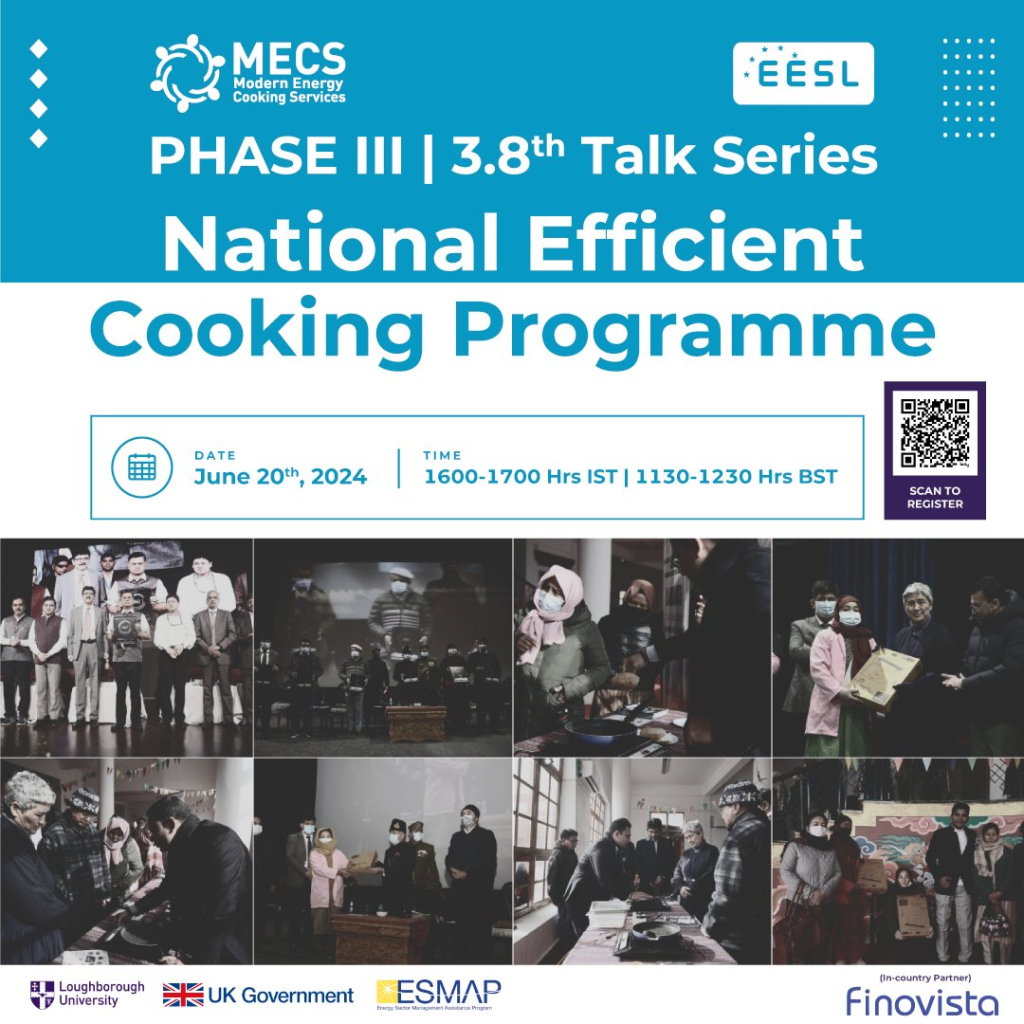
The 8th session of the Talk Series – Phase III on “Transitioning to Modern Energy for Cooking: National Efficient Cooking Programme”, was held on 20 June 2024, from 11:30-12:30 BST / 16:00-17:00 IST.
Besides being environment friendly, electric cooking offers numerous other benefits, including technological advancements like faster cooking times, precise temperature control, and enhanced safety features as a result of advanced technological features. However, the transition to electric cooking in India is slow despite these promising advantages, and laden with challenges. Challenges like inconsistent electricity supply, steep initial expenses, behavioural barriers, and compatibility issues with entrenched cooking customs impede mass acceptance. In rural regions, where access to modern electric appliances is limited, the shift from traditional cooking methods is particularly challenging, given their deep-rooted cultural significance. Moreover, concerns about the strain on the electric supply grid and perceptions surrounding cooking methods further complicate the adoption process. Addressing these multifaceted challenges effectively while leveraging the advantages of electric cooking is crucial for realizing its acceptance in India.
The National Efficient Cooking Programme (NECP), spearheaded by Energy Efficient Services Limited (EESL) under the Ministry of Power, is aimed at revolutionizing cooking practices by facilitating the adoption of electric cooking devices in India. By distributing 20 Lakh energy-efficient induction cook stoves nationwide, NECP seeks to address key challenges such as high initial costs and limited access to modern appliances, hindering the transition to electric cooking. The cost advantage of 25-30% under the programme over traditional methods is expected to make electric cooking more accessible and appealing to households, particularly in rural areas. Moreover, NECP aligns with Go-electric campaign, providing further impetus for the adoption of energy efficient and modern energy based clean cooking devices. Through these efforts, NECP will not only transform cooking practices but will also contribute to achieving sustainable goals by reducing reliance on fossil fuels and mitigating the environmental impact of traditional cooking methods.
Webinar 7: eCooking and Taste
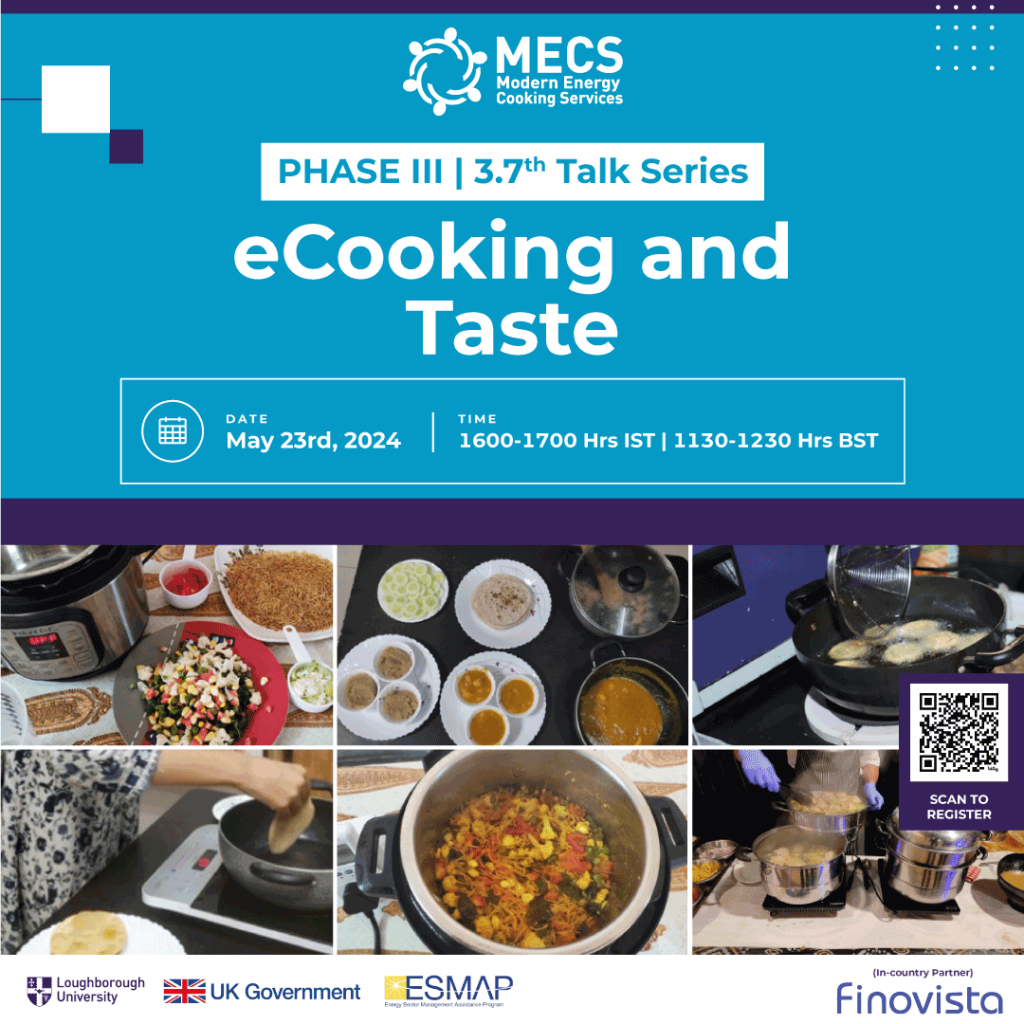
The 7th session of the Talk Series – Phase III on “Transitioning to Modern Energy for Cooking: eCooking and Taste”, was held on 23 May 2024, from 11:30-12:30 BST / 16:00-17:00 IST.
Taste is at the heart of cooking practices in India, where culinary traditions are as diverse as the country itself. With a rich tapestry of regional cuisines, ingredients, and cooking techniques, taste takes centre stage in every dish. Such diverse range of recipes make cooking a culturally embedded practice, that results in an array of behavioural change and challenges that must be understood and overcome for these new opportunities to translate into impact at a scale. Although, eCooking provides a clean canvas for the vibrant flavours of Indian spices and ingredients to shine, eCooking may lack the smoky allure of wood and charcoal which sometimes may act as a barrier for adoption of eCooking. The absence of such allurement is a factor especially in those regions where “tandoor” is an essential part of the cooking practices. This session focused around such challenges to eCooking adoption by consumers which is considered a major bottleneck to widespread adoption. Is this real or only a psychological barrier only? The experts panel shared their experience with eCooking and highlighted the need and consequent opportunities for innovation in eCooking devices and their use. They also discussed how correct cooking practice and improved awareness will play a crucial role in driving adoption of electric cooking in India without affecting the true flavour of the local cuisine.
Webinar 6: Emerging Retail Trends for eCooking Appliances
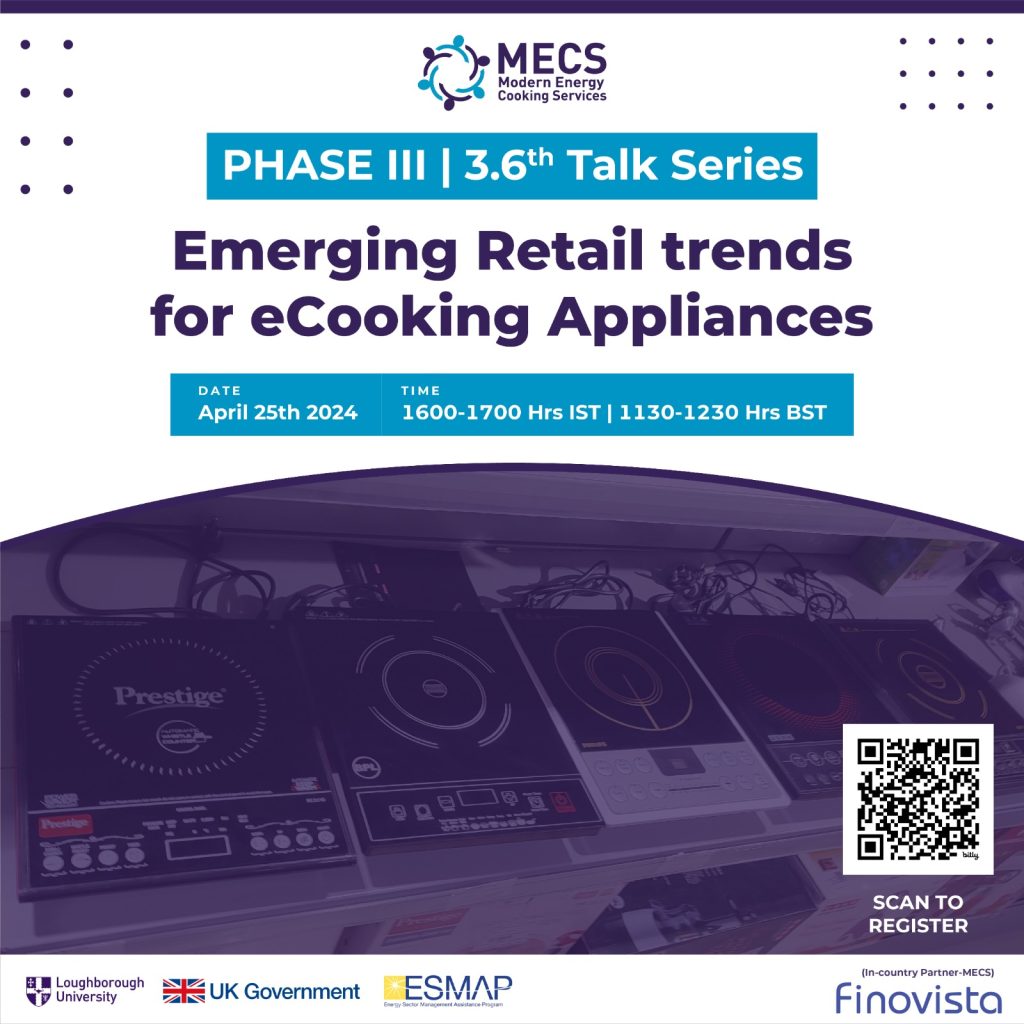
The 6th session of the Talk Series – Phase III on “Transitioning to Modern Energy for Cooking: Emerging Retail trends for eCooking Appliances”, was held on 25 April 2024, from 11:30-12:30 BST / 16:00-17:00 IST.
There are some key challenges that exist in the electric cooking devices retail business. A number of factors, besides cost, such as customer awareness about the technology, online reviews, previous brand experience in terms of reliability and after sales service, and other factors, influence the final decision to purchase any appliance. While the digitalization has helped in increasing demand for kitchen appliances whether electric cooking devices with innovative features to suit Indian style of cooking have been developed for the satisfaction of local customers. The discussions during the talk session centered around such challenges being faced by retailers hindering widespread adoption and limiting the market potential. The experts panel highlighted the opportunities for innovation and market expansion in this segment and how consumer education and awareness are going to play a crucial role in driving adoption of electric cooking in India.
Webinar 5: eCooking for Institutions
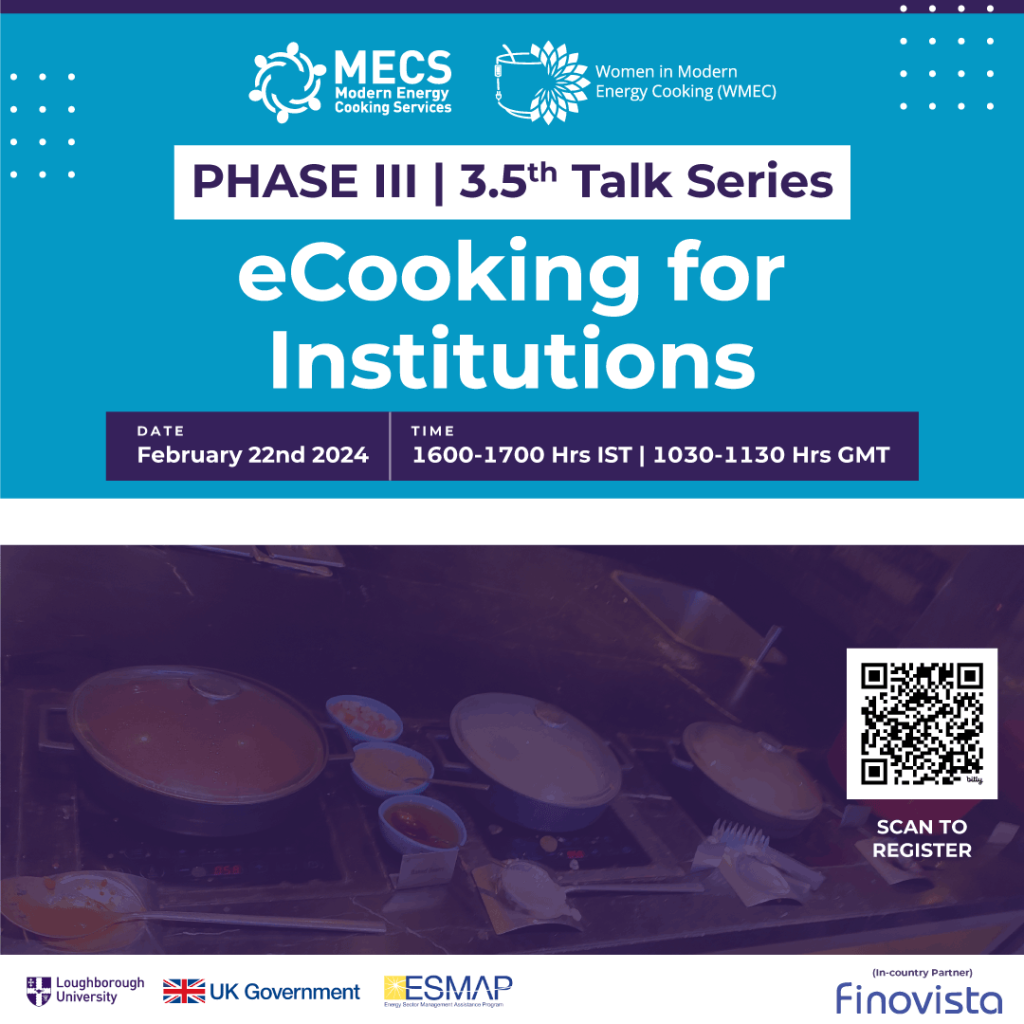
The 5th session of the Talk Series – Phase III on Transitioning to Modern Energy for Cooking: eCooking for Institutions, was held on 22 February 2024. The role of eCooking in institutional settings is evolving rapidly, ushering in a new era of efficiency, sustainability, and enhanced culinary experiences. As technological advancements continue, institutions that embrace eCooking are likely to stay at the forefront of the culinary landscape, delivering high-quality meals while minimizing environmental impact and operational costs. The discussions during the session centred around current challenges being faced in institutional cooking using traditional fuels and the likely benefits in its transition to eCooking in terms of far-reaching climate, health, cost and time benefits. The experts panel also explored and suggested suitable policy framework and other government initiatives to promote eCooking in institutions and how application of clean cooking solutions in institutions can play a crucial role in improving overall wellbeing of the people. The technological challenges related to design and manufacture of energy efficient large capacity eCooking devices was also a focal point of the discussion.
Webinar 4: Tackling Air Pollution through Clean Cooking
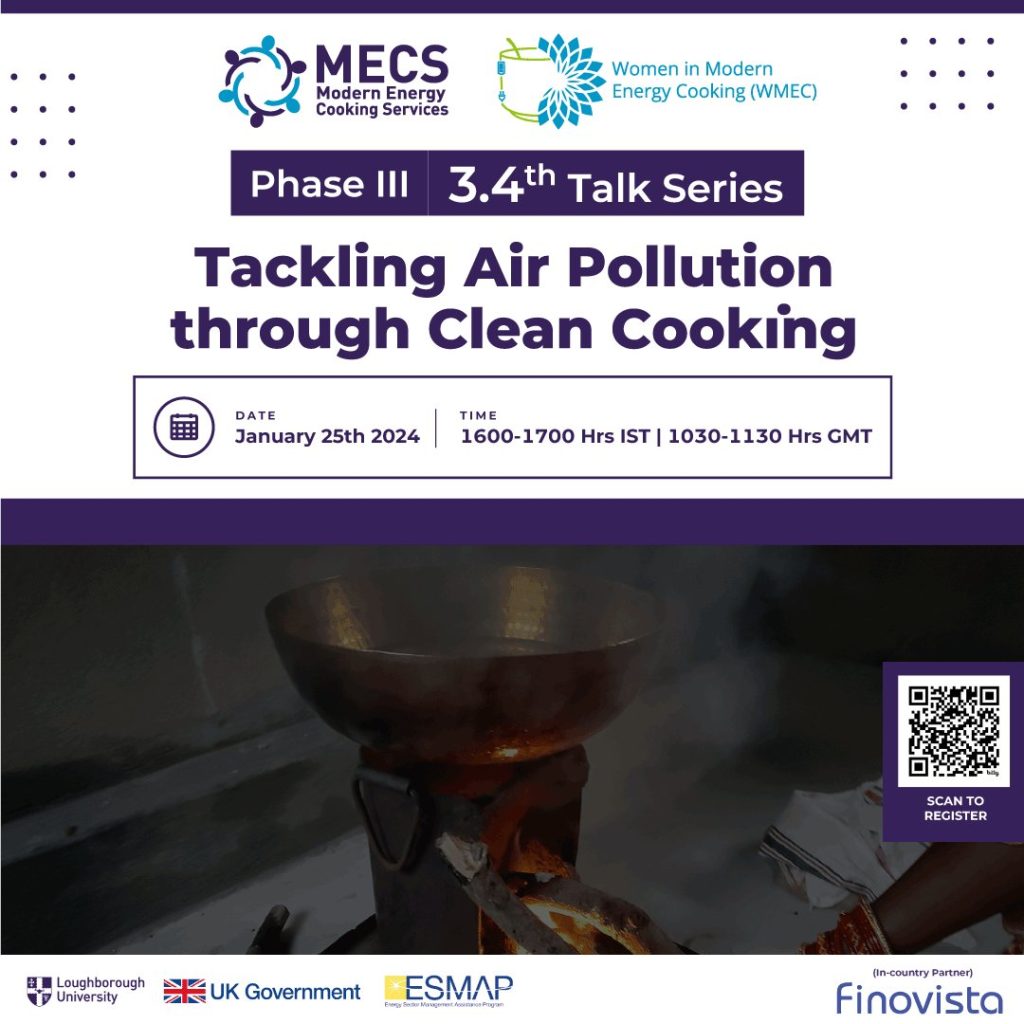
The 4th session of the Talk Series – Phase III on Transitioning to Modern Energy for Cooking: Tackling Air Pollution through Clean Cooking was held on 25th January 2024. Household Air Pollution (HAP) is estimated to impose a staggering global economic burden exceeding $2.4 trillion annually, accounting for lost productivity and healthcare expenditures. In India, a significant 20% to 50% of outdoor pollution stems from household cooking and heating practices. While deeply rooted in cultural traditions, these methods take a considerable toll on public health. Embracing modern cooking technology emerges as a vital intervention, representing a pivotal stride toward enhancing global public health and fostering environmental sustainability. The webinar centred around the policy framework and various government initiatives aimed at enhancing air quality. We explored how clean cooking solutions can play a pivotal role in mitigating air pollution and addressing climate change challenges.
Webinar 3: Engaging Youth for eCooking
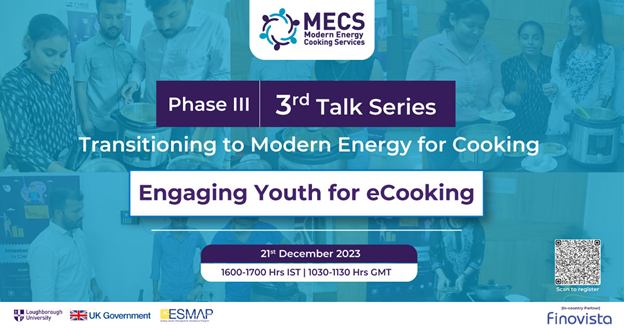
The 3rd session of the Talk Series – Phase III on Transitioning to Modern Energy for Cooking: Engaging Youth for eCooking was held on 21st December 2023. The session focused on developing the understanding that can provide meaningful youth engagement which could aid in creating opportunities for youth to participate in decision-making, building their capacity to engage in advocacy and employment, and investing in youth-led initiatives and organizations in the clean cooking sector.
Webinar 2: Local Job Creation through Modern Energy Cooking
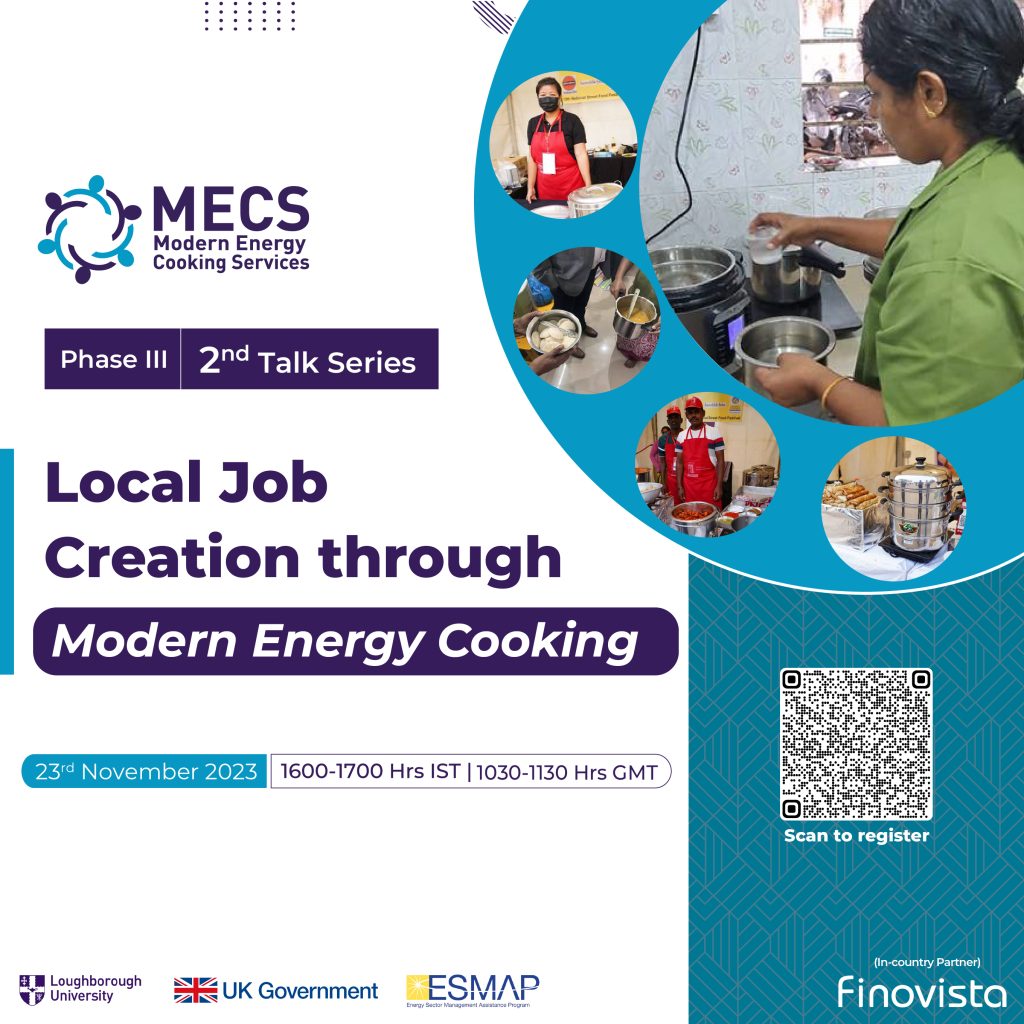
The 2nd session of the Talk Series – Phase III on Transitioning to Modern Energy for Cooking, entitled “Local Job Creation through Modern Energy Cooking”, was held on 23 November 2023. This session focused on in-depth discussions about the nature of employment opportunities that can be created. We addressed the existing challenges related to skill development and the availability of reskilling resources. Moreover, we delved into the current hurdles and potential opportunities for job creation within the modern energy cooking sector.
Webinar 1: Use of Local Language for eCooking
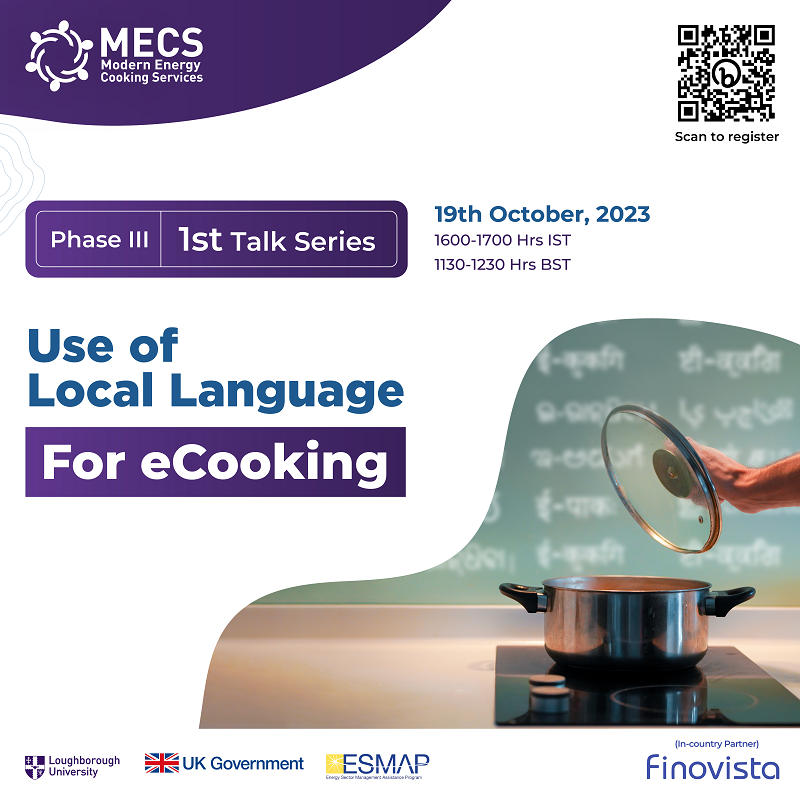
The 1st session of the Talk Series – Phase III on Transitioning to Modern Energy for Cooking, entitled “Use of Local Language for eCooking”, was held on 19 October 2023. This session focused on the current challenges and opportunities of creating communication in local languages, the impact on “Aspirational Value” for new technologies, successful examples in other consumer technologies, which could be adapted for electric cooking.
The use of local languages stands as a pivotal element in igniting consumer excitement and driving behavioral change. Similar to any emerging technology, the adoption of electric cooking necessitates consumer awareness. Incorporating local languages into consumer awareness materials and campaigns can yield substantial impacts. India, as per the 2011 Census, boasts a rich linguistic diversity, with more than 19,500 languages and dialects in use. Effective communication in vernacular languages can act as a catalyst for a smoother transition to cleaner and more efficient cooking methods. This, in turn, helps mitigate the environmental and health impacts associated with traditional cooking practices. By utilizing local languages, we ensure that information regarding the benefits, usage, and safety of electric cooking appliances reaches a broader audience, thus making these appliances more accessible and inclusive.
Moreover, when information about electric cooking is conveyed in the local language, it resonates deeply with people’s culinary traditions, rendering them more receptive to the idea of adopting electric appliances. This session focused on the current challenges and opportunities of creating communication in local languages, the impact on “Aspirational Value” for new technologies, successful examples in other consumer technologies, which could be adapted for electric cooking.
Phase II (November 2022 onwards).
Webinar 12: Consumer Financing for Clean Cooking Solutions
The twelfth webinar in the second phase of the Talk Series, held on 21 September 2023, focused on consumer financing for clean cooking solutions. Globally, 2.4 billion people lack access to clean cooking facilities, necessitating a substantial annual investment of $10 billion. However, insufficient funding, limited sector expertise, and perceived risks have impeded the financial support crucial for this sector. Encouragingly, the landscape of the clean cooking industry has been undergoing a transformation. This shift is driven by the emergence of innovative technologies and solutions, a growing acknowledgment of the sector’s significance within the broader clean energy context, and the proliferation of start-ups, innovators, and small to medium enterprises (SMEs) in this domain. Consequently, the topic of access to finance has regained prominence as a pivotal area of focus within the sector.
The viability of any successful clean cooking business model depends on various factors: the cost of the clean cooking hardware, operational expenses (particularly fuel costs), and end-user financing. While certain households can absorb the expenses of adopting new clean cooking technologies by reallocating their current expenditure on polluting cooking fuels toward cleaner alternatives, a considerable number of less affluent customers are unable to manage the upfront expense associated with modern cooking devices. Additionally, it’s important to highlight that the majority of clean cooking appliances continue to be sold through direct cash transactions or retail credit.
Webinar 11: Supply Chain Management for Clean Cooking
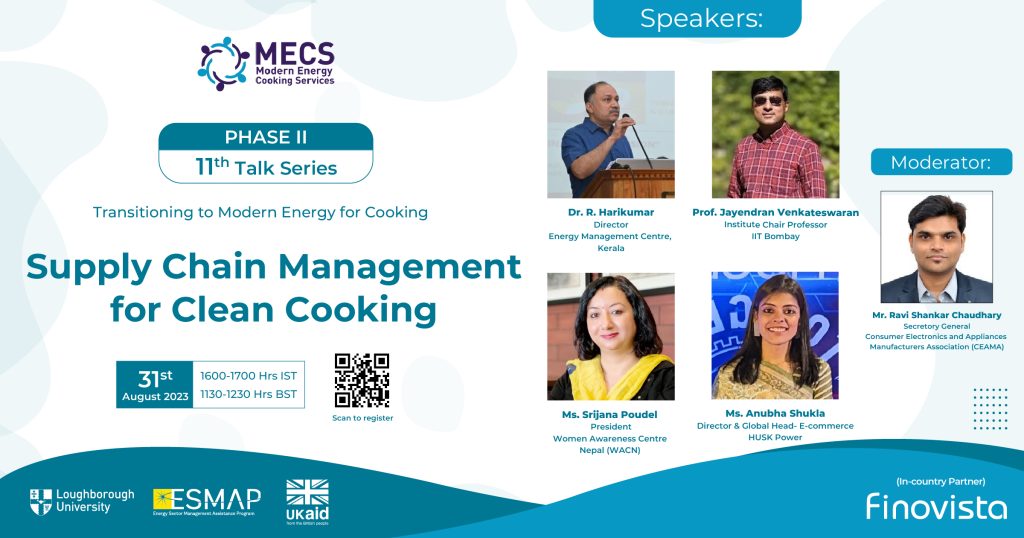
The eleventh webinar in the second phase of the Talk Series, held on 31 August 2023, focused on the down stream supply chain of clean cooking technologies and solutions, from factory to consumer, key players engaged, challenges, what needs to change, scope of innovation to reduce cost and time and make supply chains resilient to enable the transition to modern energy based clean cooking. The session also covered aspects such as innovative low-cost last-mile delivery channels and local capacity building for after-sales service of electric cooking devices.
Webinar 10: Engaging Women: A Gamechanger
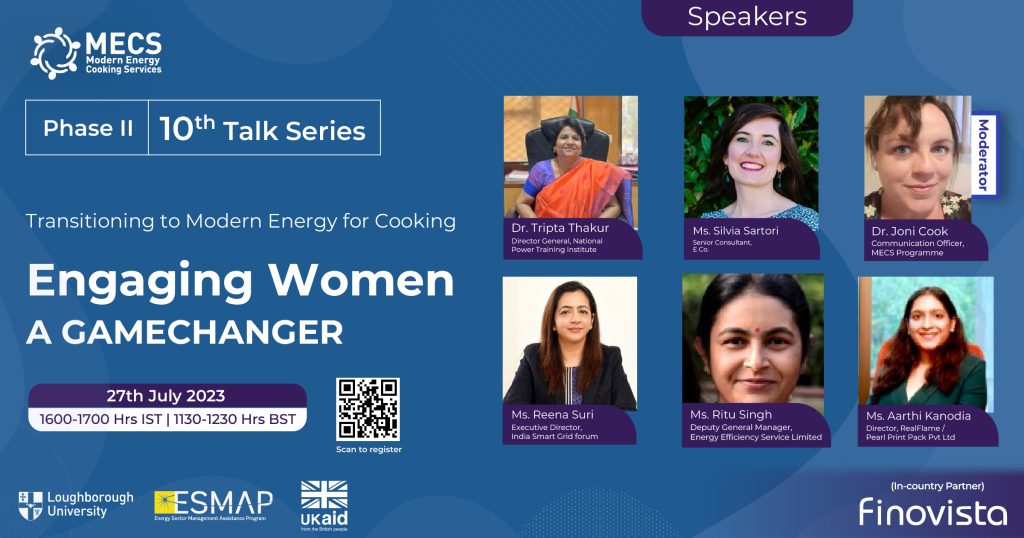
The tenth webinar in the second phase of the Talk Series, held on 27 July 2023, focused on the critical role of women in achieving universal access to clean cooking and the importance of engaging women in establishing an inclusive sector with an enabling and user-centric environment to support a robust and sustainable clean cooking industry. Further, the session explored successful models of engaging women in the clean cooking and energy access sectors, prevalent gaps and challenges.
Webinar 9: The Green Shift in Cooking
The ninth webinar in the second phase of the Talk Series, held on 6 July 2023, focused on the green shift in cooking. The discussion revolved around the report; “The Green Shift” prepared by the Energy Transition Advisory Committee (ETAC) set up by the Ministry of Petroleum and Natural Gas, Government of India, and the observations made by the experts in the report regarding the issues concerning energy transition and a new target of 25% use of electricity for cooking by 2030.
Webinar 8: Transitioning to Modern Energy in Cooking: IPR Management in Cross Border Relationships
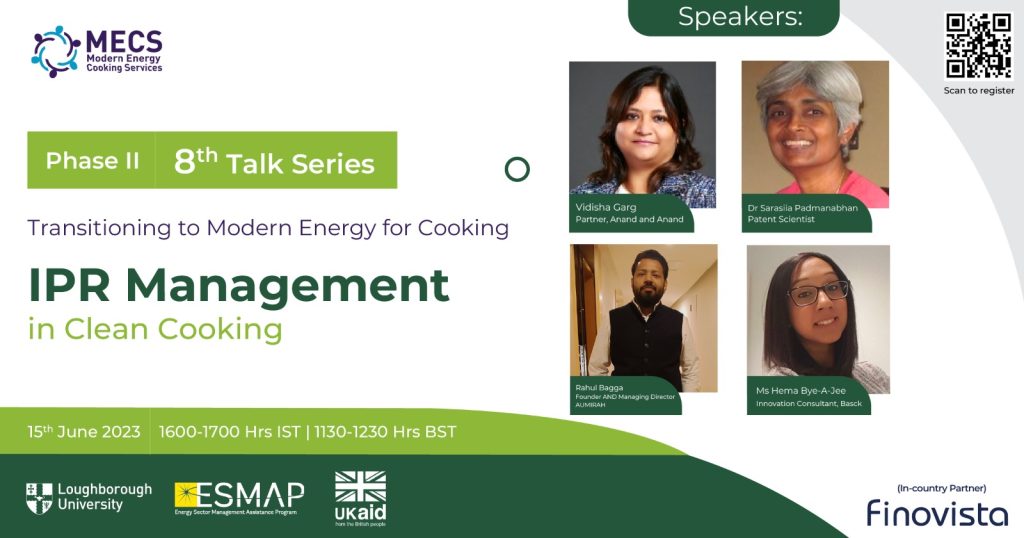
The eighth webinar in the second phase of the Talk Series, held on 15 June 2023, focused on IPR management in cross border relationships.
The discussion revolved around the various aspects of Intellectual Property Rights (IPR) that are relevant to the Clean Cooking sector. IPRs are laws and regulations that protect intellectual creations and encourage innovation and creativity. These rights include trademarks, copyrights, patents, and trade secrets. By providing control over the use of their work and preventing unauthorized use, IPRs help creators or owners of intellectual property to be compensated for their use.
India has a comprehensive legal framework for IPR protection that aligns with international
standards. India has The National Intellectual Property Rights (IPR) Policy 2016 and is a member of
the World Intellectual Property Organization (WIPO) and the World Trade Organization (WTO). India
is committed to the Agreement on Trade-Related Aspects of Intellectual Property (TRIPS
Agreement). India has implemented structural reforms to strengthen its IPR regime, including
modernizing IP offices, reducing legal compliances, and facilitating IP filing for start-ups, women
entrepreneurs, and small industries. However, enforcement, patent backlog, and lack of IP
awareness remain weak points. The Global Innovation Index (GII) 2022 rankings released by the
WIPO places India at the 40th position.
The clean cooking sector in India is under a transformation stage, with the influx of new
technologies and solutions based on clean and modern energy. The market has recently also seen a
rapid growth of start-ups and SMEs in this space and a rise in large players. The market in India also
offers a great opportunity for the global brands to expand. Both for domestic and global companies
compliance with Indian IPR laws and regulations to protect their intellectual property assets is a
paramount concern.
Webinar 7: Carbon Financing for Metered Devices
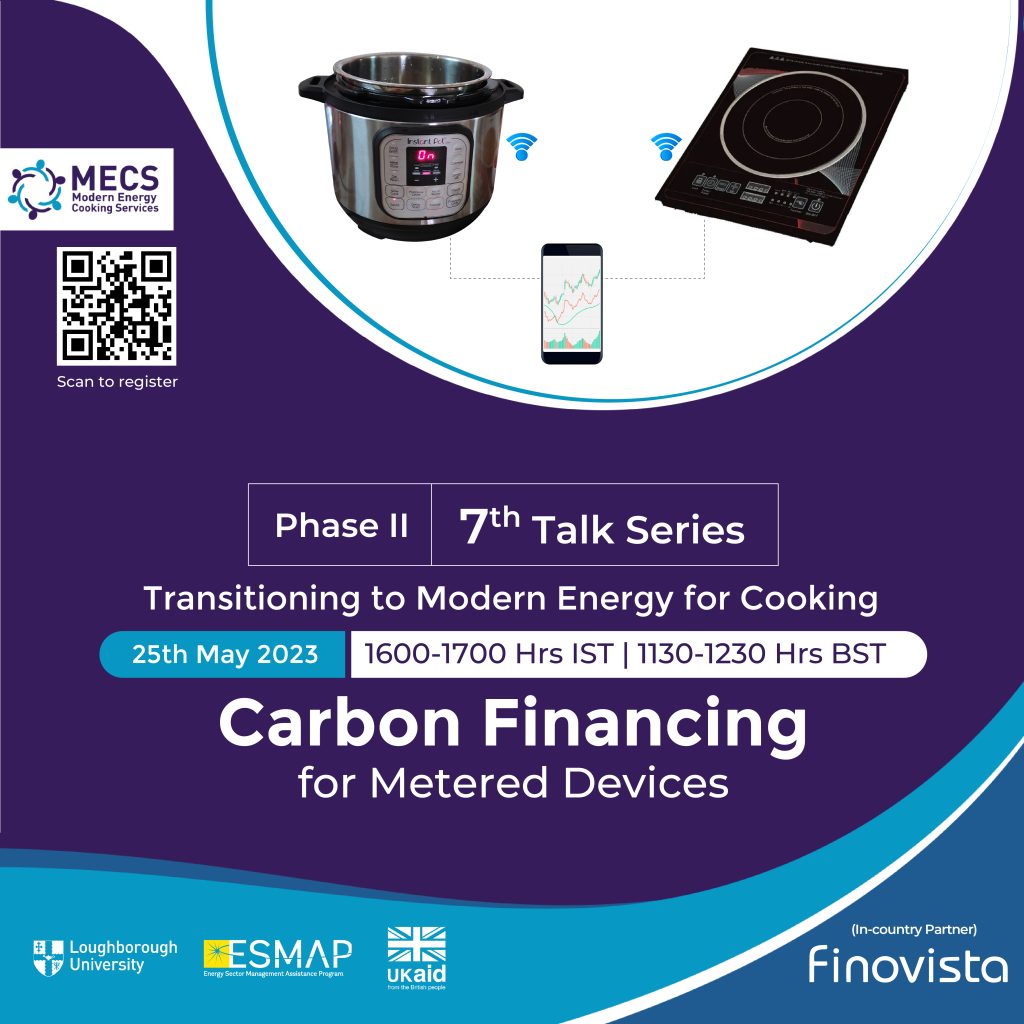
The seventh webinar in the second phase of the Talk Series, held on 25 May 2023, focused on carbon financing for metered devices.
The World Bank estimates that achieving universal access to clean cooking requires an annual investment of $25 billion. However, finding a viable financial mechanism for the clean cooking sector remains a challenge. To address this, stakeholders must explore and develop innovative solutions that combine initiatives such as demand aggregation, supporting companies for device/process development, direct partnerships, user sensitization, low-cost finance access, and carbon financing to reduce capital and operational expenses.
Affordability is a key factor responsible for the slow adoption of clean cooking solutions (both for CAPEX and OPEX), and stakeholders must focus on reducing both initial and recurring costs. Carbon financing can play a significant role in promoting and adopting clean cooking solutions due to its health, environmental, and social benefits. The ecosystem for clean cooking projects has benefited from improved regulations, including international ISO standards, enhanced measurement, reporting, and verification approaches, and better scrutiny of methodologies and input parameters. The recent surge in carbon prices also makes carbon financing an attractive source of financing for cookstove projects. However, stakeholders must work together to build capacity in accessing and managing carbon finance in the country and create a level playing field for all. This is especially crucial since over 2.4 billion people globally rely on polluting fuel sources.
The convergence of Carbon, Digitalization, and Energy (C-DEC) is taking place in the modern energy-based cooking sector. Gold Standard has developed a new ‘metered methodology’ to ensure sound methodologies, realistic parameters, and conservative assumptions while using digital measurement, reporting, and verification (MRV) data. By improving the parameters for clean cooking carbon projects, credits with higher integrity can drive better technologies and incentives for sustained use.
Webinar 6: Star Labelling for Induction Cookstove
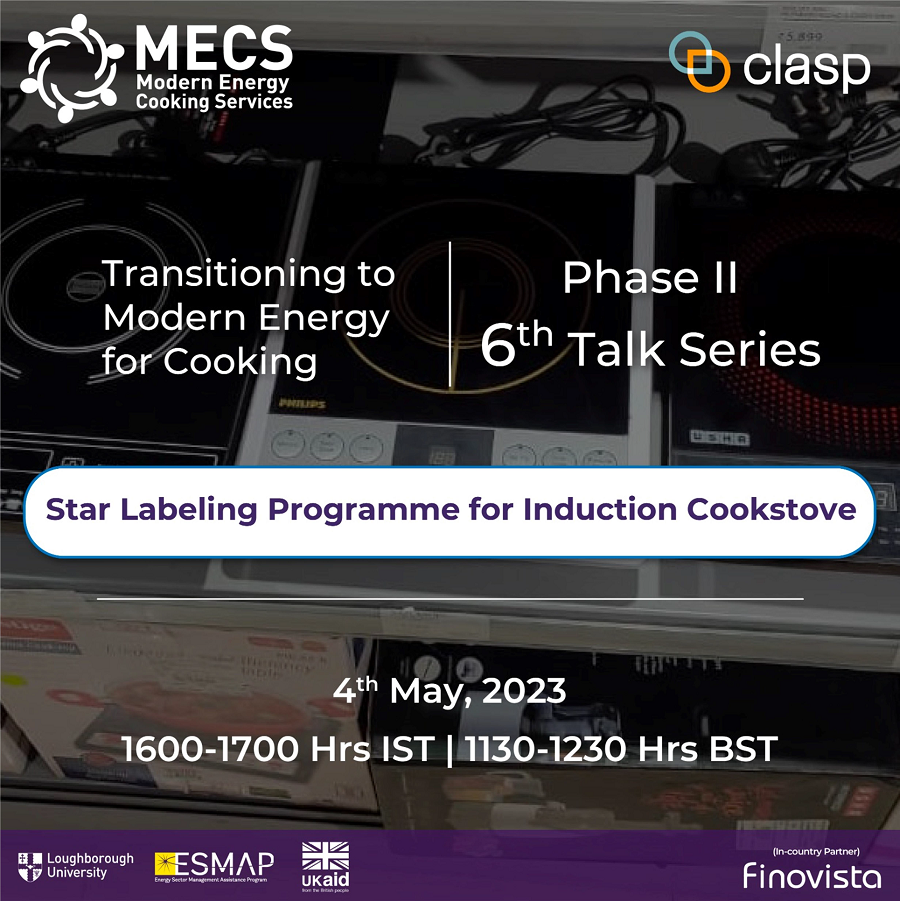
The sixth webinar in the second phase of the Talk Series, in partnership with CLASP and held on 4 May 2023, focused on the star labelling programme for induction cookstoves. With the objective of regulating energy performance and quality of induction hobs for households and similar other purposes and provide end users with an informed purchase decision, Bureau of Energy Efficiency (BEE) has launched a comparative labelling programme for Induction hobs on a scale of 1 to 5 with the 5 star being the most efficient. The star rating is based on the energy consumption of the hobs as per IS 19014:2022 which defines the main performance characteristics of hobs and specifies methods for measuring these characteristics. India being a highly cost sensitive market, the consumers when deciding whether to buy a gas or electric stove, or an induction stove, the costs of the device is important, however, the consumers should also keep in mind the cost of running a device or the overall cost based on its complete life cycle. Brainstorming on the topic with these stakeholders was beneficial for addressing the factors concerning design and manufacturing of induction cook stoves in India and its adoption by users.
Webinar 5: Integrated Solar DC Cooking
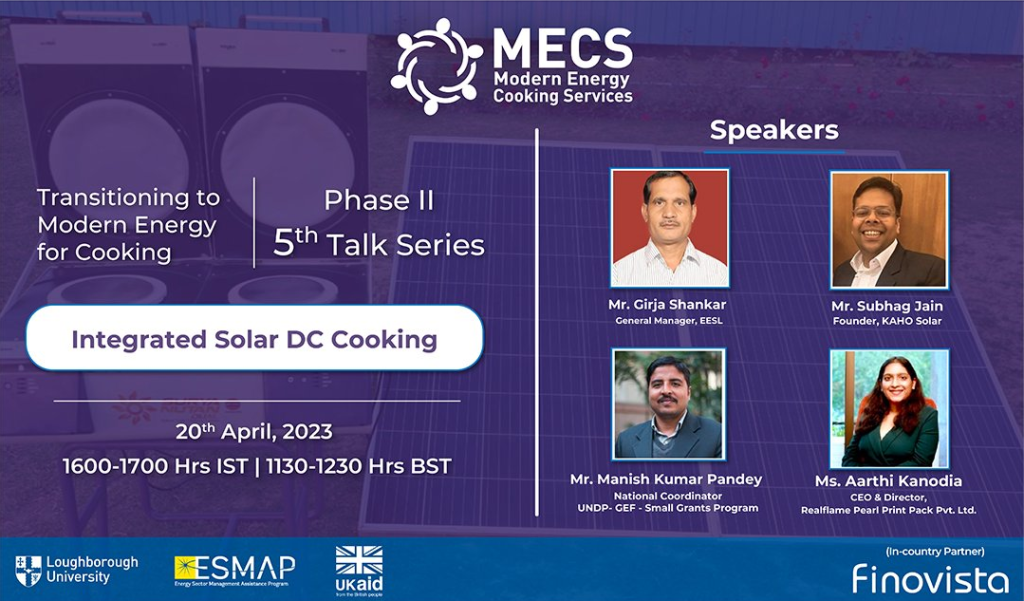
The fifth webinar in the second phase of the Talk Series, held on 20 April 2023, focused on discussing more innovative efforts in the field of integrated solar DC cooking with more attention to its viability, cost effectiveness and acceptability with respect to Indian households and also to understand and explore critical and exciting area of innovation and specific technical development with the objectives of ease of manufacturing the device, making it user friendly and cost reduction.
Webinar 4: Electric Cooking Device requirement to solve specific challenges of Indian Cooking Culture
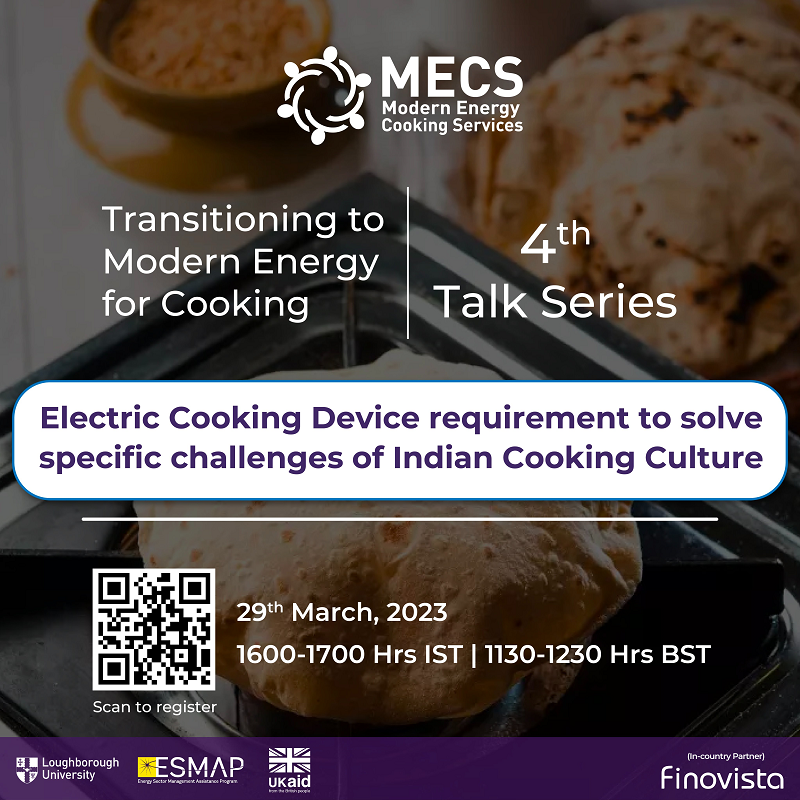
The fourth webinar in the second phase of the Talk Series, held on 29 March 2023, focused on the challenging tasks in electric cooking and discussed innovative efforts in the field of electric cooking devices with more attention to Indian cuisine for critical and exciting areas of innovation and specific development.
Webinar 3: Development of Components and local Supply Chain ecosystem for Cooking Device manufacturers
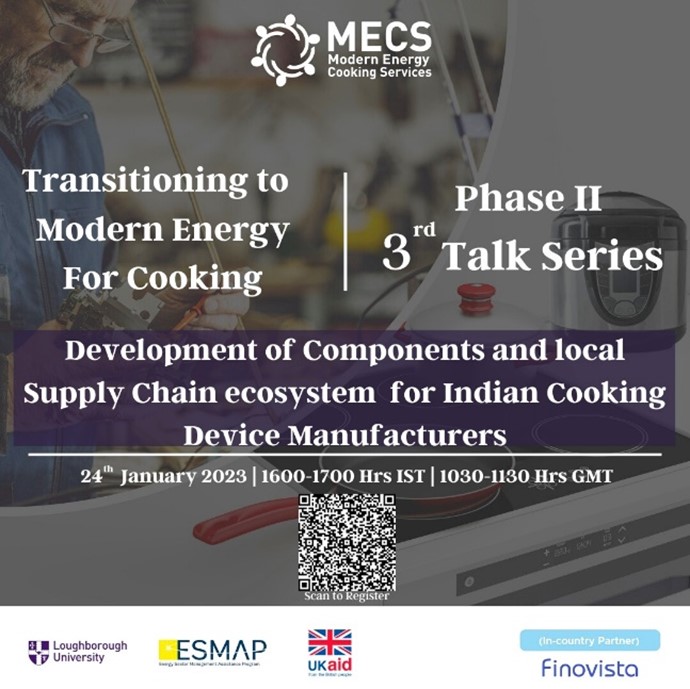
The third webinar in the second phase of the Talk Series, held on 24 January 2023, focused on the development of components and the local supply chain ecosystem for Indian cooking device manufacturers. The Talk Series aims to seek stakeholders’ inputs regarding underlying challenges as well as enabling measures that can facilitate the development of local manufacturing in the electric cooking device sector to meet domestic requirements and also pave the way for export-oriented growth of the sector. The session also focused on understanding supply chain challenges with respect to specific components of clean cooking devices, their design and manufacturing capabilities that can be easily scaled up locally, current challenges of standards development, policy/regulations and how the same can be enabled, and lastly the tariff-related issues.
Webinar 2: Standards and Labelling- Electric Cooking Devices
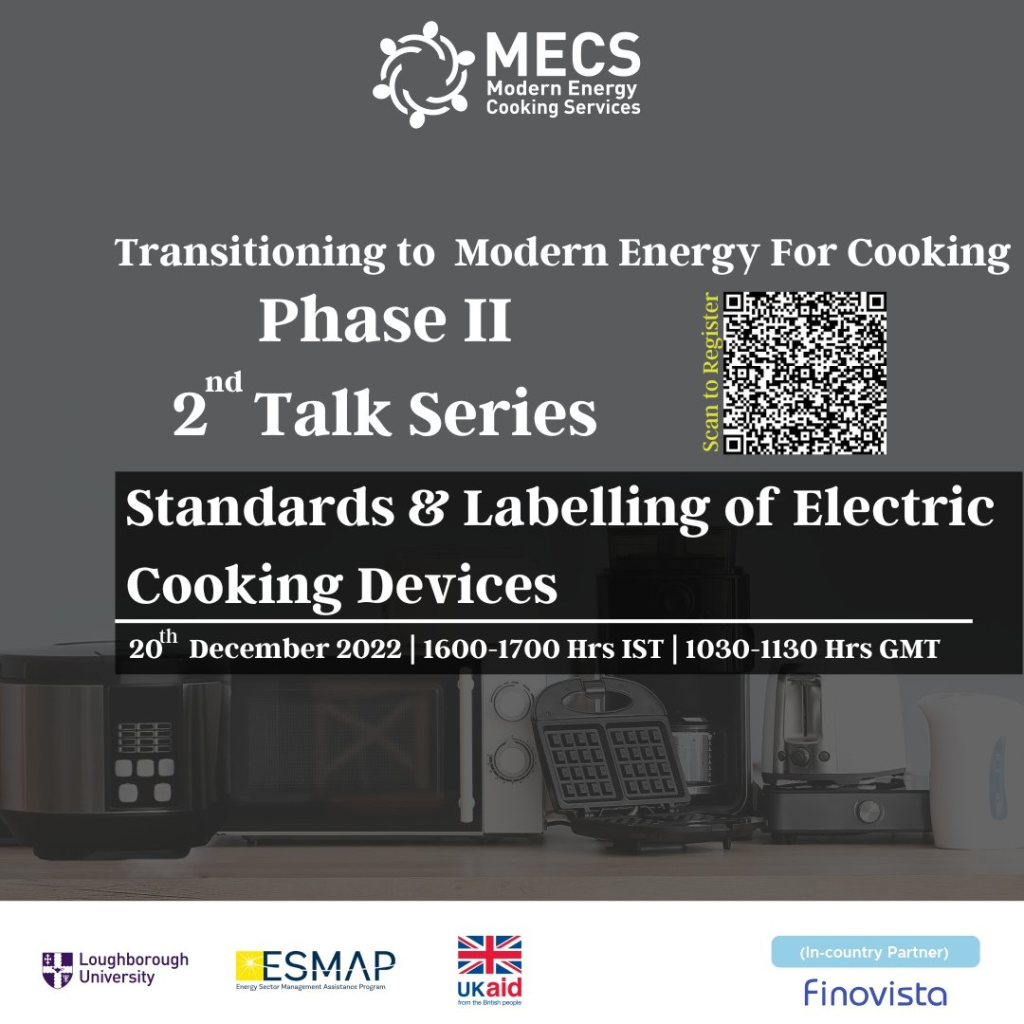
The second webinar in the second phase of the Talk Series, held on 20 December 2022, focused on standards and labelling for electric cooking devices. In this session, we aimed to adopt a collaborative and consensus-driven approach with active participation from the key stakeholders, to understand the key aspects that are critical to developing the standards and labelling for electric cooking devices, which help the manufacturers based in India and globally, to supply in their domestic markets and also enable an effective global supply chain for electric cooking devices. Aspects of safety, ease of use and adaptability, simplified technology from the user’s perspective, value for money and energy efficiency, and environmental protection must be discussed in order to promote the safety aspects in locally produced electric cooking devices or imported devices. Further performance requirements relating to energy consumption, time requirements for cooking, avoidance of energy wastage/energy leakage, and degradation of materials used in the devices over a longer duration of use must also be addressed and discussed.
Webinar 1: Carbon Credit Project Opportunities in Modern Energy Based Cooking
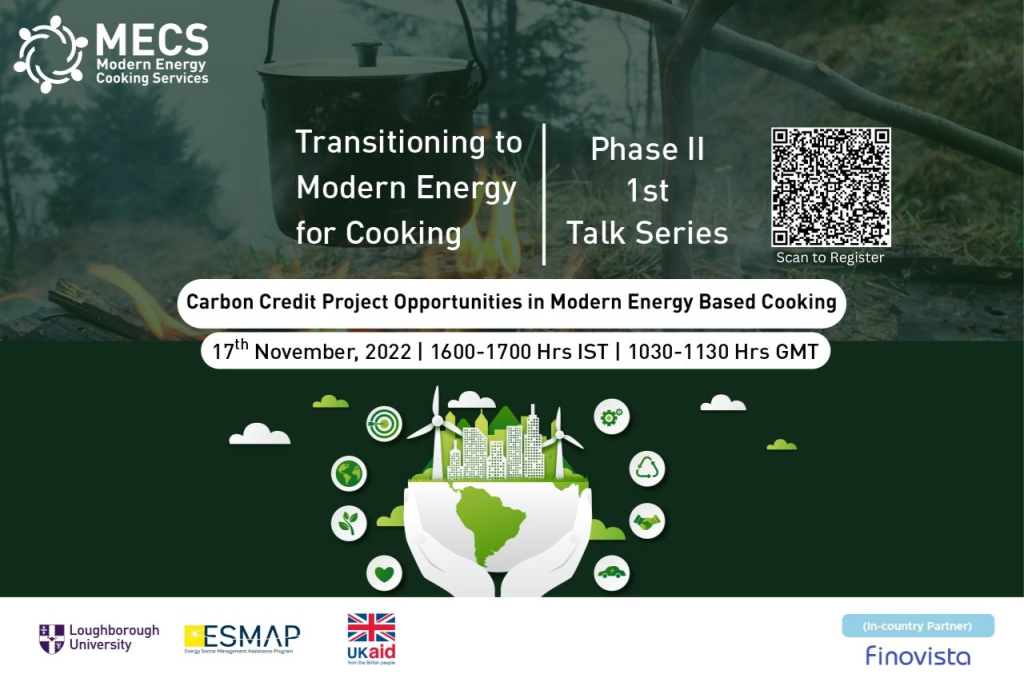
The first webinar in the second phase of the Talk Series, to be held on 17 November 2022, focused on carbon credit project opportunities in modern energy based cooking. There is an increasing market demand for carbon credits from projects across the world which provide benefits such as improved health outcomes, biodiversity enhancement, gender equality, etc. However, Indian carbon producers, especially in the MSME sector, cannot reap the benefits due to poor awareness about climate/carbon financing mechanisms, limited technical capacity to design and implement carbon projects, lack of clarity on fair price sharing and legal arrangements, etc. In this session, we focused on the need and methodologies of enabling and integrating the small and medium-scale device manufacturers to effectively and actively take benefits of carbon financing to bring down the cost of devices and make them more competitive and simultaneously benefit from the voluntary carbon market.
Webinar 12: Capacity Building for Entrepreneurs in Clean Cooking
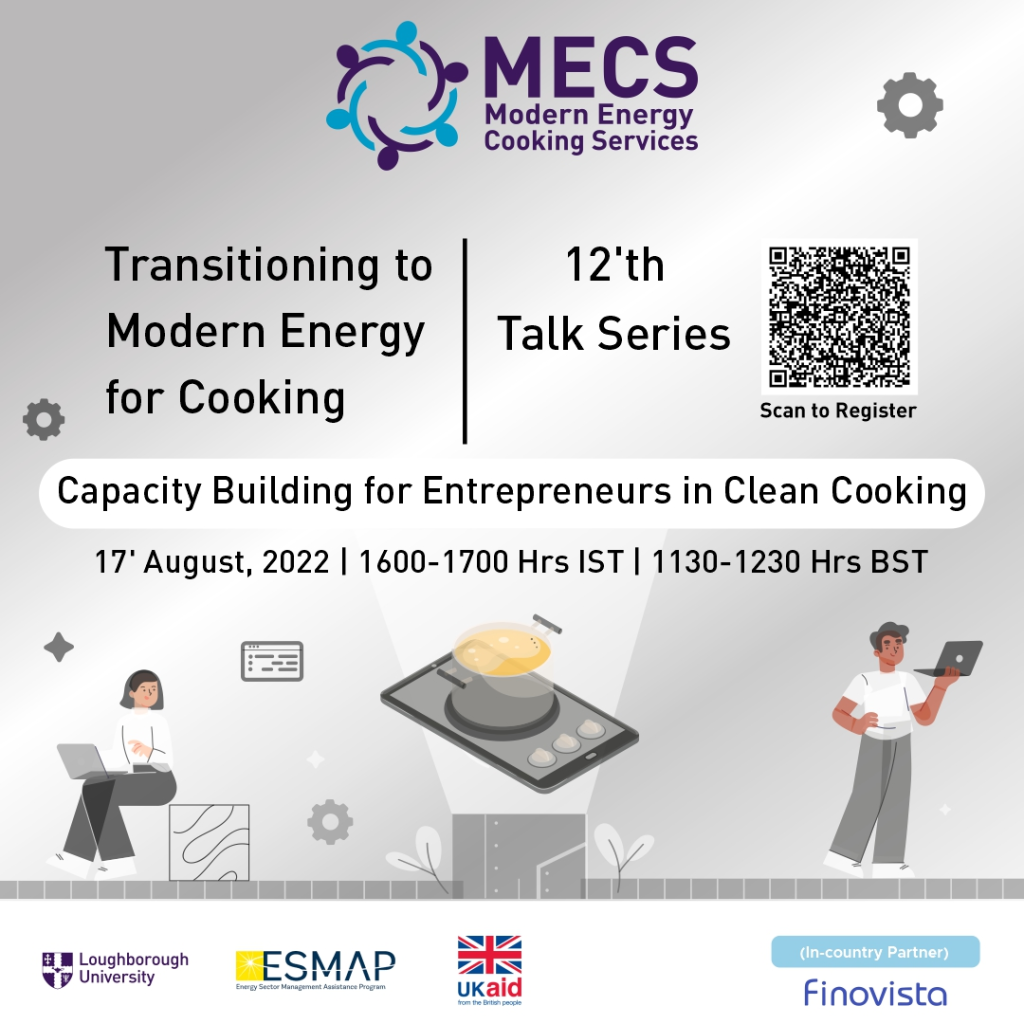
The twelfth session in the series, held on 17 August 2022, focused on the overall scale-up support required for entrepreneurs in the clean cooking domain. With India’s vision to become a “global hub for clean cooking device manufacturing”, MECS is working closely with Indian device manufacturers and stakeholders. This is also in line with India’s initiatives “Atmanirbhar Bharat” and “Make in India” and the promotion of electric cooking as per the GoElectric campaign. In this session, we aimed to steer conversations about the value of entrepreneurial growth in a sector, including clean cooking and the necessity of capacity development programmes. We also heard about the experiences of participants of the MECS supported Entrepreneurship Development Programme in India 2022.
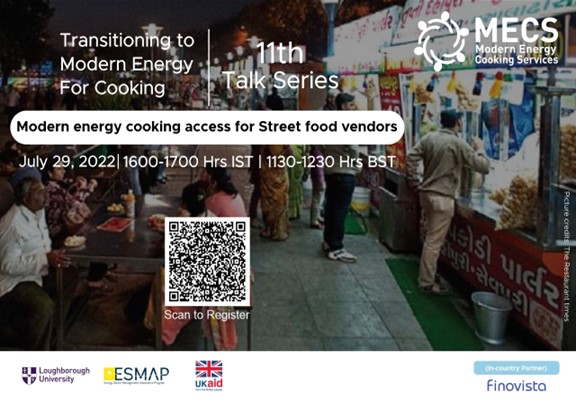
Webinar 11: Modern energy cooking access for street food vendors
The eleventh session in the series, held on 29 July 2022, focused on modern energy cooking access for street food vendors. The session addressed the general apprehension that modern energy has higher cost implications and may lead to lower profitability. The talk and discussions aimed to understand the feasibility and viability of clean cooking – solar and electric for street vendors and provide support, viz, policy support to informal business owners and their customers, rather than by the broader energy discourse; device optimisation and productivity. The session also emphasised increasing profitability through efficiency and productivity among street food vendors to improve their livelihood and provide increased business continuity and financial sustainability.
India is home to 5.5 million street food vendors, their contribution to the informal economy is 14%. Typical street vendors in India have an annual turnover of $13,000 and $130,000 (INR 10 lakhs to INR 1crore) and commonly provide jobs for 1-5 workers. Improving access to and use of modern energy by street vendors has the potential to uplift the street vendor’s income to a sustainable level, expand the client base, product or service range, and improve profitability.
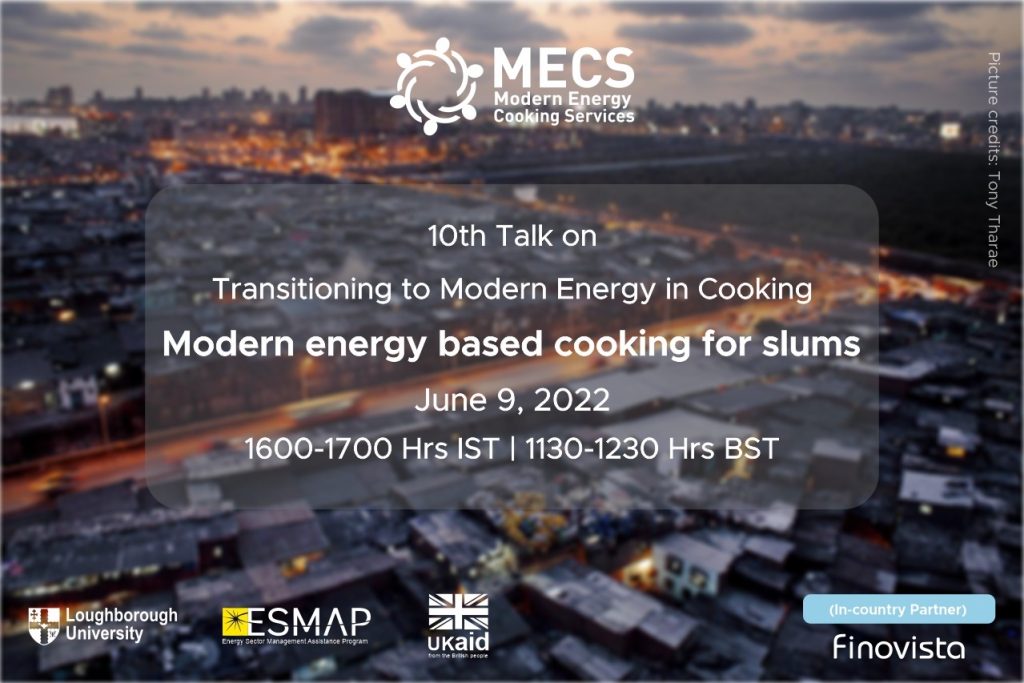
Webinar 10: Modern energy-based cooking for slums
The tenth session in the series, held on 9 June 2022, focused on modern energy-based cooking for slums. Slum communities in India account for roughly 17% of the urban population. They are more prone to health hazards by biomass burning because they have poorly constructed tenements with inadequate infrastructure, sanitation and improper ventilation resulting in enhanced exposure to indoor air pollution. Promoting modern energy cooking is challenging due to low income, education, electricity access, water supply and socio-demographic characteristics.
This session discussed the required energy and critical infrastructure to transition slum dwellers to the use of modern energy-based cooking solutions. The obstacles in promoting and marketing modern energy cooking solutions to slum dwellers and how switching to modern and sustainable cooking solutions can benefit the slum inhabitants. Discussions took place on findings from existing research studies on slum development in Southeast Asia and on developing robust energy infrastructure in slums based in the eastern part of India. Furthermore, India is working on a state-level Energy Action Plan (EAP), in which, modern energy cooking can also become part of it.
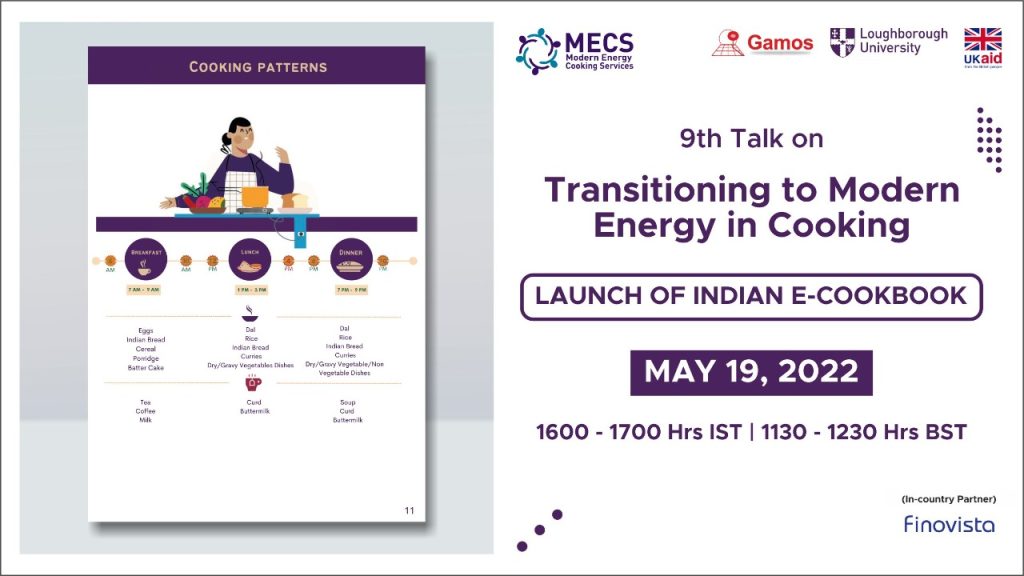
Webinar 9: Launch of the Indian eCookBook
The ninth session in the series, held on 19 May 2022, focused on the topic “Launch of the Indian eCookBook”. The session focused on showcasing the results and major findings of the cooking feasibility study with the electric pressure cooker (EPC) with reference to Indian dishes.
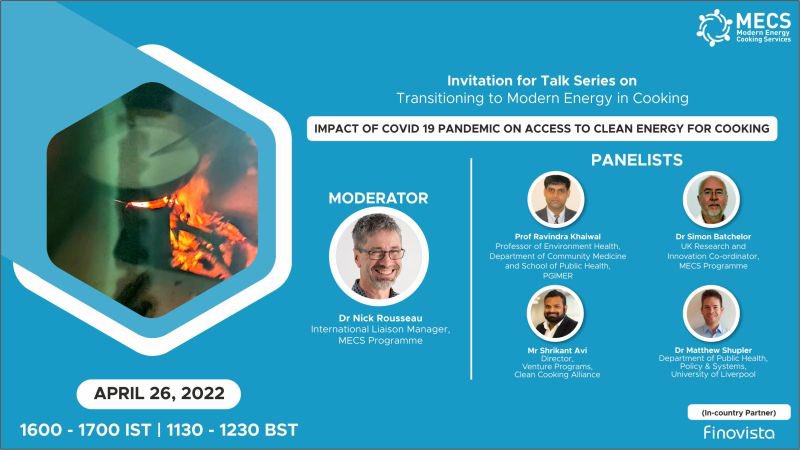
Webinar 8: Impact of COVID 19 Pandemic on Access to Clean Energy for Cooking
The eighth session in the series, held on 26 April 2022, focused on the topic “Impact of COVID 19 pandemic on access to Clean Energy for Cooking”. The session aimed to explore the key trends that have emerged during the pandemic and how these trends have impacted the consumer’s paying capacity, willingness to switch over to cleaner cooking solutions, access to clean energy solutions, and energy infrastructure.
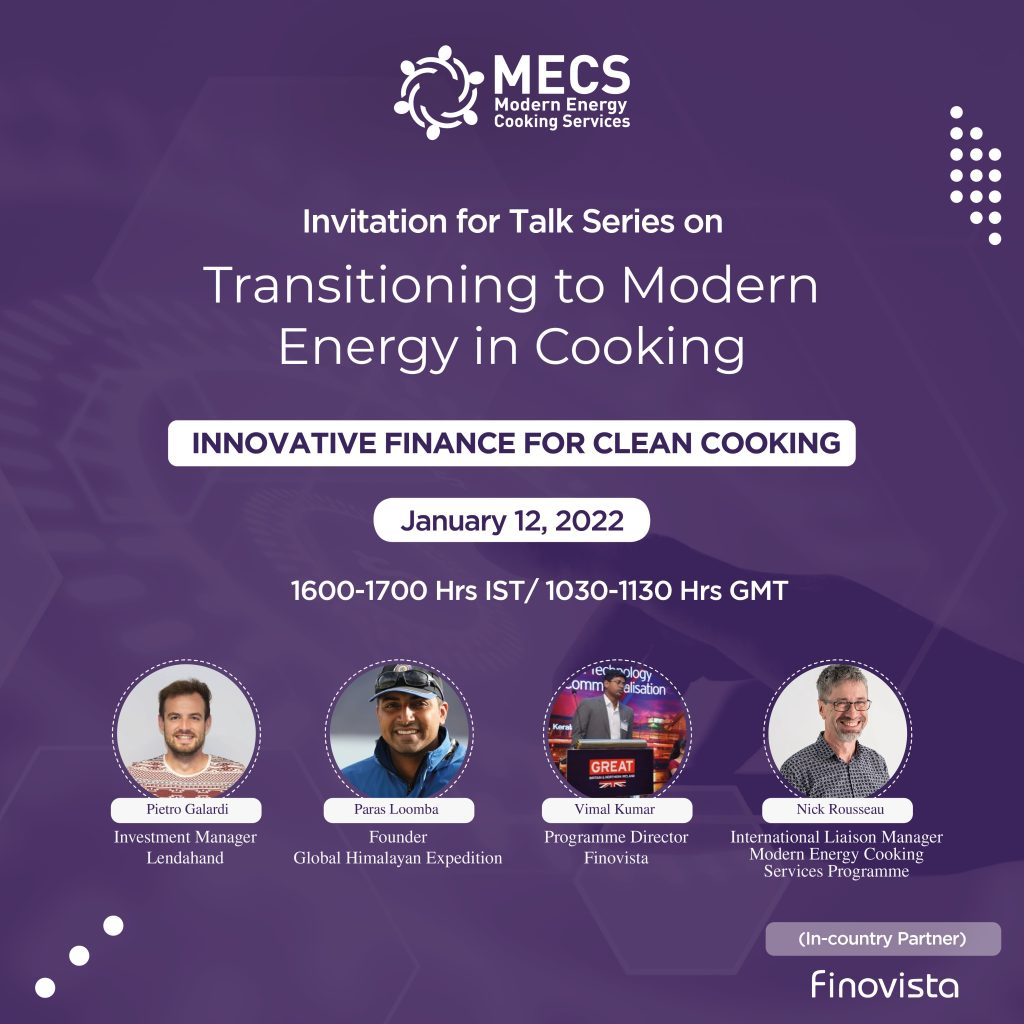
Webinar 7: Innovative Finance for Clean Cooking
The seventh session in the series, held on 12 January 2022 from 10:30-11:30 GMT, focused on financing models needed to scale up modern energy cooking solutions through accelerated investment and market deployment. The clean cooking industry has been traditionally marred by the challenge of access to finance, though this is changing fast with the emergence of innovative financing models. Despite a strong commercial potential and promising & scalable business models, the industry is often assessed from a development aspect. Innovative financing models have the potential to transform this industry into a strong market opportunity with sustainable growth potential.
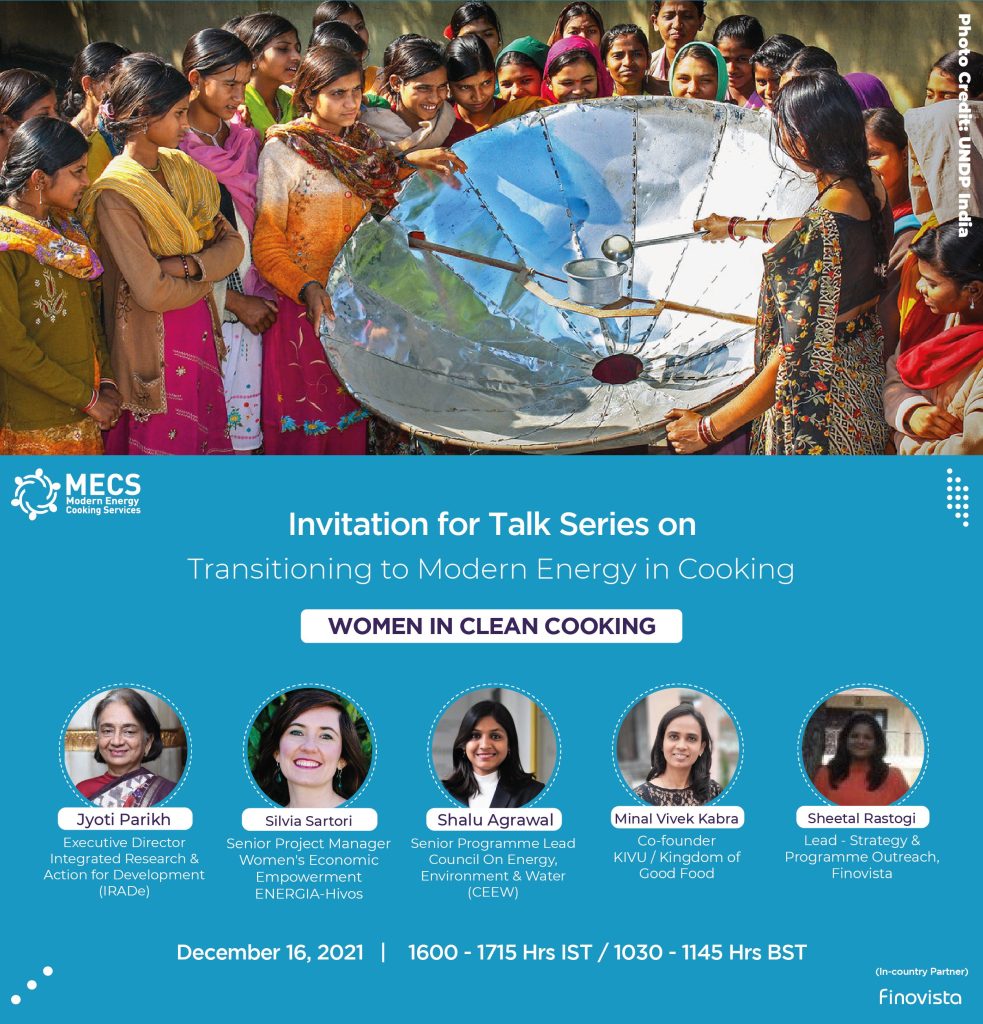
Webinar 6: Women in Clean Cooking
The sixth session in the series, held on 16 December 2021 from 10:30-11:45 GMT, focused on the critical role of women in achieving universal access to clean cooking and the importance of establishing an inclusive sector with an enabling and user-centric environment.
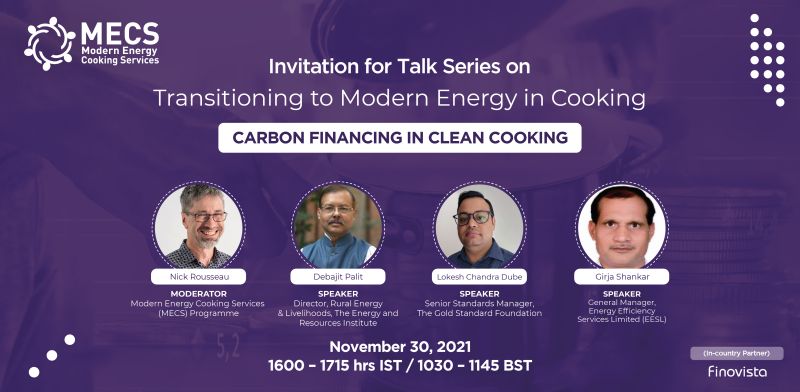
Webinar 5: Carbon Finance for Clean Cooking sector
The fifth session in the series, held on 30 November 2021 from 10:30-11:45 GMT, focused on on the role of carbon credits in boosting the clean cooking device sector. The session covered carbon financing and how the clean cooking sector can leverage innovative financing instruments to bring down the cost of ownership for the clean cooking devices which could further enhance the uptake of such devices and enable the transition to clean cooking.
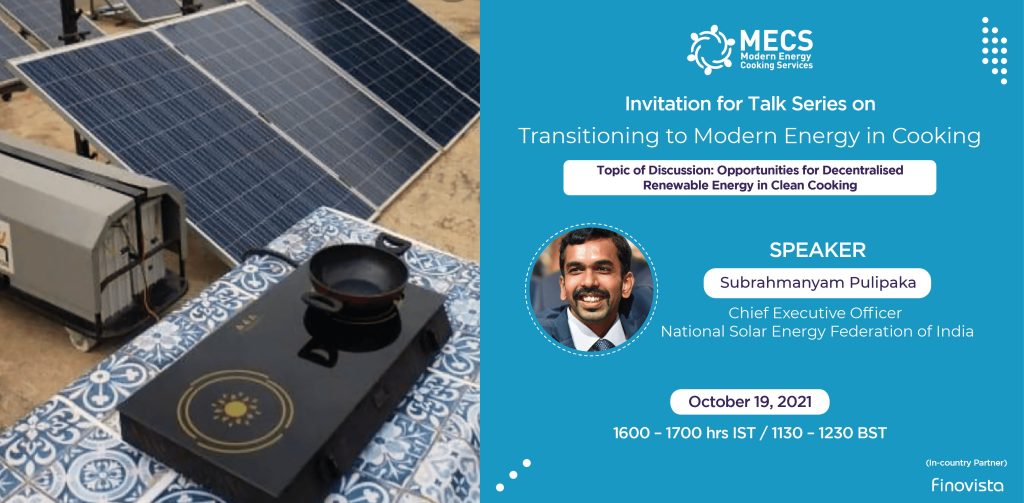
Webinar 4: Opportunities for Decentralised Renewable Energy in Clean Cooking
The fourth session in the series, held on 19 October 2021 from 11.30-12.30 BST, focused on analysis of the quality of decentralized renewable energy in clean cooking across India, and the additional revenue opportunities that can emerge from modern energy cooking.
Webinar 3: Opportunity for DISCOMs in Electric Cooking
The third talk session in the series, held on 5 August 2021 from 11:30-12:30 BST, focused on the ‘Opportunity for DISCOMs in Electric Cooking‘. The topic focused on analysis of the quality of electricity across India, and additional revenue opportunities that can emerge from electric cooking.
Webinar 2: Transitioning to Modern Energy Cooking: Barriers to Scale-Up and Possible Solutions
The second webinar in the series, held on 2 July 2021 from 11.30-12.30 BST, focused on ‘Transitioning to Modern Energy Cooking: Barriers to Scale-Up and Possible Solutions‘. The webinar focused on analysis of the barriers to scaling up clean cooking across India, and what could be the possible innovative approaches and solutions to address them.
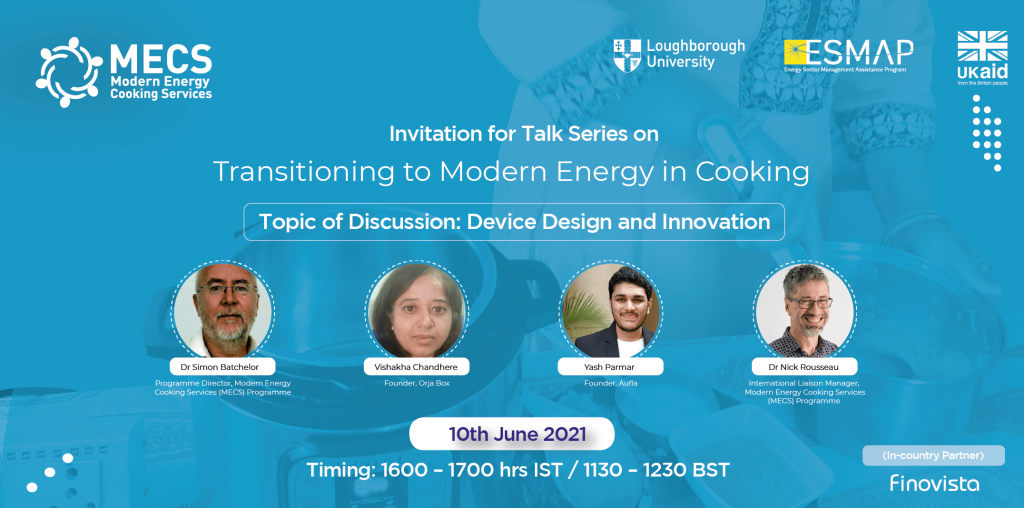
Webinar 1: Transitioning to Modern Energy in Cooking: Device Design and Innovation
The first Talk on Transitioning to Modern Energy in Cooking: Device Design and Innovation was held on 10th June 2021, 11.30-12.30 BST. The topic for the first talk was “Device Design and Innovation”, which focused on the various aspects of Design and Innovation in the new age cooking devices and the vital role they play in enabling the shift to clean cooking and also on efficiency, usability and consumer convenience.