
- Date
- 8th October 2025
- Categories
- Clean Cooking, Electric Cooking
By Syprose Ochieng, Dr Jon Leary & Joseph Kariuki (Gamos East Africa; MECS)
The Clean Cooking Week (CCW) is an annual event that has been held since 2020 as a collaboration between the Ministry of Energy and Petroleum (MoEP) and Clean Cooking Association of Kenya (CCAK) . The 6th Edition of Clean Cooking Week took place from 26th to 28th August 2025 in Kilifi County under the theme: “Implementing Clean Cooking Strategies and County Energy Plans: Transformation, Inclusivity and Empowerment”. This week-long event brought together international, national, county leaders, local policymakers, innovators, community representatives, and development partners in a shared mission to champion clean, sustainable cooking solutions across Kenya.
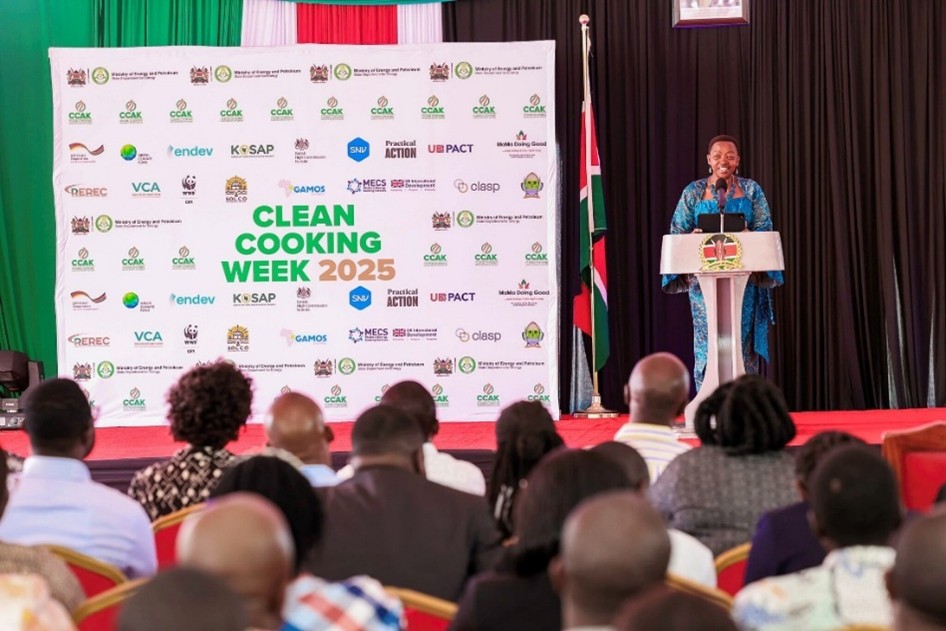
The event started with a ceremonial tree planting with Her Excellency the First Lady of Kenya Rachel Ruto with all the dignitaries, then touring the exhibitions and finally proceeding to the main event where there was a series of high-level participation, with opening remarks from the Clean Cooking Association of Kenya (CCAK) Chairman, Daniel Wanjohi reminding the audience that “Implementing the Kenya National Cooking Strategy and advancing county energy plans is not only about providing safe and modern cooking solutions, it is about accelerating our energy transition, fostering innovation, and driving inclusive growth that reaches every household. It is also about creating opportunities for entrepreneurship, local manufacturing, job creation, and women’s empowerment, while advancing Kenya’s climate agenda.”
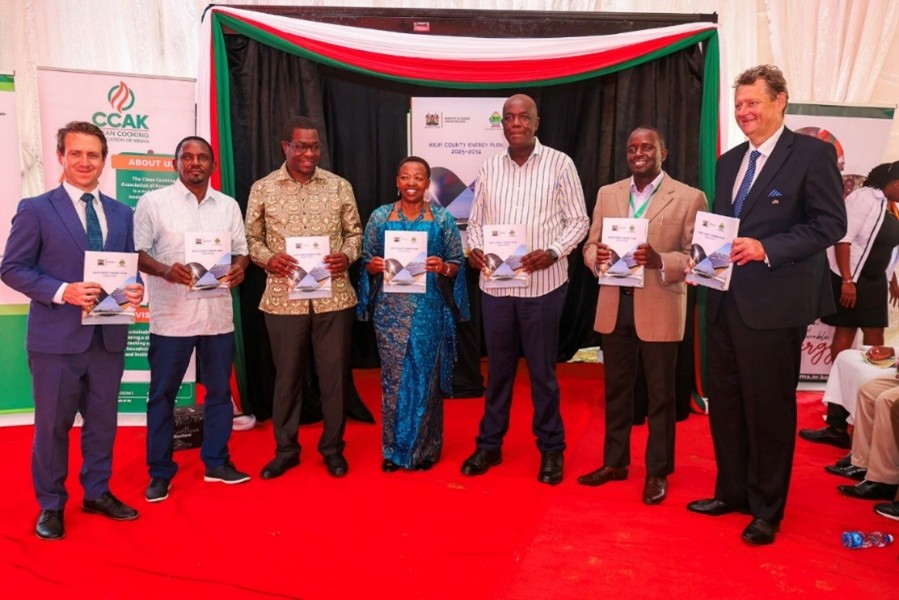
During his Keynote address, GIZ’s Country Director Bodo Immink, underscored the value of collaborative efforts in expanding clean cooking. The Governor of Kilifi County Gideon Mung’aro reiterated the urgency of clean cooking, pleading with Kilifi County residents to embrace clean cooking as a solution to deforestation, health problems, and lost livelihood opportunities. The cabinet Secretary Hon. J. Opiyo Wandayi, pointed out “Kenya’s nearly 93% renewable energy grid offers an unprecedented opportunity to adopt electric cooking, yet today only about 1% of households cook with electricity”, citing the Kenya National electric Cooking Strategy (KNeCS). The event was then officially opened by Her Excellency, First Lady Rachel Ruto. In her opening remarks, First Lady Rachel Ruto emphasized that clean cooking transcends mere technology and that it embodies dignity, health, and equality. She said that there should be no more smoky kitchens, no more children coughing while studying, clean cooking offers a future where households thrive. This was then followed by the launch of the Kilifi County Energy Plan, Investment Prospectus, and Clean Cooking Policy. These policy documents prioritize universal access to clean cooking by 2030.
Plenary Reflections
The three-day event was amplified by a diverse series of plenary sessions that showed the spirit of partnership required to accelerate universal access to modern sustainable clean cooking. These sessions covered important themes including the role of national and county governments in driving market growth through subsidies, resource allocation, and awareness campaigns; transformative partnerships; opportunities in carbon financing; and the role of inclusivity in ensuring that clean cooking solutions reach the marginalized communities.
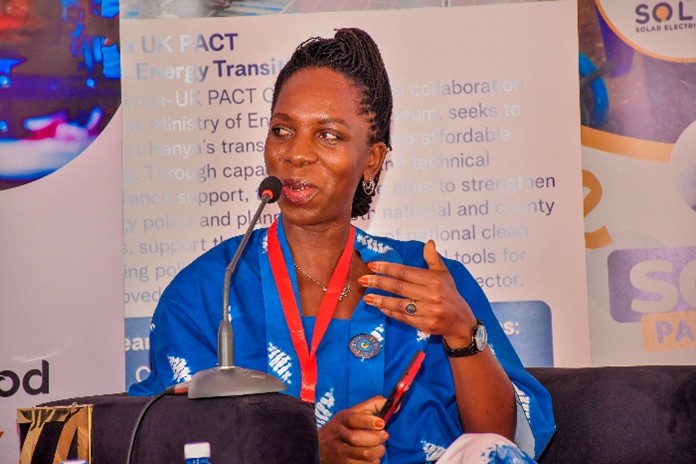
The experts also highlighted the importance of robust monitoring and evaluation frameworks to track progress and shape future strategies as well as the need for coordinated investments and knowledge-sharing to achieve large-scale adoption across East Africa. This was one of the sessions that Dr Jon Leary, MECS Programme Senior Research Associate and Director of Gamos East Africa contributed to (Image 3). Our colleagues at CLASP, Nyamolo Abagi, Director of Clean Energy and Program Associate (Image 4), and Mike Ofuya (Image 5) also contributed to the panel on leaving no one behind and on transformative partnership between governments, development partners, private sector, NGOs and academia. These sessions not only spotlight partnership, leadership, community involvement, knowledge monitoring and innovation, but also provided a roadmap for collective action centered on accelerating universal access to clean cooking.


Exhibitions Experience
The exhibition is usually like the main course of the clean cooking week. Before the official opening, all the dignitaries and the clean cooking community at large visit the exhibition area. Some people even prefer to spend all their week engaging with the exhibitors and understanding how the different solutions work. Some people come to buy appliances, while others discover clean cooking appliances for the first time and spend their visit seeking information. The exhibition is not just about showcasing appliances, technologies and innovations, but an awareness creation platform, research outputs sharing platform and a marketplace for the sector.
The exhibition gets better every year, and this year was no exception. This year saw many more sector players travelling across counties to showcase their eCooking solutions. Many of the sponsoring partners offered their exhibition booths to innovators, which was not only incredible but especially important for the small innovators. Despite the distance, eCooking innovators showed up; even those with large appliances like Ecobora, Feion Green Ventures and Technotech. Ecobora exhibited a range of large-scale eCooking solutions such as institutional solar-powered cookstoves, solar i-pan, solar i-fryer, solar water heaters, and household induction cookstoves, and conducted live fish frying demos with their solar i-fryer. Pika na Power team brought along their mobile demo kitchen, which not only displayed various eCooking appliances but also served as the tea serving spot for majority of the exhibitors.

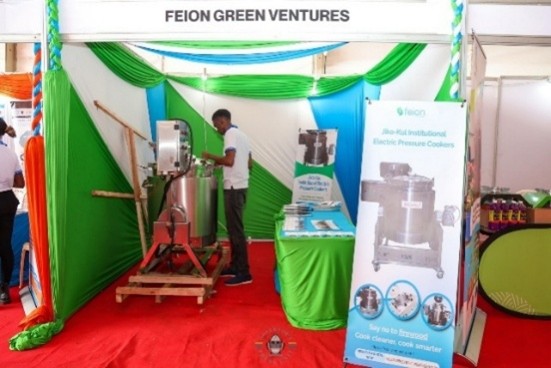
Feion Green Ventures presented JikoKul, a large-scaleEPC specifically designed for institutional settings and has now been featured on the electrify cooking series platform. We also had Sayonna Apps and Groupe SEB displaying their Tefal EPC; Practical Action and SCODE showcasing their own EPC known as Pawapot; Mwangaza Light presenting both electric Tefal and solar cooking appliances; UKPACT showing alongside SNV, and SOLCO showcasing alongside CCAK. Nyalore Impact and KOSAP also exhibited together through their KOSAP’s RBF project, highlighting eCooking appliances unlike the previous CCWs.
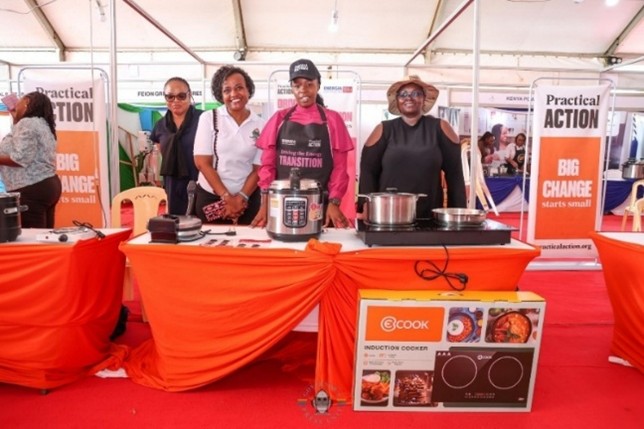

MECS Kenya and CLASP had the honours of hosting Her Excellency the First Lady of Kenya Mama Rachel Ruto, Gideon Mung’aro, Governor of County Government of Kilifi, and Opiyo Wandayi, Cabinet Secretary for Energy and Petroleum of Kenya, for an exciting live eCooking demonstration to which they cooked eggs using induction cookers. The cooking demonstration drove so much attention to our booth with everyone scrambling to witness. This was featured on NTV Kenya, a national media station: https://www.youtube.com/watch?v=-Vh_CBtyQak. The live demo was hosted by our very own eCooking Champion Agnes Kalyonge, the founder of Jikoni Magic.
This activity set out the mood for the rest of the week with a series of eCooking competitions that brought massive engagement to the booth enabling us to talk more about eCooking and its benefits while highlighting the broader impacts. By the end of the week CLASP was able to award three winners for the three days with complete set of Induction Cookstoves, and through the electrify cooking platform we also awarded a few followers with the ‘electrifycooking’ T-shirts and pins while the overall winner received an EPC!

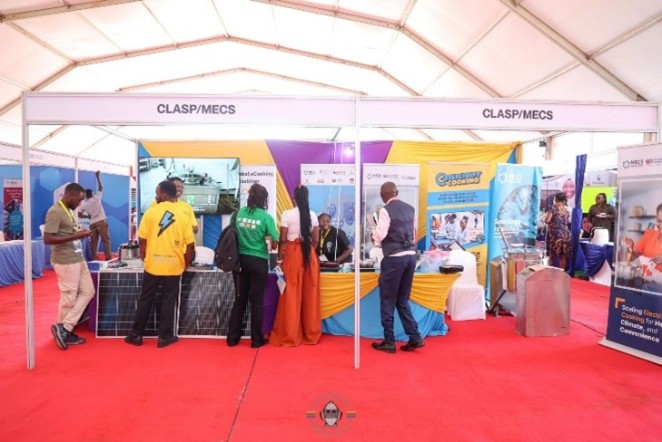
Apart from the cooking demos, we also shared a wide range of learning and communication materials from our research work that could be used for reference and awareness creation. Daniel Kipkemboi from Kisumu eCooking hub, who hosted at Ramogi Institute of Advanced Technology (RIAT), was also present, offering practical lessons on EPC maintenance and repair, as well as Sheldon from Kijani, talking about commercial eCooking.
This year new MECS Programme partners, SOLCO, CLASP and Danish Embassy joined the CCW and some even sponsored the event. Through their collaboration with CCAK and engagement with MECS through GeCCo, SOLCO are looking to work with private sector players who are not only technology suppliers but co-creators of inclusive business models that empower communities and unlock sustainable financing.


Gala Dinner
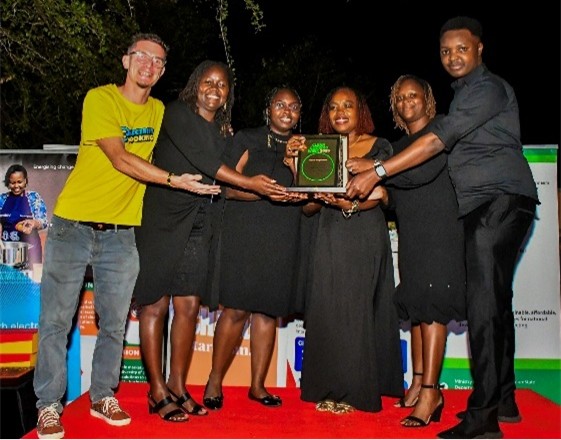
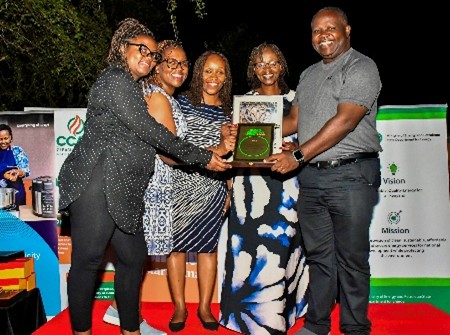
Clean Cooking Week takes a lot of effort to put together, from the planning to resource mobilization and plenary coordination. Taking a moment to celebrate the leadership and commitment of the sector’s champions is crucial to this process, hence the reason for the gala. We took the opportunity to recognise the sponsors who made the Clean Cooking Week a success and the counties that are helping to move the needle closer in, as far as clean cooking transition is concerned. The following counties: Kilifi, Nakuru, Nyandarua, and Homa Bay received special recognition through the County Clean Cooking Awards for their excellent work in supporting clean cooking transition. Kilifi county was a wonderful host and champion. The images below are some of the highlights from the gala dinner celebration.

Site Visits
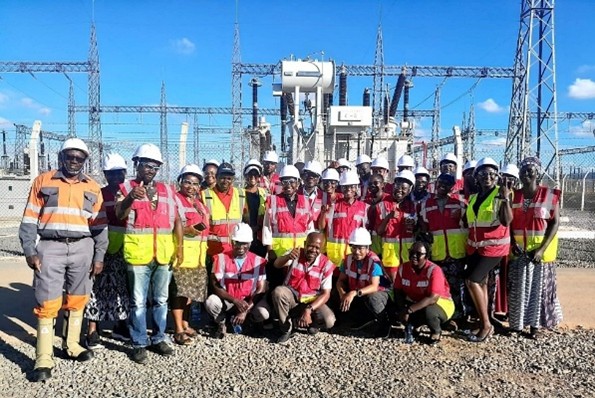
On the final day of the clean cooking week, over 60 participants and delegates were taken for site field visits to see some of the innovations that were going on in Kilifi County. They visited Giraffe Bioenergy, where CEO Dr Linda Davis, who is also a board member of CCAK took everyone through how drought-resistant cassava farming and innovative irrigation systems are driving a rural bioeconomy and creating a way for local bioethanol production. Giraffe Bioenergy are expected to produce over 15 million liters of ethanol annually and are planning to launch their first biorefinery in 2026. Later in the afternoon the delegates visited the Malindi Solar Power Plant with over 157,000 solar panels generating 40MW of clean energy. The plant’s kitchen is fully electric, but many of the surrounding communities are yet to be connected and still rely on firewood for cooking. We explored the role that the plant operator, Globaleq’s CSR funding could play in enabling community members to access off grid eCooking systems. These visits were a reminder that the clean cooking transition is not just about innovation, or the infrastructure but about connecting to the communities and offering impactful change in the society.

Conclusion
This year’s clean cooking week did not disappoint. It was more than just showcasing technology and knowledge sharing; it was about reaching out to the unreachable. Local participation is crucial in order to universally transition everyone to modern clean cooking and sustainable solutions. Seeing women come to participate with babies on their back, is a clear indication that there is interest in clean cooking and more so in eCooking. Kilifi County is ready for transition, they have the right policy documents, political good will and a community that is open minded and we are excited about the opportunities that will arise from this convening. Be on the lookout for the clean cooking week experience episode on the electrify cooking platforms for more.
***************************************************************************************************************
Featured Image: Her Excellency the First Lady of Kenya Rachel Ruto during eCooking demo at MECS Kenya, CLASP, & GeCCo exhibition booth. Image Credit: MoEP &CCAK.