- Date
- 7th April 2025
- Categories
- Finance, Health, Markets, Policy & Strategy, Repair and Maintenance, Supply Chains, Technologies
By Dr Helen Osiolo
This blog is the second in a three-part series on “Breaking Barriers, Unlocking Potential: Scaling Bioethanol for a Sustainable Future.”
This second article builds upon the previous discussion and explores the crucial role of multi-stakeholder collaboration in advancing bioethanol adoption in Tanzania. It is part of the ongoing series titled “Barriers, Unlocking Potential: Scaling Bioethanol for A Sustainable Future.” The first article examined how to unlock the potential of bioethanol by navigating consumer demand, supply chains, and policy frameworks. The third and final article in this series will focus on the complexities of scaling bioethanol, providing a comparative analysis of the strategies employed by KOKO Networks and UNIDO.
Tanzania’s path to scaling clean cooking solutions offers a compelling case study on the importance of multi-stakeholder integration in overcoming barriers to clean energy adoption. The UNIDO Bioethanol Clean Cooking Programme, with its collaborative framework, demonstrates how the coordinated efforts of development organizations, local private sector players, and government entities can drive large-scale clean energy transitions. This initiative, in particular, highlights how UNIDO (United Nations Industrial Development Organization), alongside key private sector stakeholders like Consumer Choice Company Limited, Multiplex Systems Limited, and Bukona Agro, has leveraged a holistic and inclusive approach to achieve impactful bioethanol adoption. By fostering an integrated platform of collaboration, Tanzania has made significant progress in addressing critical barriers such as affordability, consumer acceptance, and supply chain resilience.
A Multifaceted Approach to Scaling Bioethanol
As highlighted above, this article explores the crucial role of multi-stakeholder collaboration in advancing bioethanol adoption in Tanzania. It examines key strategies such as market segmentation, affordability, consumer empowerment, supply chain strengthening, local production, capacity building, conducive policies, all aimed at making clean energy solutions more accessible and sustainable for Tanzanian households, with the support of diverse partners.
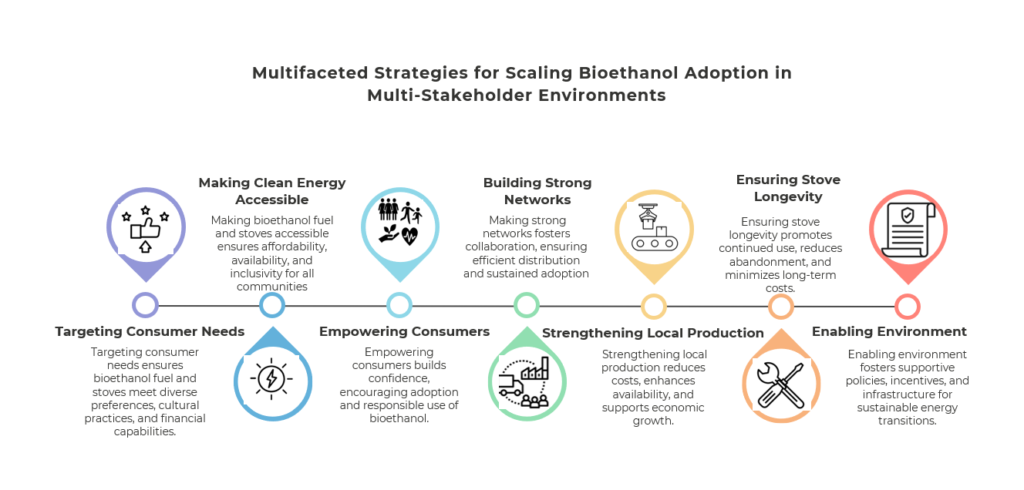
1. Targeting Consumer Needs: The Power of Market Segmentation
The UNIDO Bioethanol Clean Cooking Programme illustrates how market segmentation can play a pivotal role in scaling clean energy solutions. A significant strategy employed by UNIDO and its partners, including Consumer Choice Company Limited, is tailoring products to meet specific consumer needs based on meal types, cooking habits, and regional preferences. Through comprehensive market research, the programme has ensured that bioethanol stoves and fuel are suitable for a wide variety of Tanzanian cooking needs. Unlike traditional fuels like charcoal, which are primarily used for slow cooking, bioethanol similar to eCooking is promoted as a versatile solution for both light and heavy cooking, accommodating everything from quick meals to more time-consuming, traditional dishes. This is especially significant in regions where charcoal has long been the preferred cooking fuel. By aligning bioethanol technology with local culinary practices, the programme aims to effectively addresses cultural barriers, offering a technology that fits seamlessly into existing cooking customs.
2. Making Clean Energy Accessible: Affordability, Inclusion, and Pricing Strategies
Affordability is one of the primary barriers to the widespread adoption of clean cooking technologies, especially among low-income households. The UNIDO Bioethanol Clean Cooking Programme has effectively addressed this challenge through innovative pricing models and strategic partnerships with local private sector actors. Recognizing that many Tanzanians purchase cooking fuel in small quantities, the programme introduced bioethanol fuel in affordable, small units, such as half litre, one-litre, and five-litre bottles. This flexible pricing model mirrors the purchasing habits of traditional fuels like charcoal and kerosene, making bioethanol more accessible to a wider range of consumers. By allowing consumers to purchase smaller amounts, this strategy reduces financial risk and allows households to test bioethanol before committing to larger quantities, thus making the transition to clean energy more financially feasible. In addition, the programme includes a fuel subsidy to make bioethanol more affordable for low-income households, promoting clean cooking adoption and reducing financial barriers.
While UNIDO has not yet expanded distribution to rural areas, partnerships with companies like Consumer Choice Company Limited have been instrumental in ensuring bioethanol remains accessible in urban centres like Dar es Salaam, where the demand for clean cooking solutions is high. Consumer Choice Company Limited established distribution networks help mitigate logistical challenges such as stockouts and distribution delays that are common in urban markets. Through this partnership, bioethanol products are reliably available in urban areas, making it a more accessible alternative to eCooking, LPG, charcoal, and kerosene.
In terms of inclusivity, the programme has made significant strides in ensuring that bioethanol adoption reaches underserved and marginalized populations. By introducing innovative pricing and distribution models, including targeting women vendors in urban areas, the programme addresses the financial barriers that often prevent low-income and marginalized groups from accessing clean energy solutions. Furthermore, corporate partnerships with Azam Bakhresa Group aim to distribute 10,000 bioethanol stoves to marginalized households, especially targeting women vendors, through their Corporate Social Responsibility (CSR) initiatives. This focus on gender inclusion ensures that women, who often serve as the primary household decision-makers for energy use, are actively involved in the clean cooking transition.
While UNIDO has not yet expanded distribution to rural areas, partnerships with companies like Consumer Choice Company Limited have been instrumental in ensuring bioethanol remains accessible in urban centres like Dar es Salaam, where the demand for clean cooking solutions is high. Consumer Choice Company Limited established distribution networks help mitigate logistical challenges such as stockouts and distribution delays that are common in urban markets. Through this partnership, bioethanol products are reliably available in urban areas, making it a more accessible alternative to eCooking, LPG, charcoal, and kerosene.
By prioritizing affordability, accessibility, and inclusivity, the programme ensures bioethanol is accessible to both wealthier and low-income households, fostering equitable adoption of sustainable cooking technologies and ensuring the benefits of clean energy reach all socio-economic groups.
3. Empowering Consumers: Education Campaigns, Engagement, and Cooking Demonstrations
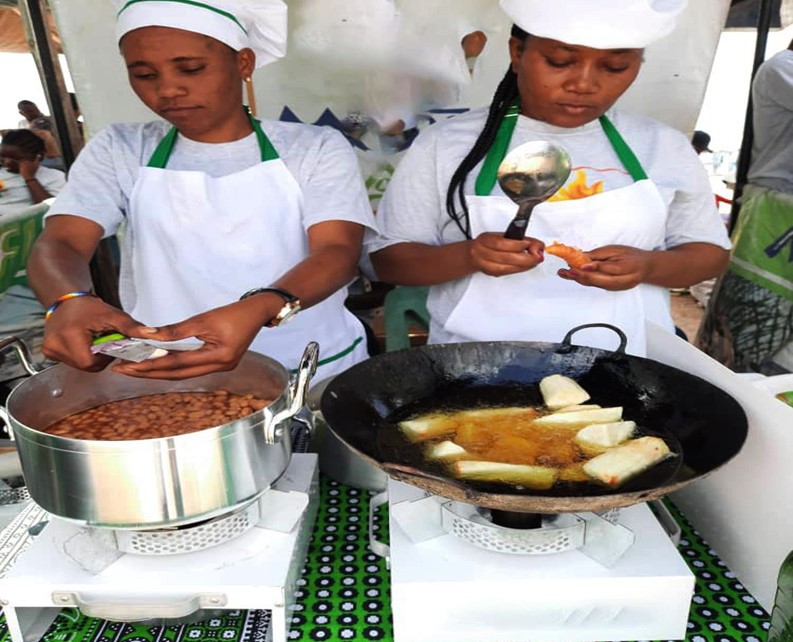
One of the most significant challenges in bioethanol adoption including other modern energy cooking such as eCooking is overcoming cultural resistance to switching from traditional fuels like charcoal and wood. The UNIDO Bioethanol Clean Cooking Programme has addressed this challenge through consumer engagement initiatives such as live cooking demonstrations, community-based outreach, and culturally appropriate marketing. Consumer Choice Company Limited has played a key role in facilitating these cooking demonstrations, where local communities could see firsthand how bioethanol stoves perform with traditional Tanzanian meals. This direct interaction with the technology has been crucial in building trust and fostering confidence in bioethanol stoves, allowing consumers to experience the stoves’ effectiveness in preparing familiar dishes.
In addition to these demonstrations, UNIDO has developed Swahili-language educational materials in partnership with Consumer Choice Company Limited to make bioethanol adoption more accessible. These materials, aimed at a wide range of literacy levels, have been designed to communicate the benefits of bioethanol stoves in a culturally sensitive manner. These efforts have proven critical in engaging a broader population and breaking down barriers to technology adoption, especially among communities that are traditionally resistant to new cooking methods.
4. Building Strong Networks: Strengthening the Supply Chain and Local Distribution
Consumer Choice Company Limited has been instrumental in developing a robust supply chain for bioethanol fuel and stoves. Through strategic partnerships with local distributors, the company has ensured the continuous availability of bioethanol, particularly in urban areas like Dar es Salaam, where the demand for clean cooking solutions is high. Although UNIDO has not yet extended distribution to rural areas, the focus has been on strengthening urban distribution networks and overcoming common logistical barriers that limit access to clean cooking technologies.
The ability to address stockouts, a recurring challenge for clean cooking solutions, has been crucial for maintaining bioethanol as a reliable alternative to traditional fuels. By collaborating with local distributors, Consumer Choice Company Limited has ensured consistent stock levels, improving the reliability and accessibility of bioethanol. This partnership has played a key role in strengthening the supply chain, ensuring that bioethanol remains a dependable solution for urban consumers.
5. Localizing Solutions: The Role of Regional Production in Scaling Clean Energy
A key success factor for the UNIDO Bioethanol Clean Cooking Programme has been the transition from reliance on South African imports to a more regionally integrated East African supply chain. Initially, the programme relied on imported stoves from Durban, South Africa, which resulted in higher costs, longer delivery times, and supply chain disruptions. To address these challenges, UNIDO and Consumer Choice Company Limited (CCL) partnered with Burn Manufacturing and Bukona Agro to establish a regional manufacturing and distribution network, ensuring a steady, affordable supply of bioethanol stoves and fuel.
The production of bioethanol stoves has since been regionalised, with Burn Manufacturing in Nairobi, Kenya producing stoves on behalf of Consumer Choice Company Limited (CCL) and playing a key role in meeting demand. This transition has shortened supply chains, stabilized production, and enhanced affordability, making bioethanol stove mores accessible to Tanzania consumers.
In parallel, bioethanol fuel production, has also been localized with Tanzanian companies, such as Kilombero Sugar Company and Kagera Sugar now producing bioethanol from sugarcane molasses. To supplement domestic supply, Uganda has emerged as a key exported to Tanzania, ensuring fuel availability remain stable.
By shifting manufacturing and fuel sourcing to East Africa, the programme has reduced logistical delays, lowered costs, and strengthened supply chain resilience. While earlier reliance on South Africa created vulnerabilities in affordability and distribution, this regional approach has enhanced energy security and made bioethanol a more reliable and accessible alternative to traditional cooking fuels across Tanzania.
6. Ensuring Stove Longevity: Capacity Building and Training for Maintenance and Repair
Consumer Choice Company Limited (CCL) has been central to capacity building, offering training to local distributors and repair agents. This has created a reliable maintenance network to keep bioethanol stoves functional and accessible for consumers in need of technical support.
In addition, CCL has partnered with Burn Manufacturing to handle major repairs, ensuring stoves remain in working order. These efforts are crucial in preventing stove abandonment, a common issue for clean cooking technologies. The programme’s ongoing training and repair services help strengthen consumer trust, ensuring that bioethanol stoves continue to be a sustainable and reliable alternative to traditional cooking methods.
7. Enabling Policy Environment for Scaling Bioethanol in Tanzania
The Tanzanian government, alongside the Global Environment Facility (GEF) and Tanzania Development Bank , has played a significant role in supporting the scale-up of bioethanol in the country. Her Excellency President Samia Suluhu Hassan has been a strong global advocate for clean cooking, and her leadership has reinforced Tanzania’s commitment to sustainable energy solutions. As a result, the Vice President’s Office has been a key driver of bioethanol promotion, actively supporting UNIDO’s efforts to expand clean cooking initiatives.
Key government bodies, including the Vice President’s Office, Ministry of Energy and Minerals (MEM), the Ministry of Trade and Industry, and the Tanzania Bureau of Standards (TBS), have worked collaboratively to establish a conducive environment for bioethanol adoption. The Ministry of Trade and Industry facilitated the integration of bioethanol into national policies, while the Vice President’s Office provided high-level political support, ensuring that bioethanol remains a priority in Tanzania’s clean energy transition. Additionally, the Tanzania Bureau of Standards focused on developing and enforcing standards for both bioethanol fuel and bioethanol stoves, ensuring product quality and safety.
This multi-faceted support helped establish a robust framework for scaling bioethanol solutions, ensuring that both the fuel and stoves meet the required regulatory standards for wider use in Tanzanian households.
Moving Forward
Stay tuned for Blog 3: Examines the complexities of scaling bioethanol, comparing the strategies of KOKO Networks and UNIDO.
Previous blogs in this series
***************************************************************************************************************
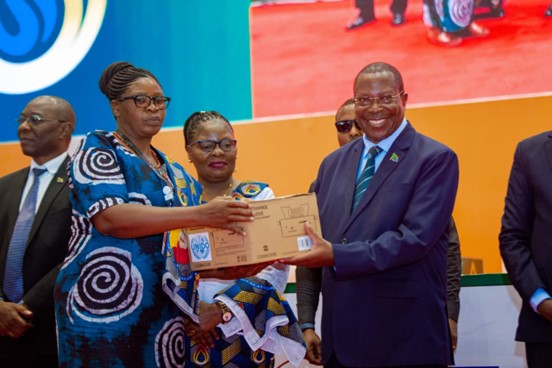
Featured Image: The Vice President of the United Republic of Tanzania, HE. Dr. Philip Mpango has commended the United Nations Industrial Organization (UNIDO) for promoting clean cooking solutions in the country. Photo credit: UNIDO