- Date
- 4th December 2025
- Categories
- eCooking, Gender, Supply Chains
By Joss Spencer, September 2025
One of the major barriers to the adoption of electric cooking (eCooking) is the lack of awareness of its benefits compared to traditional fuels such as firewood and charcoal, and misconceptions about its affordability. To address these challenges and promote the transition to energy efficient eCooking technologies, the MECS programme has been supporting the implementation of awareness campaigns across communities. As part of this effort, MECS commissioned Fern Marketing Company to lead a nationwide awareness campaign in Tanzania, highlighting the advantages of eCooking and encouraging communities to switch from harmful, traditional fuels such as coal and biomass to more efficient and cost-effective eCooking appliances.
Over the summer, I have spent time looking at how gender equality and equity and social inclusion (GESI) has been integrated into the eCooking awareness campaign in Tanzania. Embedding GESI within such campaigns is essential to ensure that they are designed and targeted to reach all groups, including those often left behind, so that everyone can benefit equally from the transition to eCooking. As increased adoption of eCooking has the potential to advance GESI by saving time spent on cooking, a traditionally female role, and by mitigating health impacts of traditional cooking fuels. I interviewed key various people involved in the design and delivery of the campaign, including team members from Fern Marketing, the MECS programme, and supply chain partners who are distributing and selling the clean cooking appliances. The assessment was guided by the gender framework (Khalifa, 2024), indicators, survey questions and guidance resources.
Promoting change by adapting a cautious approach
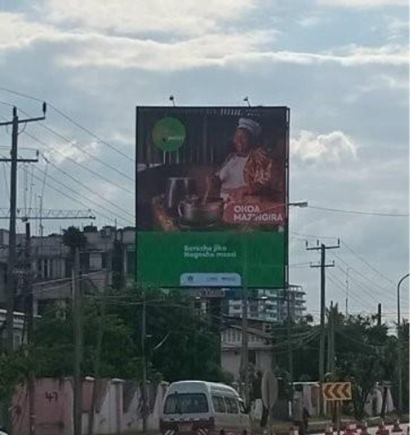
Although addressing gender inequalities is one of the key goals of encouraging eCooking, achieving it through this awareness campaign was challenging. Many interviewees were keen to mention the traditional nature of gender roles in Tanzania; women are primarily the ones who cook while men are the decision makers. This means actively challenging this norm in order to promote gender equality is unlikely to resonate well with the target audience as it opposes their cultural understanding of how housework should be shared. Rather than directly challenging gender norms, such as encouraging men to cook, Fern adopted a cautious approach, choosing to “change behaviour slowly and not to stir the pot” (Fern representative). For example, the campaign ensured there was an equal representation of men and women cooking on billboards to subtly show that cooking doesn’t have to be a gendered task. This gradual shift reflects efforts to promote change while maintaining cultural relevance. The campaign was also reviewed for stereotypes, with MECS and Swahili-speaking reviewers ensuring cultural sensitivity. Addressing inequalities was not the main goal during the initial design of the campaign, however, it was “interwoven” throughout, and Fern representatives described their focus was more as creating “blanket awareness.”
Gaps in inclusion and accessibility
The interviews revealed that a few crucial aspects were overlooked. Blanket awareness was seen as the main aim of the campaign and it allowed it to reach large audiences; however, this meant that some groups of people were left behind. Although materials were translated into local languages and mainly used audio, there was an overall lack of inclusion and accessibility provided for persons with disabilities, from both the media campaign and the supply chain partners. There was a lack of accessible media to spread the message, for example no braille and no sign language. Additionally, there was a lack of representation of people with disabilities being featured in the visuals of the campaign, which would have made it more inclusive and reflective of the target audience. By limiting accessibility and engagement, the campaign cannot be as inclusive as intended to reach everyone. Additionally, there wasn’t any goals set surrounding GESI, and it wasn’t seen as a major factor within the campaign by many of the people involved, despite being central to the MECS programme.
Similarly, many of the supply chain partners hadn’t adapted their products to make them more accessible or user-friendly for persons with disabilities. The cost of eCooking appliances also remains a significant concern among the population. Although the long-term cost benefits are addressed in the campaign, concerns around initial cost remain. The supply chain partners all have their own ways of providing financial assistance for example pay-as-you-go, instalment plans or loans, however these are all quite new and people are still unaware of the opportunities available.
Conclusion
The campaign reached a wide range of audiences across urban and peri-urban Tanzania using radio, TV, billboards, markets, and social media influencers. The awareness goal to reach as many as possible, cannot truly be achieved when marginalized people aren’t provided with equitable solutions and opportunities to engage. By only striving for “blanket awareness”, there are limits to reaching any particular GESI goals. The campaign doesn’t directly address key issues for people who are already disadvantaged, for example persons with disabilities or low-income families. Without specific plans to target such groups, it potentially restricts the full effect and impact that the awareness campaign can have. With eCooking having the potential to improve the lives of so many people, a socially inclusive approach is the only way to ensure everyone can be actively involved and benefit from the transition.
Reflections on the gender framework
Last year, MECS published the gender framework, which was developed to assess gender equality, equity and social inclusion in modern energy cooking interventions. The framework was designed to support project developers in identifying gender inequalities and social exclusions, developing targeted action plans, tracking progress and measuring impacts. The framework is structured into four main domains and thirteen sub-domains, each reflecting specific gender dimensions relevant to modern energy cooking services. Indicators, survey questions and practical guidance resources were also published to assist users in implementing the framework and conducting assessments.
The survey questions were originally designed to capture experiences of modern energy cooking related services at household and organization levels, rather than perspectives from companies involved in distribution and awareness raising campaigns. However, for this study, the survey questions were tailored to design the interview questions for representatives from Fern. The study mainly drew on Sub-domain 2.4: knowledge, information and technology, which was the most relevant domain for assessing the effectiveness of the awareness campaign. Eleven indicators from the gender framework were also used to assess both the awareness campaign and the supply chain. Additionally, the household survey questions which were originally designed to assess the ability to access eCooking, the social, economic and environmental contexts were modified to gain a better understanding of how gender equality, equity and social inclusion are being considered or overlooked within the supply chain.
This study offered a valuable opportunity to explore how project developers can engage with and adapt the gender framework to fit with the specific scope of their interventions. The framework assisted in structuring the analysis, however, applying it in practice required further modification. The study also identified areas where the framework can be refined and improved to enhance its suitability for various purposes. Overall, applying the framework enabled identifying gender inequalities and social exclusions that should have been considered in the design and implementation of such interventions, and providing practical recommendations for future initiatives.
……………………………….
Featured image: One of the billboards from the Tanzania National Awareness Campaign for eCooking (photo credit: Fern).
No AI was used in the production of this blog post.