- Date
- 13th November 2025
- Categories
- Modern Energy Cooking
By Dr. Simon Batchelor OBE (Gamos Ltd.).
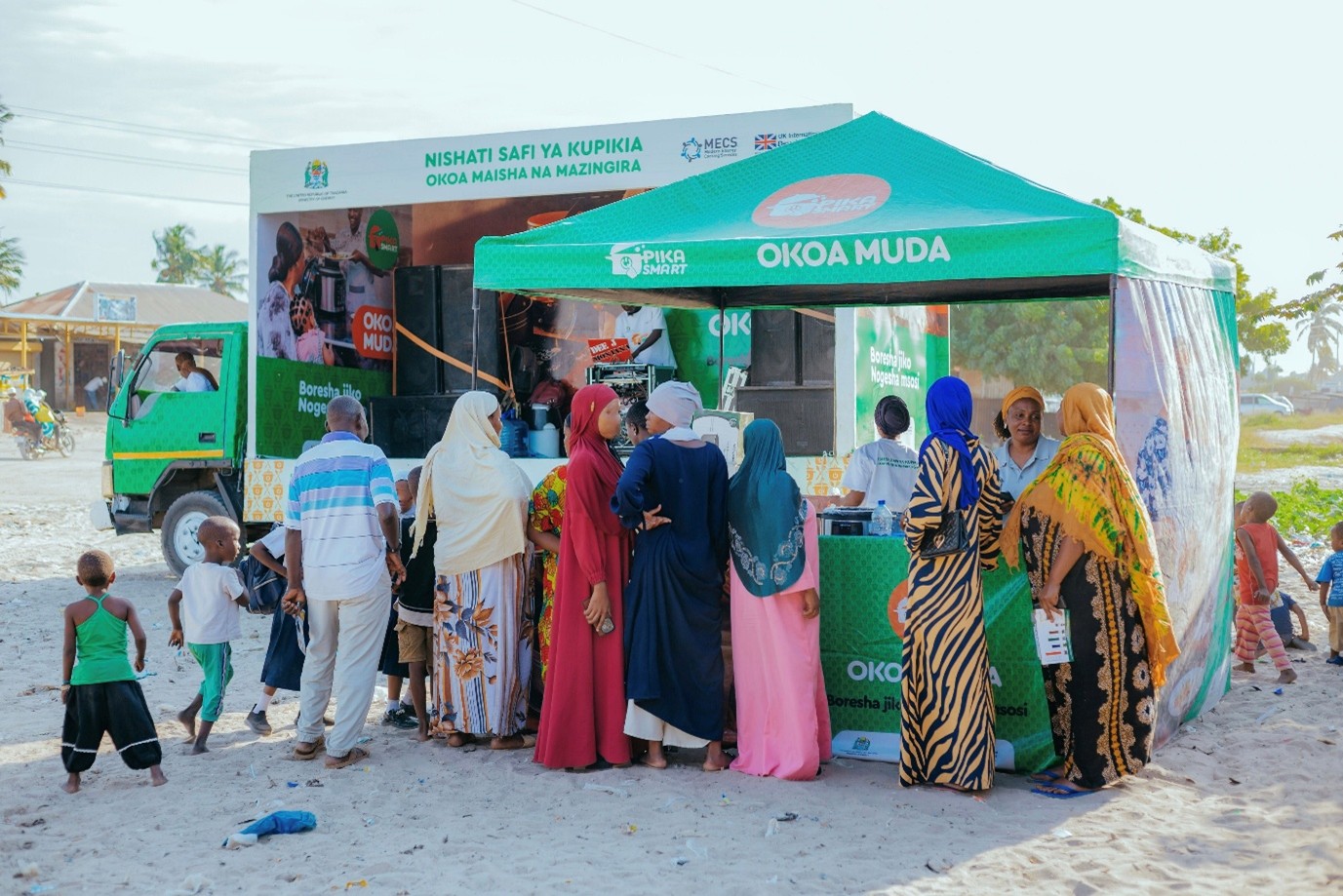
In their recent blog, Charles Barnabas and Anna Clements reflected on the eCooking Awareness Campaign called Pika Smart, particularly what audiences said at the roadshow demonstrations. Fern Marketing conducted 51 full-day roadshow events across six regions, alongside airing the Pika Smart message on TV, radio and billboards. Their reflections prompted me to revisit my MECS working paper, “Consumer Journey – Acquiring a Modern Energy Cooking Service”, which at the time launched without an accompanying blog. As it is a detailed working paper, this piece draws out key insights specifically on awareness-raising.
The Consumer Journey working paper maps the journey in eight stages, from initial awareness through to end-of-life. It argues that scaling modern energy cooking in Africa and Asia demands more than infrastructure or subsidies; it requires understanding how people first encounter, interpret, and trust information about new cooking options.
When a household first learns that cooking can be done differently — faster, cleaner, safer, and possibly cheaper — it begins a journey that may reshape daily life. That journey starts with an awareness spark. Someone hears a radio advert, sees a neighbour using a new device, or watches a short video showing a familiar meal cooked with electricity. These early encounters form expectations, challenge or reinforce myths (including the affordability concerns Charles and Anna noted), and set the tone for whether a household is willing to learn more.
Importantly, people do not all respond the same way. The Fern design for Tanzania recognises that awareness mechanisms must adapt to different types of consumers. This blog explores those early moments through the five MECS personas built from discrete-choice research: the Isolated Pioneer, Communal Energy Pioneer, Weakly Connected Pioneer, Connected and Busy, and Connected but Sceptical. Their stories illustrate how awareness spreads — and sometimes stalls — across different settings.
Awareness as a Crossroads
In the language of consumer journeys, “awareness” is the moment a consumer realises that a product or service exists. In development practice, the concept is wider. It is not just awareness of a brand or appliance, but the realisation that modern energy cooking — electricity, LPG, ethanol, or biogas — is possible at all.
This initial step is highly contextual. The same TV advert or billboard might trigger excitement in one place and scepticism in another. MECS research suggests that awareness that “sticks” depends on three related factors:
- Trusted sources – who delivers the message matters as much as the content.
- Relevant framing – time, safety, cost and convenience often resonate more than health or deforestation.
- Demonstration and social proof – seeing someone you know cook successfully with modern energy is often more convincing than advertising.
With these principles in mind, let’s explore how each persona might first encounter modern energy cooking. (As many programmes begin with urban audiences, the personas below are presented in a different order from the working paper.)
The Connected and Busy: Scrolling and Sharing
In the capital city, Anita rarely consumes traditional media. She gets information through short videos, influencers, WhatsApp and food blogs. One evening, a clip appears on her feed: “Quick Ugali in 15 minutes — no smoke, no mess.” The presenter cooks in a kitchen much like hers, and shows the estimated electricity cost per meal.
Anita double-taps, follows the page, and saves a recipe. Within days she posts in her office WhatsApp group: “Anyone tried one of these?” A colleague replies that she bought one on a payment plan from a local electronics store.
For this persona, digital media and peer-to-peer networks drive awareness. They value convenience, modernity and speed, but are alert to product quality and running costs. Successful campaigns for this group combine aspirational storytelling with practical details — wattage, cooking time, durability, and electricity use. A QR code linking to reliable information or a trusted retailer can transform curiosity into action.
The Connected but Sceptical: Reassurance Through People They Trust
Mr Okello, a retired teacher in a peri-urban area, reads the newspaper daily. He has seen articles praising electric cooking but remains unconvinced. “The bills will rise,” he says. His wife, who enjoys the flavour of charcoal-cooked meals, agrees.
Their son returns from the city with a small induction cooker. For weeks it sits unused. One afternoon, when time is short, Mrs Okello tries it to boil maize — and is surprised by the speed and cleanliness. When her church friend asks about it, she responds cautiously: “Maybe for tea.”
For this persona, awareness grows gradually through trusted personal experiences rather than mass campaigns. Once convinced, they carry social influence — their acceptance can legitimise modern cooking for others. Programmes can reach this group through demonstration ambassadors: respected community members modelling use in everyday life rather than through overt sales messaging.
The Weakly Connected Pioneer: From Billboard to Curiosity
In a small town with an unreliable grid, Peter notices a billboard featuring a smiling woman beside an electric pressure cooker, captioned: “Cook smart — save time and money.” It catches his attention, but he has experienced years of power cuts.
Later, a short segment on local TV features a family cooking beans with an EPC. The reporter notes that “Kenya Power now encourages electric cooking.” Endorsement from the utility makes the idea feel more realistic.
This is mass-media awareness — billboards, TV, and utility messaging — aimed at households who already have electricity but are not using it for cooking. Trust must be rebuilt after years of unreliable supply. Campaigns showing real local dishes cooked under local reliability conditions help shift perceptions. In-person demonstrations remain key to unlocking doubt and creating belief that “this could work here.”
The Communal Energy Pioneer: A Shared Experiment
In a fishing settlement powered by a solar mini-grid, electricity is used for lighting and charging phones. One afternoon, the mini-grid operator Jacob hears a radio feature on “Energy for All” discussing electric cooking. He realises that if households cook during the day, his revenue could extend beyond evening lighting hours.
He organises a small demonstration in the community hall and invites households, including Mariam’s. She attends partly out of curiosity and partly because a neighbour insists that “the radio man said it saves time.” The EPC works well, though the mini-grid trips once. Still, Mariam tells others at the fish-drying racks that it could be ideal for tea and rice — the seed of awareness is planted.
Here, awareness spreads through hybrid channels — radio, gatherings, and trusted local figures. When messages sound like national campaigns, they add legitimacy; when shared by neighbours, they feel authentic.
The Isolated Pioneer: A Demo Under the Tree
Far from the national grid, Amina spends hours each week collecting firewood. She is familiar with solar lanterns and phone-charging kiosks, but has never imagined solar energy could cook food.
A micro-solar agent arrives one afternoon with a “solar cooking day” — a mix of demonstration and outreach. He connects an EPC to a portable solar unit and invites women to see beans cooking without smoke. The group reacts with disbelief: “Can it really cook without fire?”
Amina sees, smells, and tastes the difference. She tells her husband, and both mention it at their cooperative meeting. For isolated communities, in-person demonstrations, trusted intermediaries, and hands-on tasting matter most. Leaflets achieve little; a working prototype leaves a lasting impression. The challenge is reach and repetition — awareness must be reinforced until finance and supply options catch up.
What Makes Awareness “Stick”?
Across these stories, common threads emerge:
- Trust is relational – People believe messages from those they know or respect, not necessarily from the “loudest” source.
- Emotion often outweighs information – Time savings, ease and a sense of progress resonate more strongly than health or environmental messages.
- Demonstration is proof – One successful meal witnessed firsthand can shift perceptions more than statistics or expert claims.
- Gender roles shape decisions – Men often approve large purchases; women control daily cooking. Awareness must speak to both.
- Myths persist – Beliefs such as “electricity is too expensive” or “food tastes better on charcoal” endure unless gently challenged with relatable local evidence.
Beyond Awareness: Ready to Consider?
Awareness alone does not lead to change. The Theory of Planned Behaviour suggests that moving from awareness to intention depends not only on knowing an option exists, but believing it is doable — affordable, available, and reliable.
Even so, awareness is the essential first gate. Without it, households never enter conversations about finance, reliability, after-sales service or cooking norms. Awareness is the moment where social norms begin to shift — when modern energy cooking moves from “strange” to “something my friend does.”
For programme planners, this means early-stage communication must be properly funded and evidence-based. Gender-aware campaigns, adapted to different personas, can have an outsized effect on later adoption.
Every clean-cooking journey starts with a spark — a story, a taste, a roadside demo, or a short video shared on WhatsApp. In policy language this is “awareness,” but in everyday life it is curiosity meeting possibility. The MECS Consumer Journey framework encourages us to treat that spark not as marketing noise but as a developmental hinge point. Each new conversation — under a tree, on the radio, in a shop queue or online — is a small but meaningful step toward cleaner kitchens and more empowered consumers.
……………………………………..
Featured image, top, credit: Fern Marketing.
Disclaimer: ChatGPT5 was asked to do a first draft of this blog extracting ideas from the working paper – the working paper was written without AI assistance, so original information human creation; outline of blog was AI, followed up by human editing.