
By Eva Idugboe
Day three of COP31 in Antalya, Turkiye, took MECS from a working session with the International Electrotechnical Commission (IEC) at the Standards Pavilion, to a BURN session at the Ghana Pavilion on electric cooking under Article 6, and on to Tanzania’s high-level side event on clean cooking in schools and health facilities.
The thread running through the day was what it takes to move electric cooking from pilots to scale: standards that make sure appliances perform, carbon finance that helps pay for them, and national plans that put institutions such as schools and hospitals at the front of the queue.
Standards and digital carbon credits with the IEC
The day began with a catch-up with the IEC team and its Secretary-General and CEO, Philippe Metzger, who was at the Standards Pavilion that day for a leaders’ session with ISO and UL Standards & Engagement.
MECS and the IEC are currently co-funding a study that follows a digitised electric cooking carbon credit from the moment it is created through metering, as it travels across an emerging digital value chain. The study is identifying strengths, gaps and alignment needs across project-level systems, standards, registries and international infrastructure. Its aim is a clear, practical and technically robust blueprint for an end-to-end digital carbon credit system for electric cooking: one that protects environmental integrity, works across registries (including Article 6 pathways) and stays reliable from data capture at the appliance through to final credit retirement. These issues will be discussed further at the 90th IEC General Meeting in Hamburg from 16th to 20th November.
The conversation also covered the work MECS has supported on national standards for electric cooking appliances under its FCDO-funded eCooking Scale and Support Programmes in Tanzania and Uganda, and explored further avenues for collaboration as both organisations continue to support the transition to electric cooking.
Electric cooking and Article 6: lessons from Ghana
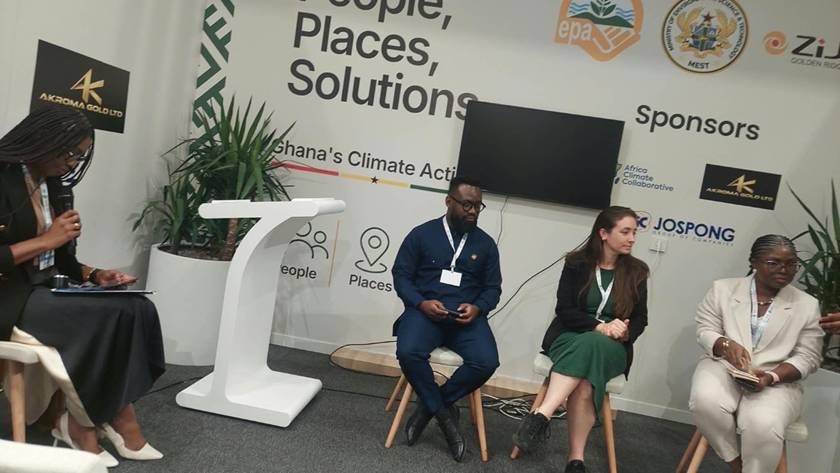
The second session, “Advancing Electric Cooking through Bilateral Cooperation: The Case of Ghana-Switzerland”, was hosted by BURN at the Ghana Pavilion. It offered a deep dive into BURN’s electric cooking programme in Ghana, which is financed through carbon credits under Article 6.2 of the Paris Agreement. In April 2026, BURN received a Letter of Authorisation from Ghana’s Ministry of Environment, Science and Technology and Switzerland’s Federal Office for the Environment, enabling it to distribute 100,000 of its IoT-enabled ECOA electric induction cookers to low-income households across northern Ghana and the Ashanti, Volta, Central and Eastern regions. The resulting carbon credits will be purchased by the Swiss KliK Foundation, and the cookers are expected to benefit around 400,000 people. As KliK notes, nearly 85% of Ghanaian households are connected to the grid, yet fewer than 1% cook with electricity.
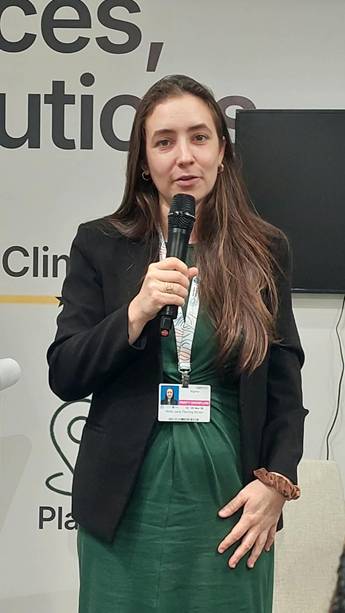
The presentations showed how carbon funding has allowed BURN to learn a great deal about running successful eCooking programmes in a country like Ghana, where electricity access is widespread but the grid is under strain, and where LPG already has a strong foothold in the market. Molly Brown of BURN gave a detailed account of the project, its successes and its challenges. Because each cooker is metered, the project also links directly to the digital carbon credit work discussed with the IEC earlier in the day.
Tanzania puts schools and health facilities at the centre
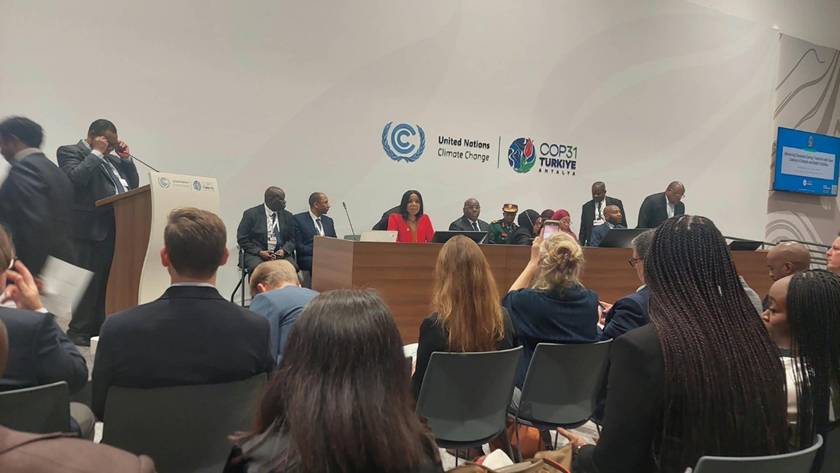
The day ended with what was, for MECS, the highlight of COP31 so far. A packed room of high-level delegates joined a session organised by the Government of Tanzania and SEforALL, “Advancing Tanzania’s Energy Transition and Clean Cooking in Schools and Health Facilities”, to hear directly from HE Dr Samia Suluhu Hassan, President of the United Republic of Tanzania. The session focused on the progress Tanzania is making in turning clean cooking ambition into reality, and the full session can be watched on YouTube.
Tanzania aims for 80% of its population to use clean cooking by 2034, with a particular focus on institutions that cook for large numbers of people, such as primary schools and hospitals. At the event, Tanzania’s Energy Minister, Juma Homera, reported that clean cooking use had risen to 28.6% in four years. Two videos set the scene: the first on Tanzania’s multi-fuel strategy, with a strong emphasis on electric cooking, and the second on institutional cooking, which focused largely on electric solutions. The International Solar Alliance offered to support modelling for every school to adopt solar, and the African Development Bank linked Tanzania’s plans to Mission 300.
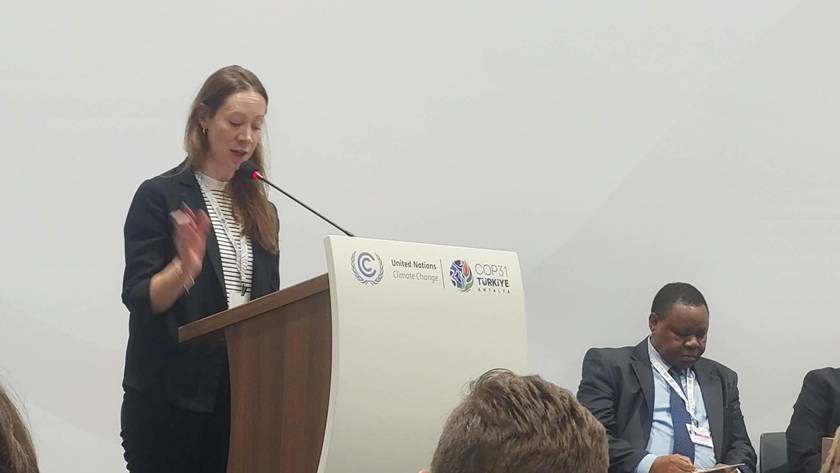
Speaker after speaker pointed to Tanzania’s leadership on electric cooking as a key strategic part of its journey. As Ros Eales, Director of the Energy and Climate Directorate at the UK’s Foreign, Commonwealth & Development Office (FCDO), put it: “Reliable affordable power can unlock clean cooking, create demand and strengthen the case for investment.” This is a truth the Tanzanian government has put at the centre of its clean cooking strategy. MECS is proud to have supported the defining and delivery of this ambition through the FCDO-funded Tanzania eCooking Scale and Support Programme, now in its third year.

Damilola Ogunbiyi, CEO of SEforALL, presented Tanzania as a model for other countries, and the Middle East Green Initiative’s Forward7, a fellow partner with MECS in the Platform for Clean Cooking in Schools, also contributed to the discussion. The Platform marked its first year at COP31 the day before, and you can read more in our blog, From the household to the school kitchen: one year of the Platform for Clean Cooking in Schools.
Talking superpollutants with We Don’t Have Time
Prof. Ed Brown was also interviewed by We Don’t Have Time for a special report from COP31 focused on super pollutants. Hosted by Nick Nuttall, the conversation brought him together with Durwood Zaelke, founder and President of the Institute for Governance & Sustainable Development, around a shared focus on methane. The interview will be published shortly and shared across MECS social media.
Looking ahead
Day three made one thing clear: this is the year the clean cooking discussion has come of age. No longer confined to back rooms or ignored completely, it echoed in panel after panel across multiple pavilions, with a new clarity of message and electric cooking increasingly front and centre. COP31 is about raising global ambition for accelerated electrification, and the growing electric cooking community is ready to play its part.
These themes carry into our event with the IEC, “Enabling Access to High Quality, Efficient eCooking Appliances for Emerging Economies”, on Thursday 12th November from 10:15 to 11:45 (TRT, UTC+3) at the Standards Pavilion in the Blue Zone.
……………………………………
Featured image: Prof. Ed Brown with the IEC team at the Standards Pavilion, COP31 (photo credit: MECS).
Photo credits: Ed Brown and MECS.
AI disclaimer: Drafted with AI, researched and edited by E Idugboe.