- Date
- 18th November 2026
- Categories
- Scaling eCooking
By the ACUASA team.
Sell someone an electric hob or pressure cooker and their cooking situation immediately becomes cleaner and safer. But whether it’s still in use six months later, meal after meal, depends on tariffs, wiring, supply reliability and habit, none of which the appliance itself can provide.
Closing the gap between adoption and sustained use is what ACUASA (Accelerating eCooking Uptake in Africa and South Asia) is set up to do. Funded by the Climate and Clean Air Coalition, with additional support from MECS, and led by Loughborough University, this 15-month programme kicked off in August 2026 and works to support the World Bank to firmly embed electric cooking within two major initiatives: Accelerating Sustainable and Clean Energy Access Transformation (ASCENT) in East and Southern Africa and the Indo-Gangetic Plain Himalayan Foothills (IGP-HF) Clean Air Platform in South Asia.
ACUASA is delivered through four complementary workstreams. Intellecap is exploring how carbon and other impact finance, alongside digital monitoring, reporting and verification, can underwrite eCooking. Harriet Okwi and Partners are working with ASCENT by examining institutional eCooking, mapping supply chains, markets and procurement in two African countries. Finovista is providing analytical and technical support to the IGP-HF platform on tariffs, affordability, energy infrastructure and transition pathways in India. NIRAS coordinates the programme by managing overall governance, quality assurance, knowledge management and gender and social inclusion.

Three early signals
- Sustained use is what matters. What keeps eCooking appliances running is affordability, reliability, user behaviour and the operational arrangements around them – more than availability alone.
- Practical eCooking depends on the wider electricity system. Tariffs, network capacity, load management, internal wiring and supply reliability together determine whether eCooking is workable and affordable at scale.
- Financing works best when it fits the local context. Blended approaches that combine grants, concessional finance and subsidies are likely to be needed; early findings indicate higher potential for carbon finance in some African markets than in India.
What comes next
As ACUASA shifts from foundational research into delivery, it will publish practical resources for governments, development partners and practitioners, as well as helping ASCENT and IGP-HF specifically, and wider World Bank programming. Upcoming outputs include guidance on carbon and impact-financing options for eCooking; assessments of institutional eCooking supply chains and procurement in Rwanda; and technical recommendations on tariffs, affordability and transition pathways to eCooking in India.
The aim is to turn evidence into decisions, so that eCooking becomes a lasting part of energy access and clean air programmes.
……………………………………
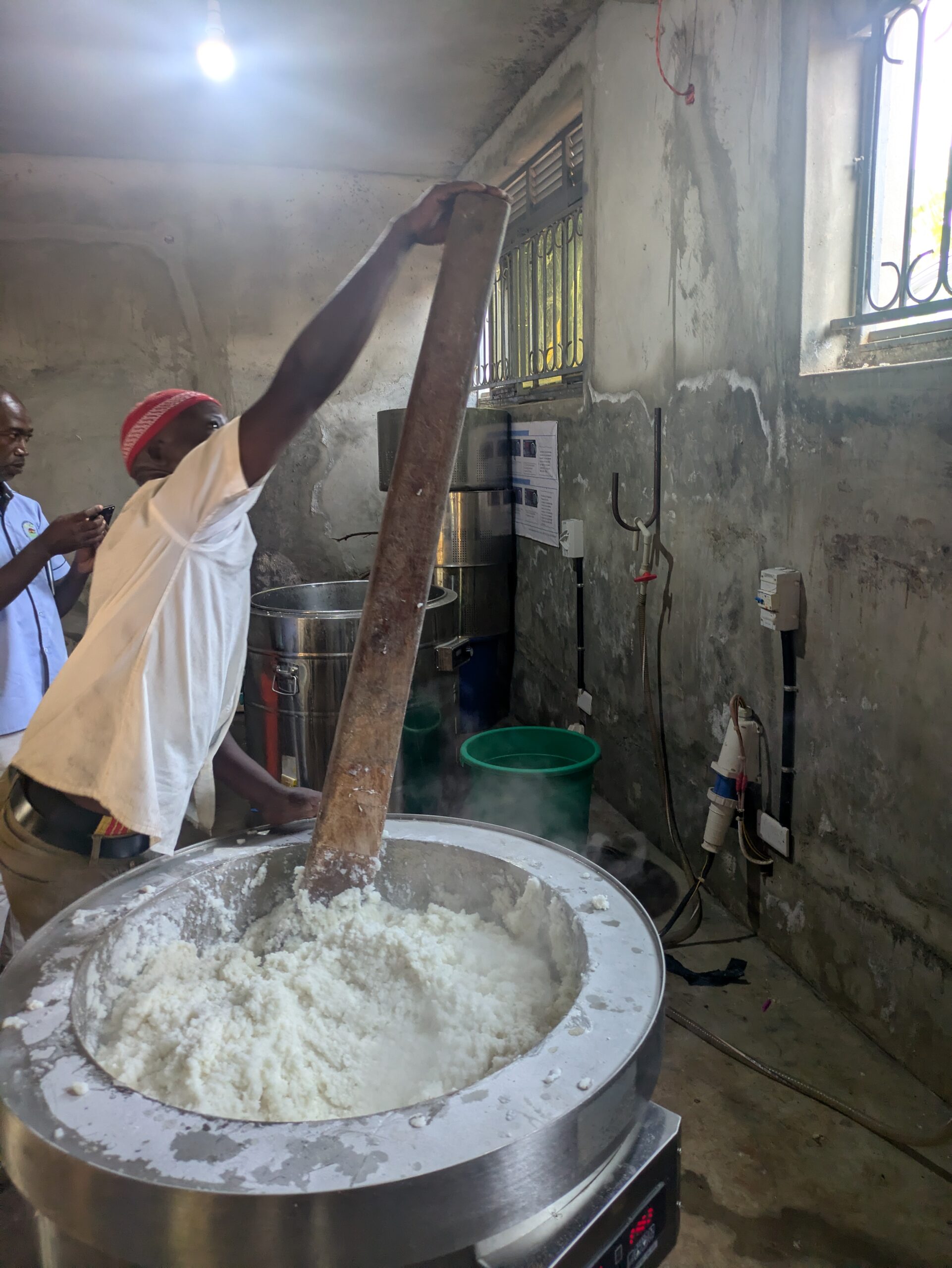
Featured image, top, credit: Cooking posho in 230l Ecoca East Africa eBoiler in Buddo Parents’ Academy, Kampala, Uganda (photo credit: Jacob Fodio Todd).
AI disclaimer: AI was used to distill key learnings and insights from the first ACUASA quarterly report to include in the blog. The authors verified and refined AI’s outputs to generate the final blog piece.