- Date
- 18th August 2025
- Categories
- Behaviours, Electric Cooking

Introduction
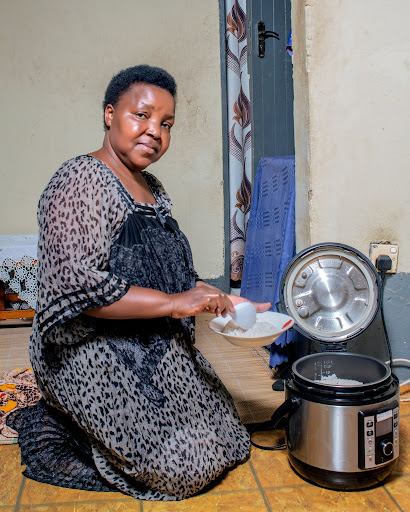
PowerUP launched the eCooking Behavioural Change Pilot to explore the viability of electric pressure cookers (EPCs) among low-income, grid-connected households in Kampala with the support of MECS. These communities, while having access to electricity, still heavily depend on charcoal for daily cooking. The pilot tested real-time interventions to determine their effectiveness in transitioning more cooking to electric and the impact smoke-free cooking and reduced energy costs. This project was also aligned with global efforts to modernize cooking and support carbon market innovation through digital Monitoring, Reporting, and Verification (dMRV) systems. The insights from this pilot provide a critical foundation for future programs aiming to scale electric cooking interventions in similar environments.
The eCooking Behavioural Change Pilot aimed to understand user adoption patterns and cooking behavior in a real-world context. It tested various customer engagement and sales strategies to encourage regular EPC usage and sought to identify barriers that prevent sustained adoption. In addition, the pilot supported the development of a digital data platform for usage monitoring, with the goal of contributing to emerging carbon credit methodologies. It also assessed the operational feasibility of offering EPCs through both upfront cash purchases and flexible financing models.
Implementation and Approach
The pilot was conducted in Kampala, where PowerUP distributed EPCs to over 500 households. Devices were made available through cash sales and pay-as-you-go (PAYGO) options, enabling participation across income segments. A portion of the cookers were equipped with IoT technology that allowed real-time usage monitoring. For households with weaker network coverage, usage logs were collected manually.
Customers were recruited through various channels, including door-to-door agents, in-home demonstrations, community gatherings, and digital outreach. Each customer received an onboarding session, and the project team maintained a support line for follow-up guidance and technical troubleshooting. Over time, field staff visited participants to gather feedback, observe cooking behavior, and identify challenges as they emerge.
Insights from the Field
The pilot revealed several critical insights about behavior, technology adoption, and the role of contextual factors in shaping usage outcomes.
Firstly, financial pressures significantly influenced both purchase decisions and repayment behavior. Notably, sales volumes declined during months when households faced competing financial demands such as school fees. This highlighted the importance of aligning marketing and financing terms with the seasonal cash flow cycles of target communities.
Secondly, there was a mix of utilization levels amongst customer segments and payment methods. The most consistent adopters appreciated the cost savings and convenience. They had a good understanding of their cooking fuel expenditure. Some customers relied on domestic workers unfamiliar with the new device while perceived electricity costs were a consideration for stove stacking. Overall, most customers established a new regular electric cooking habit.
Thirdly, the structure and roles within a household played a role in influencing behavior. Households where cooking responsibilities were shared among men, women, and even older children exhibited higher usage rates and greater willingness to experiment with the EPC.
Another observation was the clear advantage of in-home demonstrations. These personalized interactions had a much higher conversion rate compared to sales through public venues or street agents. Customers were more confident in making a purchase after seeing the device prepare familiar foods in a home kitchen setting. This finding underscores the importance of localized, trust-based sales models in emerging markets.
Electricity availability did not present a major infrastructure challenge in most cases; sales were only made to those with formal home electricity wiring. However, perceptions about power reliability and cost remained behavioral barriers, even in areas with relatively stable supply. Households had to gain confidence in the new fuel source and observe cost savings over time.
User Behavior and Cooking Patterns
The project team observed a wide spectrum of cooking behaviors. Some users quickly integrated the EPC into their daily cooking routine, especially for energy- and time-intensive meals like matooke, beans, and meat stews. Others reserved the EPC for certain dishes, while a portion of participants heavily stacked other stoves.
Analysis of usage data helped segment customers into behavioral groups. High-frequency users, often from larger families, appreciated the time savings and energy efficiency. Occasional users found value in specific use-cases but maintained parallel use of charcoal. Some customers stopped using the device due to household resistance to change. These findings illustrate the variety of cooking profiles and the need for tailored engagement strategies.
In many cases, initial skepticism gave way to enthusiasm after just one or two successful cooking experiences. Households that began with hesitation often became strong advocates once they experienced the speed and convenience of the device.
A core innovation of the pilot was the deployment of a digital platform capable of aggregating and analyzing cooking data at scale. This PowerUP data platform captured daily usage metrics from IoT-enabled devices and created visual dashboards for internal monitoring. It allowed PowerUP to track adoption trends in near real-time, segment customers based on activity levels, and flag disengaged users for follow-up.
The platform offers a potential pathway to automating the verification of clean cooking activity in future carbon credit projects. The pilot proved that low-cost, scalable monitoring is both technically viable and programmatically valuable.
Conclusion and Path Forward
The eCooking Behavioural Change Pilot demonstrated the promise of electric cooking in urban, low-income settings and highlighted the importance of customized behavioral change. The pilot showed that successful adoption is not only about access and affordability; it requires sustained engagement, trust-building, technical support, and a deep understanding of customer context.
Through this pilot, PowerUP established a solid foundation for larger-scale deployments. The insights gained will inform a more targeted customer engagement model, with personalized interventions based on behavior segments. The pilot helped lay the foundation for future carbon credit issuance using a digital Measurement, Reporting, and Verification (dMRV) platform.
The next phase of PowerUP’s work will focus on expanding access, strengthening after-sales support, and collaborating with ecosystem partners to ensure that electric cooking becomes a practical, aspirational solution for African households.
***************************************************************************************************************
Featured Image: Copyright of PowerUP